Tuberville Requests GAO Investigation into Child Care Fraud
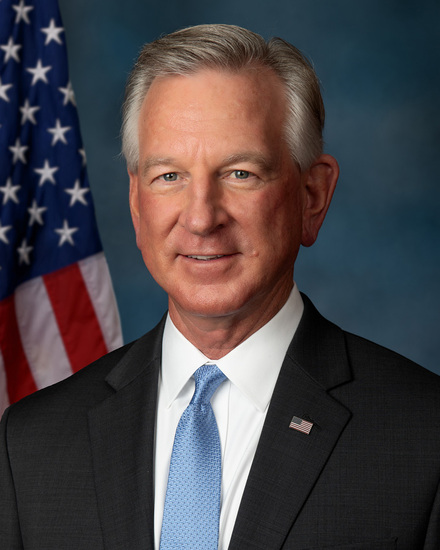
WASHINGTON – U.S. Senator Tommy Tuberville (R-AL), Co-Chairman of the HELP task force on fraud , joined U.S. Senators Bill Cassidy (R-LA) and Jon Husted (R-OH) in sending a letter to the Government Accountability Office (GAO), urging them to investigate the rampant level of improper payments and fraud in the Child Care and Development Fund (CCDF). For the fiscal year 2025, the Department of Health and Human Services (HHS) reported that CCDF had over $800 million in overpayments, representing about 4.5 percent of its payments. Further, in January 2026, HHS froze access to certain CCDF funds in California, Colorado, Illinois, Minnesota, and New York due to serious concerns about widespread fraud and misuse of taxpayer dollars. Despite 8 million low-income families being eligible, the CCDF is only able to serve about 1.4 million. “The Trump administration has done a great job of exposing the waste, fraud, and abuse that has been happening in blue states across this country for years , ” said Sen. Tuberville. “Our number 1 priority is making sure that hardworking American taxpayers aren’t being ripped off. I’m glad to join my Republican colleagues in urging GAO to investigate and put an end to all fraud in the Child Care and Development Fund.” Read the letter below or here . “Dear Acting Comptroller General Brown: We are writing to request that the Government Accountability Office (GAO) initiate an audit of states’ payment integrity actions and oversight within the Child Care and Development Fund (CCDF), with particular attention to state payment systems, administrative controls, and coordination with the U.S. Department of Health and Human Services (HHS). The CCDF program provides federal and state-funded childcare assistance to low-income families, helping them access quality childcare while they work, train, or attend educational programs. Congress has continuously supported providing this critical assistance to our hard-working constituents. However, significant challenges persist in preventing fraud and improper payments in this program. For example, for fiscal year 2025, HHS reported that CCDF had over $800 million in overpayments, representing about 4.5 percent of its payments. Further, in January 2026, HHS froze access to certain CCDF funds in California, Colorado, Illinois, Minnesota, and New York due to serious concerns about widespread fraud and misuse of taxpayer dollars. In a July 2026 GAO report on federally funded state administered programs, your agency highlighted examples of recent fraud schemes that have occurred in the CCDF program. Challenges with CCDF’s ability to maintain program integrity are longstanding. In 2010, GAO found that five states with large CCDF budgets (over $100 million each) had weak fraud prevention controls. In undercover tests, investigators attempted to circumvent selected states’ fraud prevention controls and found several vulnerabilities that could be exploited for fraud and abuse. You have also reported on difficulties in overseeing and monitoring CCDF program integrity risks. For example, in 2020, you reported that HHS did not clearly define what states should report on its program-integrity activities and the corrective actions that it plans to take to address root causes of improper payments. Although HHS has taken steps to address recommendations from prior reports, including conducting a fraud risk assessment of the program, more actions need to be taken to address payment risks at the federal, state, and local levels. We are writing today to request GAO conduct a follow-up study on improper payments and fraud in the CCDF program. Specifically, To what extent have fraud risk assessments and efforts to prevent and detect fraud and improper payments been incorporated into the CCDF program? What are key eligibility and payment integrity risks and to what extent has the federal government and the states taken steps to address those risks? For example, To what extent has the federal government and the states taken steps to ensure that beneficiaries and providers are eligible for the CCDF program? To what extent has the federal government and the states ensured that providers are paid for the services that they provide and not just based on enrollment in childcare centers? To what extent has the federal government and states ensured that providers are not overbilling the states for children that are enrolled in more than one federal childcare program (e.g., CCDF and Early Head Start)? What, if any, additional actions need to be taken to address the payment integrity risks related to fraud posed in CCDF? What lessons learned or better practices for accurately identifying and estimating improper payments (including fraud) and improving payment integrity can be leveraged across states? How does HHS ensure that states are properly estimating their improper payments Rates? Sincerely, ” MORE: Tuberville Launches Task Force to Eliminate Waste, Fraud, and Abuse in Taxpayer-Funded Education Tuberville, Cassidy Move to Eliminate Fraud in Federal Child Care Funding Tuberville, Husted Make Move to Crack Down on Student Aid Fraud Tuberville Joins Anti-Fraud Task Force to Root Out Waste, Fraud, and Abuse in Federal Programs Senator Tommy Tuberville represents Alabama in the United States Senate and is a member of the Senate Armed Services, Agriculture, Veterans’ Affairs, HELP and Aging Committees. ###
bce8a105-ea84-4840-bb8b-fff6bd5fa88dIssued within 24 hours
Other senators' releases published in the day before or after this one.