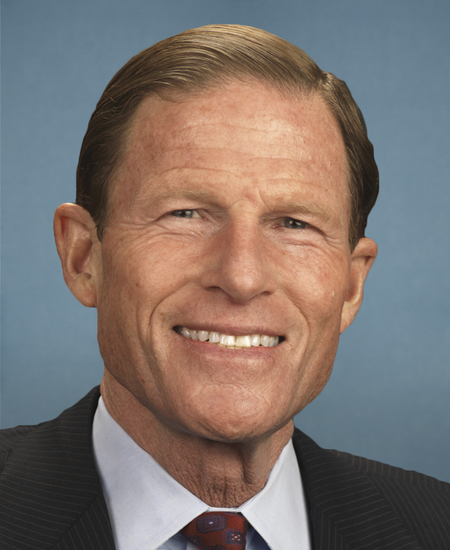
Murphy Reintroduces Bill Requiring Supreme Court to Follow Code of Ethics
WASHINGTON— U.S. Senator Chris Murphy (D-Conn.) reintroduced the Supreme Court Ethics Act , legislation to require an ethical code of conduct for the Supreme Court of the United States. The bill would also require the appointment of an Ethics Investigations Counsel and require justices to publicly disclose why they decide to recuse themselves from a case. U.S. Senators Tammy Baldwin (D-Wis.), Dick Durbin (D-Ill.), Kirsten Gillibrand (D-N.Y.), Martin Heinrich (D-N.M.), John Hickenlooper (D-Colo.), Amy Klobuchar (D-Minn.), Ed Markey (D-Mass.), Adam Schiff (D-Calif.), Bernie Sanders (I-Vt.), Jeanne Shaheen (D-N.H.), Tina Smith (D-Minn.), Chris Van Hollen (D-Md.), Ron Wyden (D-Ore.), and Peter Welch (D-Vt.) co-sponsored the legislation. Public trust in the Supreme Court has cratered to historic lows in recent years following numerous allegations that Justices have engaged in partisan activities, conflicts of interest and financial impropriety, including accepting undisclosed luxury trips and other gifts from people who are likely to have business before the court. Every other federal court is bound by a code of conduct, with the exclusive exception of the Supreme Court of the United States. This bill would bring the Supreme Court in line with the ethical obligations required of every federal judge and work to restore public trust in the Supreme Court. “With conservative justices attending red carpet dinners at the White House and going on luxury vacations paid for by Republican donors, it’s no wonder Americans believe this Supreme Court is just playing politics and ignoring the Constitution,” said Murphy. “Adopting a standard code of ethics like every other federal court in this country is the bare minimum to begin earning back the trust of the American people.” Murphy is one of Congress’ longest standing advocates for ethics reform at the Supreme Court and has introduced legislation to apply a code of conduct to the Supreme Court every Congress since 2011. The Supreme Court Ethics Act would: Require the Supreme Court to create a code of conduct that meets the standard set by current federal courts; Direct the Supreme Court to appoint an Ethics Investigations Counsel who will establish a process for the public to report information about potentially unethical conduct by the Justices and to issue a public annual report on the disposition of allegations and investigations; Empower the Ethics Investigations Counsel to conduct their own investigations into potential violations of the code of conduct; Require Justices who recuse themselves from a case to publicly disclose the reason; Require Justices who deny a proper motion to recuse to publicly disclose the reason. “The highest court in the land shouldn’t have the lowest ethical standards. Public trust in the Supreme Court remains near historic lows, and every story of a luxury gift or questionable failure to recuse contributes to it. The American people should expect transparent recusals and ethical conduct from every justice, regardless of the party of the President who appointed them. I thank Senator Murphy for reintroducing this legislation, and I encourage all my colleagues to support this popular anti-corruption measure,” said Durbin. “The Supreme Court’s refusal to adopt an enforceable code of ethics has contributed to a decline in public trust of this vital institution. If the Court won’t act, Congress must. The highest court in our land should be held to the highest standards, and this legislation will help ensure that – requiring that the Supreme Court be held to the ethical obligations required of federal judges and limiting influence on the Court’s decision-making from special interests,” said Van Hollen. “The American people are entitled to accountability and transparency from the highest court in the land. But our Supreme Court has had scandal after scandal, leaving public confidence in the institution at an all-time low,” said Welch. “The bottom line here is that the Supreme Court must establish a code of conduct that holds Justices to the same ethical standards as every other federal judge across the country–that’s exactly what this bill would do.” “The Supreme Court needs reforms urgently to restore the American people’s confidence to that body,” said Schiff. “Congress must enact an enforceable code of ethics for Supreme Court Justices, particularly in light of Justices on this Court accepting lavish gifts and trips from wealthy individuals with interests before the Court. I’m proud to join my colleagues to support this critical legislation.” “Unlike every other federal judge in this country, Supreme Court Justices aren’t bound by a code of ethics. With no transparency and no enforcement mechanism, it’s no wonder the American people can’t trust the Supreme Court to police itself,” said Smith. “Doing nothing is not an option – we need to pass the Supreme Court Ethics Act to reform the Court and to ensure it reflects our nation’s principles and core beliefs.” “The Supreme Court is facing a legitimacy crisis,” said Gillibrand. “The justices operate with little to no oversight, having secretly accepted private jet travel, lavish hunting retreats, yacht vacations, and more, often from groups with a vested interest in the outcome of cases before the court. I am proud to support the Supreme Court Ethics Act to hold the justices on our nation’s highest court to the same standards as other federal judges, and I will keep fighting to ensure Americans’ rights are determined by the Constitution, not by special interests.” "The nine Justices who sit atop our judicial system should be held to the highest ethical standards. Instead, the Supreme Court has been mired in controversies of its own making, with reports of some far-right Justices accepting undisclosed lavish gifts and engaging in conflicts of interest. As the Court continues to face a crisis of confidence and legitimacy, reforms are urgently needed to restore trust and stop the Court's capture by far-right billionaires and corporate interests. Creating an enforceable code of ethics is a critical step towards achieving real accountability,” said Markey. A one-pager providing further details about the bill is available here . Bill text is available here .
bd46c2a4-8bee-47d3-b473-490cc6fbfdf7Issued within 24 hours
Other senators' releases published in the day before or after this one.