Van Hollen, Wyden Question Trump Administration Over Secret Process for Tariff Cuts that Favor Politically Connected Companies Over Small Businesses
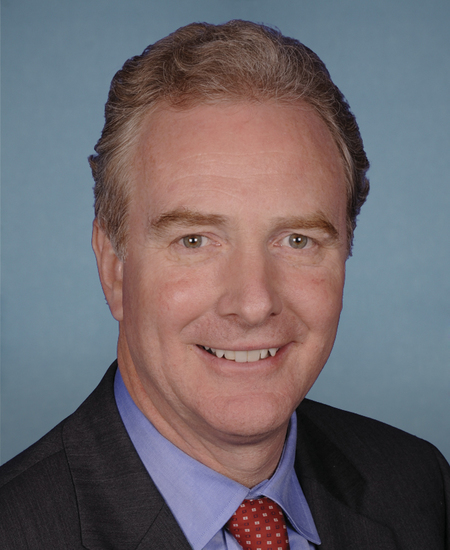
Today, U.S. Senator Chris Van Hollen (D-Md.), Ranking Member of the Senate Appropriations Subcommittee on Commerce, Justice, Science, and Related Agencies (CJS), and U.S. Senator Ron Wyden (D-Ore.), Ranking Member of the Senate Finance Committee, questioned the Trump administration’s reliance on a secret, closed-door process for exempting thousands of products from tariffs, which has favored politically connected companies and industries, while small businesses and family farms struggle to stay afloat.
Despite Donald Trump’s initial promise to make no exemptions to his unprecedented global tariff spree, his administration has granted thousands of exclusions, without any formal application process or ability for the public or stakeholders to weigh in on these decisions. At the same time, his sweeping global tariffs are raising prices for consumers, jacking up the cost of making things in America and leaving U.S. exports less competitive in foreign markets.
“Tariff exclusions can mean the difference between life or death for American companies, particularly for small businesses and family farms that lack the resources of their larger counterparts and are seeing their already thin margins squeezed by increased tariff and compliance costs,”The Senators wrotein their letter to United States Trade Representative (USTR) Jamieson Greer and Department of Commerce Secretary Howard Lutnick.
“The Administration’s failure to open a formal, public process to request these exclusions has prevented Main Street from ever making their case to access relief. Small businesses have been left in the dark as to how, when, and under what circumstances relief from these tariffs may be possible. Americans deserve a transparent and legitimate tariff exclusion process that does not prioritize the needs of well-connected insiders over American families,”the lawmakers concluded.
Americans are in the dark about why certain products face tariffs while others don’t. The secrecy around the process and ever-changing exclusions list have raised concerns about corruption and have made it hard to discern any strategy behind the decisions to exclude products.
Both Van Hollen and Wyden have been strong opponents of Trump’s reckless tariffs. In December 2025, Van Hollen held USTR Ambassador Greer’s feet to the fire on Trump’s trade policies at an oversight hearing, noting the impacts of tariffs on Maryland companies that lack the political connections to get special treatment. Earlier last week, Wyden demanded answers about Trump’s Swiss tariffs that were arbitrarily raised and then lowered after Trump accepted a rare Rolex and gold bar from Swiss companies.
The full text of the letter can be foundhereand below:
Dear Ambassador Greer and Secretary Lutnick:
We write to request information about the process that the Office of the United States Trade Representative (USTR) and the Department of Commerce (Commerce) have created to grant product exclusions from the tariffs imposed pursuant to the International Emergency Economic Powers Act (IEEPA). We have significant concerns that the Trump Administration appears to have created a closed-door tariff exclusion process allowing relief largely for those with political connections. This process has lacked transparency and procedural fairness for American stakeholders, especially small businesses and family farms, and it has opened the door to corruption and economic harm.
The President has unilaterally claimed authority under IEEPA to impose sweeping global tariffs on nearly everything Americans buy from nearly every country in the world. These tariffs have not only raised prices for consumers—they have also raised the costs of inputs, making it more expensive to build, grow, and make things in America and leaving U.S. exports less competitive in foreign markets. Despite the President’s initial insistence that there would be no exclusions or exemptions, the Administration has in fact excluded certain goods from the tariffs, seemingly on an ad hoc basis and through an opaque process that appears to favor the politically connected.
The Administration has granted these exclusions in several waves. First, when the President announced his global tariffs on April 2, 2025, he excluded more than a thousand products, listed in Annex II of Executive Order (EO) 14257. It is unclear how the Administration compiled the Annex II list, and there was no public notice and comment process. Shortly thereafter, the Administration amended Annex II to exclude certain electronics products, including smartphones, computers, and semiconductors, from the global tariffs. Although the Administration indicated that these exclusions would be temporary, they have remained in effect with no timeline for elimination. Then, on September 5, 2025, the Administration issued EO 14346, again amending the Annex II exclusions list with no public process or input. This EO also created the Potential Tariff Adjustments for Aligned Partners (PTAAP) Annex, a list of products that could be eligible for tariff exclusions if imported from a country that has negotiated a “framework agreement” with the United States. The Administration listed in the PTAAP Annex certain unavailable natural resources and certain agricultural products and inputs—seemingly in recognition that the Administration’s tariffs on these products have harmed American manufacturers and farmers. The Administration also listed certain aircraft, aircraft parts, and pharmaceutical products—a confusing decision that seems to be at odds with the Administration’s simultaneous Section 232 investigations of the national security risks posed by these imports. Finally, on November 14, 2025, the President issued yet another EO (EO 14360) amending the Annex II exclusions list, this time excluding various agricultural products and inputs from the global tariffs altogether, despite some of those items having previously been listed in the PTAAP Annex and, hence, eligible for tariff exclusions only pursuant to completed framework agreements. This announcement was a significant and unexplained retreat from the PTAAP strategy unveiled just one month prior, but also an apparent admission that Trump’s tariffs have driven up the price of agricultural imports like bananas and coffee.
Instead of opening a transparent, public tariff exclusion process with objective criteria, the Administration has considered and granted tariff exclusions behind closed doors, through an opaque and unaccountable process that has provided limited opportunity for Americans to engage. To the extent the Administration did consult with stakeholders, the lack of a public process necessarily self-selects for stakeholders that not only have an established presence in Washington, D.C., but also find themselves in favor with the White House. Public and congressional confidence in the integrity of the Administration’s tariff and tariff exclusion policies is further undermined by a lack of information about the criteria and analysis used to determine the products and product categories excluded or eligible for exclusions from the global tariffs—suggesting such decisions may not have been based on any objective criteria or data-driven analysis at all.
In light of the foregoing, we ask that you respond to the following questions:
1. The Administration did not open a formal public notice and comment process regarding any of these tariff exclusions.
a. Please explain why the Administration has elected not to hold a public process.
b. What steps has the Administration taken to proactively engage with American companies, including small businesses, that lack a presence in Washington, D.C. or an existing relationship with your agencies?
2. The Administration has not disclosed any criteria it used to determine what products or categories of products to exclude or make eligible for tariff exclusions. For example, the PTAAP Annex includes products that cannot be produced domestically at sufficient quantities to meet domestic demand, but the Administration has not explained what quantitative analysis was done, or what numerical thresholds were used, to determine what products would fall into that category.
a. Please describe the categories of products that are currently excluded or eligible for exclusions from the global tariffs. Please explain why the Administration chose these categories.
b. Please provide the specific, objective criteria that the Administration used in creating Annex II and the PTAAP Annex. Please describe any quantitative analysis done, including any quantitative thresholds used.
c. With which other agencies did USTR and Commerce consult?
3. The Administration has made several modifications to Annex II and the PTAAP Annex. Is the Administration considering further modifications or additions to these lists? If so, please respond to the following questions.
a. What is the process to accept, review, and assess requests for modification?
b. Will you open a public comment process and publish your decision-making criteria prior to taking action?
c. How will you proactively engage with American companies, including small businesses, that lack a presence in Washington, D.C. or an existing relationship with your agencies?
d. Does the Administration plan to renegotiate the concluded “framework agreements” to reflect any changes made to the PTAAP Annex?
4. The Administration has put certain pharmaceutical products, aircraft and aircraft parts, semiconductors, and critical minerals in Annex II or the PTAAP Annex, excluding them from the global tariffs or making them eligible for exclusions. At the same time, however, the Administration is investigating the national security risks of these imports, which could result in tariffs under Section 232 of the Trade Expansion Act of 1962. If the Administration believes that such imports may pose a risk to U.S. national security, why has the Administration excluded these items from the global tariffs, or made them eligible for exclusion?
5. While the Administration has chosen to exclude some products from the global tariffs entirely (listed in Annex II), it appears that tariff exclusions for products in the PTAAP Annex can only be secured as a concession to countries with whom the U.S. has concluded a “framework agreement.” But negotiating takes time, and the global tariffs are hurting Americans now. Choosing to put certain goods in the PTAAP Annex limits the relief that can be accessed by American farmers, businesses, and manufacturers who rely on those imports.
a. How did the Administration determine which products to list in Annex II and which products to list in the PTAAP Annex?
b. How are your agencies prioritizing ongoing negotiations with trading partners?
c. Please explain why this Administration has made the highly unusual and inappropriate decision to classify the list of countries with which it is negotiating.
d. Given that the Administration has classified the list of ongoing negotiations, how can the public and stakeholders properly engage with these negotiations and any exclusions sought?
Tariff exclusions can mean the difference between life or death for American companies, particularly for small businesses and family farms that lack the resources of their larger counterparts and are seeing their already thin margins squeezed by increased tariff and compliance costs. The Administration’s failure to open a formal, public process to request these exclusions has prevented Main Street from ever making their case to access relief. Small businesses have been left in the dark as to how, when, and under what circumstances relief from these tariffs may be possible. Americans deserve a transparent and legitimate tariff exclusion process that does not prioritize the needs of well-connected insiders over American families. Yet, particularly given the Administration’s troubling history of political favoritism in its first-term exclusion process, we have significant concerns about the lack of transparency surrounding your decisions to grant or reject tariff relief.
Please respond to these questions as soon as possible, but no later than March 4, 2026. Thank you for your prompt attention to this important matter.
Sincerely,
bd7dc604-a06e-4958-8181-4041df818314Issued within 24 hours
Other senators' releases published in the day before or after this one.