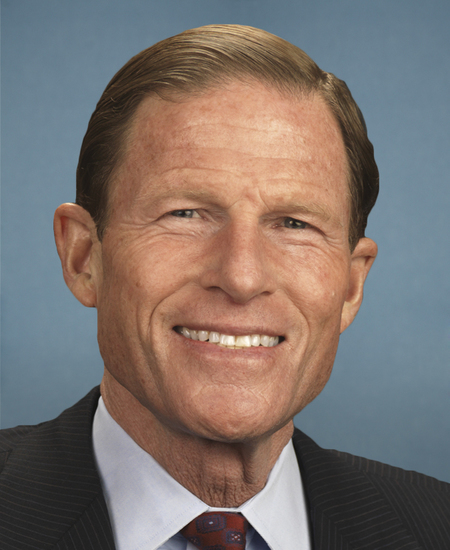
Van Hollen Leads Push for Senate, House Leadership to Strip Provisions in NDAA that Mandate U.S.-Israel Defense, Intelligence Cooperation
Today, U.S. Senator Chris Van Hollen (D-Md.), along with more than ten of his colleagues, is pressing Senate and House leadership to exclude provisions in the FY2027 National Defense Authorization Act (NDAA) that would require the President to expand and enhance defense cooperation and intelligence sharing with the Government of Israel. These provisions would undermine the United States’ ability to act independently and in line with U.S. national security interests at a time when the Government of Israel’s actions are increasingly not aligned with those interests. This effort follows a Dear Colleague letter sent by Senator Van Hollen in July urging Senators to oppose any motion to proceed on the NDAA vote until these provisions were addressed. Senator Van Hollen was joined in sending this letter by Senators Patty Murray (D-Wash.), Ron Wyden (D-Ore.), Bernie Sanders (I-Vt.), Jeff Merkley (D-Ore.), Brian Schatz (D-Hawaii), Elizabeth Warren, (D-Mass.), Ed Markey (D-Mass.), Tammy Duckworth (D-Ill.), Tina Smith (D-Minn.), Peter Welch (D-Vt.), and Andy Kim (D-N.J.). The letter was sent to Senate Majority Leader John Thune, Senate Minority Leader Chuck Schumer, House Speaker Mike Johnson, House Minority Leader Hakeem Jeffries, Senate Armed Services Committee (SASC) Chair Roger Wicker, SASC Ranking Member Jack Reed, House Armed Services Committee Chair (HASC) Mike Rogers, and HASC Ranking Member Adam Smith. The Senators begin , “As you prepare to conference the Fiscal Year 2027 National Defense Authorization Act (NDAA), we respectfully urge you to exclude three provisions from the final bill that would further entrench concerning aspects of the U.S.-Israel defense and intelligence relationship at a time when the Israeli government’s actions are increasingly undermining U.S. interests and values. These provisions would constrain the Administration’s ability to independently determine how best to protect U.S. national security and would lock in long-term commitments despite our serious concerns with the Israeli government’s actions in Gaza, the West Bank, and other parts of the region.” On the threats to U.S. national security, the lawmakers note , “The agreements and projects these provisions envision threaten U.S. national security interests by handing Israel leverage over American weapons systems and military technology. This is not hypothetical. The Netanyahu government has already leveraged its existing coproduction agreement with the United States on missile defense to block American Iron Dome batteries from reaching Ukraine, in direct opposition to U.S. national security interests. Should these provisions be enacted, it would further increase Israel’s leverage over the United States through some of the most sensitive technologies in warfare. That is not in the U.S. interest. If enacted, these agreements would create long-term dependencies by embedding Israeli technology into the U.S. defense industrial base that could make future policy changes costly or difficult to implement. President Trump, at his own discretion, could choose to enter new agreements with Israel under existing law. The executive branch does not need a congressional mandate to more deeply entrench U.S.-Israel defense cooperation.” “Moreover, we do not share, let alone co-produce, many of these sensitive technologies even with our closest partners, including NATO or other treaty allies. To do so in this instance would be unwise, especially as the Government of Israel continues to pursue policies in Gaza, the West Bank and other parts of the region that are inconsistent with U.S. interests and values,” the lawmakers write. “Prime Minister Netanyahu has openly stated that such an initiative was his idea. In a letter to Representative Stutzman, who led a resolution calling for an effort similar to these provisions, Prime Minister Netanyahu states, ‘I was glad to receive your proposed Congressional resolution endorsing my plan to shift the framework of the US-Israel defense cooperation from aid to partnership.’ The intention behind this is clear: to move U.S. security assistance governed through more traditional pathways, like Foreign Military Financing and arm sales, to more opaque, less discernible avenues through defense acquisitions and programs of record that reduce transparency, as well as increase Israel’s leverage over the United States and our dependency on Israeli technology. This is particularly problematic after Prime Minister Netanyahu boasted that he has been trying to start a war with Iran for 40 years. That war has proven to be a strategic disaster for the United States and against U.S. interests,” the Senators continue. “For all these reasons, we should not legally mandate an expansion in defense co-production or a requirement to increase intelligence sharing with the Government of Israel. We therefore urge you to exclude Section 1217, Section 219, and Section 618 from the NDAA final conference report,” they conclude. The full text of the letter is available here and below. Dear Majority Leader Thune, Minority Leader Schumer, Speaker Johnson, Minority Leader Jeffries, Chairman Wicker, Ranking Member Reed, Chairman Rogers, and Ranking Member Smith: As you prepare to conference the Fiscal Year 2027 National Defense Authorization Act (NDAA), we respectfully urge you to exclude three provisions from the final bill that would further entrench concerning aspects of the U.S.-Israel defense and intelligence relationship at a time when the Israeli government’s actions are increasingly undermining U.S. interests and values. These provisions would constrain the Administration’s ability to independently determine how best to protect U.S. national security and would lock in long-term commitments despite our serious concerns with the Israeli government’s actions in Gaza, the West Bank, and other parts of the region. Both Section 1217 from the Senate Armed Services Committee-reported bill and Section 219 of the House-passed bill mandate the creation of a “United States-Israel Defense Technology Cooperation Initiative” to expand and accelerate the U.S.-Israel defense relationship, including technology sharing, co-production of weapons systems, and bilateral research and development across multiple domains of warfare such as biotechnology, quantum, autonomous systems, artificial intelligence, cyberwarfare, and others. The agreements and projects these provisions envision threaten U.S. national security interests by handing Israel leverage over American weapons systems and military technology. This is not hypothetical. The Netanyahu government has already leveraged its existing coproduction agreement with the United States on missile defense to block American Iron Dome batteries from reaching Ukraine, in direct opposition to U.S. national security interests. Should these provisions be enacted, it would further increase Israel’s leverage over the United States through some of the most sensitive technologies in warfare. That is not in the U.S. interest. If enacted, these agreements would create long-term dependencies by embedding Israeli technology into the U.S. defense industrial base that could make future policy changes costly or difficult to implement. President Trump, at his own discretion, could choose to enter new agreements with Israel under existing law. The executive branch does not need a congressional mandate to more deeply entrench U.S.-Israel defense cooperation. Moreover, we do not share, let alone co-produce, many of these sensitive technologies even with our closest partners, including NATO or other treaty allies. To do so in this instance would be unwise, especially as the Government of Israel continues to pursue policies in Gaza, the West Bank and other parts of the region that are inconsistent with U.S. interests and values. Prime Minister Netanyahu has openly stated that such an initiative was his idea. In a letter to Representative Stutzman, who led a resolution calling for an effort similar to these provisions, Prime Minister Netanyahu states, “I was glad to receive your proposed Congressional resolution endorsing my plan to shift the framework of the US-Israel defense cooperation from aid to partnership.” The intention behind this is clear: to move U.S. security assistance governed through more traditional pathways, like Foreign Military Financing and arm sales, to more opaque, less discernible avenues through defense acquisitions and programs of record that reduce transparency, as well as increase Israel’s leverage over the United States and our dependency on Israeli technology. This is particularly problematic after Prime Minister Netanyahu boasted that he has been trying to start a war with Iran for 40 years. That war has proven to be a strategic disaster for the United States and against U.S. interests. In addition to the provisions discussed above in the Senate and House NDAAs, the Senate Select Committee on Intelligence (SSCI) FY27 Intelligence Authorization Act, which is typically incorporated in the final NDAA, includes a provision (Sec. 618) that mandates the executive branch “expand and enhance intelligence sharing with the Government of Israel,” and also states that intelligence sharing with Israel “shall not be suspended, reduced, or otherwise materially limited.” The provision would tie the President’s hands from limiting intelligence sharing with Israel, even when doing so may be necessary to protect U.S. national security. That would be irresponsible and especially troubling given public reports that the Defense Intelligence Agency recently raised the counterintelligence threat from Israel to its highest level. For all these reasons, we should not legally mandate an expansion in defense co-production or a requirement to increase intelligence sharing with the Government of Israel. We therefore urge you to exclude Section 1217, Section 219, and Section 618 from the NDAA final conference report.
c05ed98c-1bda-480b-a7cb-23b8972c194dIssued within 24 hours
Other senators' releases published in the day before or after this one.