WATCH: In SASC Hearing, Kelly Questions Pentagon Official on Trump’s Wasteful Golden Dome Proposal
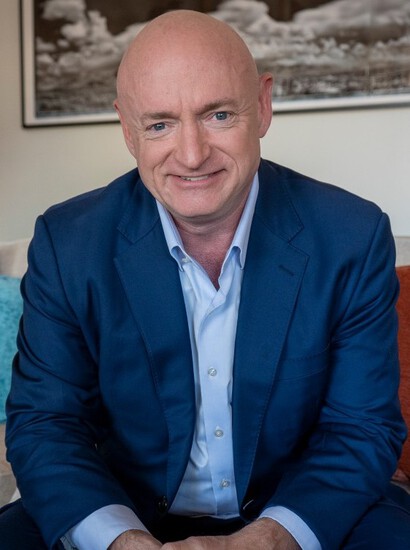
“We could spend more than $1 trillion and end up with a system that’s not going to work” “Missile defense is too important to pursue just based on aspiration alone” Today, during a Senate Armed Services Committee (SASC) hearing , Arizona Senator and Navy combat veteran Mark Kelly questioned Acting Pentagon Comptroller Jules W. Hurst III on the cost and effectiveness of the Golden Dome missile defense system before Congress commits hundreds of billions of dollars to a program that won’t meaningfully improve America’s security. Kelly raised concerns about the cost of the Golden Dome and pressed into the effectiveness of the space-based interceptor layer: “Before Congress commits taxpayers to what could become the most expensive defense program in our nation’s history, we need some confidence that the system is going to deliver the capability that’s being promised. And to me, right now, it’s clear that it won’t. The most ambitious element of Golden Dome is the space-based interceptor layer, and that is going to face significant technical challenges. The costs, the physics, the likely reliability, in my view, do not support a full-scale space-based intercept architecture. This means that we could spend more than $1 trillion and end up with a system that’s not going to work, and it’s not going to meaningfully improve our security.” Kelly pointed out that defeating the system is cheaper than building it: “Do you understand that defeating a system with countermeasures and decoys is cheaper than interceptors? […] That becomes a math problem, like an economics math problem is that the adversary’s ability to defeat the system is less expensive than our cost to build the system.” Kelly called on the Pentagon to prove that Golden Dome is worth the investment: “There are things in the program that makes sense; detecting launches, even some other approaches to this. The space-based interceptor part is really, really hard, and the physics clearly favors the offense. So, we could go down this road, spend hundreds of billions of dollars and not get any return on that investment. And missile defense is too important to pursue just based on aspiration alone. “I want to make sure that we have a system that is technically achievable, strategically sound, and represents the best use of limited resources. So, the Department should be able to demonstrate not only what Golden Dome will cost, but that that it can realistically deliver on this promise of missile defense. And I have not seen any convincing evidence of that to date.” Sen. Kelly questions Acting Pentagon Comptroller Jules W. Hurst III about the Golden Dome at a SASC hearing. Click here to download a video of Kelly’s questions. See the transcript below: Senator Kelly: Thank you, Mr. Chairman. Mr. Hurst, the administration, I want to follow up on Senator King’s question about Golden Dome. So, it’s made it a priority. It is a significant investment in limited resources that we have. So, before Congress commits taxpayers to what could become the most expensive defense program in our nation’s history, we need some confidence that the system is going to deliver the capability that’s being promised. And to me, right now, it’s clear that it won’t. The most ambitious element of Golden Dome is the space-based interceptor layer, and that is going to face significant technical challenges. The costs, the physics, the likely reliability, in my view, do not support a full-scale space-based intercept architecture. This means that we could spend more than $1 trillion and end up with a system that’s not going to work, and it’s not going to improve, meaningfully, improve our security. So, Mr. Hurst, what analysis gives you confidence that Golden Dome is a responsible use of taxpayer dollars, rather than an extraordinarily expensive system that’s not going to achieve the stated objectives? Mr. Jules W. Hurst III: Senator Kelly, I appreciate your background in this area. I would say I have confidence in this because I trust the program manager, General Guetlein, to make these kinds of determinations and change course inside the program, if necessary, to achieve an outcome at the appropriate cost for the taxpayer. This is a better issue to be held in a classified session, but if you haven’t gotten a brief from him, sir, I’d recommend it. It’s compelling. Kelly: I’ve got gotten multiple briefs from him. Have you seen an analysis, a technical analysis that has convinced you that this is achievable? Or are you—just trust that he tells you we can do this? Hurst: I believe it’s possible to have a space-based interceptor capability. Kelly: Based on what? Hurst: I think the big determination there is, what will the cost per unit be, whether or not it’s a field of capability that produces the kind of result we want. Kelly: Do you understand that defeating a system with countermeasures and decoys is cheaper than interceptors? Hurst: I’m familiar with some of the dynamics of an engagement in a space environment. Kelly: So that becomes a math problem, like an economics math problem is that the adversary’s ability to defeat the system is less expensive than our cost to build the system. Hurst: It will depend on how the technology turns out, but I think there’s an opportunity to avoid that exact engagement scenario in a manner that makes the system more effective. Kelly: How do we do that? Hurst: I think, again, that’d be a better classified session. Kelly: But you know how we do that? Hurst: I have had a brief on that and if that’s still what General Guetlein of thinking is, I think it’s a possibility that we should be interested in investing in the research and development dollars to procure. Kelly: Let’s say if the Department cannot demonstrate that Golden Dome will provide the level of protection that the Administration publicly states it will. I mean, why would why would Congress be asked to commit more than $1 trillion over the lifecycle before these questions have all been answered? Because I’m not convinced, they’ve been answered. Hurst: Senator Kelly, I haven’t heard that cost estimate of $1 trillion. Kelly: From the CBO. Hurst: Is that what we’re saying? Well, I think the Department’s cost estimate at the time that I was comptroller is $185 billion for the entire system. And the most compelling parts of Golden Dome for me are the situation of awareness aspects, which will pay dividends for the Department outside of just missile defense. Kelly: I agree with that. So, there are things in the program that makes sense; detecting launches, even some other approaches to this. The space-based interceptor part is really, really hard, and the physics clearly favors the offense. So, we could go down this road, spend hundreds of billions of dollars and not get any return on that investment. And missile defense is too important to pursue this just based on aspiration alone. So, I want to make sure that we have a system that is technically achievable, strategically sound, and represents the best use of limited resources. So, the Department should be able to demonstrate not only what Golden Dome will cost, but that that it can realistically deliver on this promise of missile defense. And I have not seen any convincing evidence of that to date. Thank you, Mr. Chairman.
c52b7d99-d03b-4677-ade4-5ddb04710d48Issued within 24 hours
Other senators' releases published in the day before or after this one.