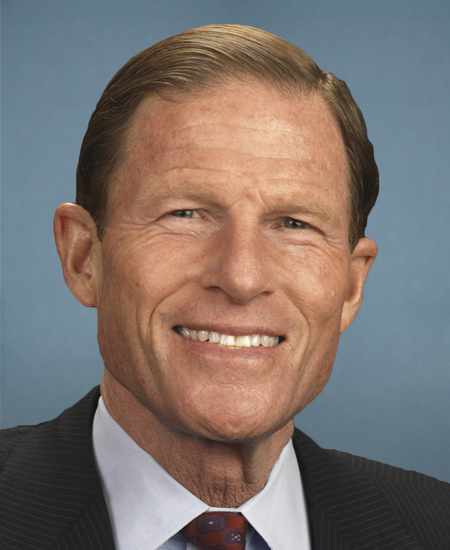
Blumenthal Investigates Tether's Multimillion-Dollar Payment to Consulting Firm Owned by White House Official Who Previously Led Crypto Policy
[WASHINGTON, D.C.] – U.S. Senator Richard Blumenthal (D-CT), Ranking Member of the Senate Permanent Subcommittee on Investigations (PSI), today demanded answers from Tether over its reported multimillion-dollar payment to a consulting firm co-founded and controlled by Bo Hines, who served as the Executive Director of the White House Council of Advisers for Digital Assets. In a letter sent today to Tether CEO Paolo Ardonio, Blumenthal raised concerns that Tether reportedly paid millions of dollars to a business partially controlled by the White House official responsible for cryptocurrency policy, while that same official lobbied for loopholes in legislation on its behalf. “According to The Wall Street Journal , in May 2025, Tether entered into a deal with the small consulting and investment firm Nxum to develop a “strategic brand and public affairs plan” for the stablecoin issuer…However, Nxum did have one particular advantage: its cofounder, Bo Hines, had been appointed ‘Executive Director of the Presidential Council of Advisers for Digital Assets’ for the Trump Administration the prior December and had recently begun working on stablecoin legislation for the White House,” Blumenthal wrote. Blumenthal continued, “According to The Wall Street Journal , as the White House dropped enforcement actions against cryptocurrency firms and lobbied Congress for legislation favorable to the industry, over $6 million flowed into Nxum from Tether —all while Bo Hines sought special exemptions and dispensation on behalf of the firm…While Hines failed to divest his one-third stake in Nxum, according to messages seen by The Wall Street Journal , he worked closely over encrypted messaging applications with Nxum to coordinate lobbying, advocacy, and browbeating of members of Congress that were opposed to, or had sought changes to, pending stablecoin legislation.” Blumenthal continued, “The highly unusual terms and nature of Tether’s business relationship with both Nxum and Bo Hines raise alarming ethical and legal concerns, indicating that Tether was likely well aware of the illegality and impropriety of issuing payments to a current White House official with such a direct role in shaping cryptocurrency legislation that was instrumental to its business.” “Tether’s alleged multimillion-dollar payment to a firm controlled by the White House official primarily responsible for cryptocurrency policy implicates federal ethics, anticorruption, and lobbying laws,” Blumenthal concluded. In a similar letter sent today to the CEO of Nxum Group, Todd Hines, Blumenthal sought records and information related to contracts, payments, communications, and lobbying between Nxum, Bo Hines, and all associated parties. As PSI Ranking Member, Blumenthal is leading an inquiry into the illicit use of cryptocurrencies and the Trump Administration’s self-enrichment and self-dealings with cryptocurrency firms. As part of this investigation, Blumenthal recently released a report detailing how Tether and its dollar-pegged stablecoin have become a significant financial lifeline within Iran’s shadow banking network. A copy of PSI’s report, “Tethered to Terrorism: Crypto & Iran’s Shadow Banking Network,” is available here . The full text of today’s letter to Tether is available here and below. Blumenthal’s letter to Nxum Group is available here . Dear Mr. Ardoino, Mr. Hines: The Senate Permanent Subcommittee on Investigations (“PSI” or the “Subcommittee”) Minority is conducting an ongoing inquiry into the illicit use of cryptocurrencies and the Trump Administration’s self-enrichment and self-dealings with cryptocurrency firms. Recent reporting has revealed that Tether paid millions of dollars to a business partially controlled by the White House official responsible for cryptocurrency policy, while that same official lobbied for loopholes in legislation on its behalf. I therefore write to demand that you provide the Subcommittee with all records and information related to contracts, payments, communications, and lobbying with the firm, Nxum, its cofounder Bo Hines, and all associated parties. According to The Wall Street Journal, in May 2025, Tether entered into a deal with the small consulting and investment firm Nxum to develop a “strategic brand and public affairs plan” for the stablecoin issuer. Nxum had little history providing consulting services for successful cryptocurrency firms, previously having attempted to market a marijuana-themed digital asset and a Trump-themed meme coin, both of which failed. However, Nxum did have one particular advantage: its cofounder, Bo Hines, had been appointed “Digital Asset Policy Advisor” for the Trump Administration the prior December and had recently begun working on stablecoin legislation for the White House. According to the WSJ, as the White House dropped enforcement actions against cryptocurrency firms and lobbied Congress for legislation favorable to the industry, over $6 million flowed into Nxum from Tether —all while Bo Hines sought special exemptions and dispensation on behalf of the firm. In May 2025, Tether agreed to pay Nxum $415,000 a month after the consulting firm had pitched it a “strategic lobbying and a full scale public relations and media awareness campaign.” While Hines failed to divest his one-third stake in Nxum, according to messages seen by the WSJ, he worked closely over encrypted messaging applications with Nxum to coordinate lobbying, advocacy, and browbeating of members of Congress that were opposed to, or had sought changes to, pending stablecoin legislation. Those messages also reportedly demonstrate that Tether was directly coordinating Nxum’s lobbying efforts on the GENIUS Act which would regulate stablecoins, with CEO Paolo Ardoino demanding that Nxum “obliterate” the legislation’s opponents. Mr. Hines personally lobbied for changes to the GENIUS Act that would predominantly benefit Tether by allowing it to continue operating outside of the United States and providing it more time to come into compliance with regulations—provisions that have become known as the “Tether loophole.” The highly unusual terms and nature of Tether’s business relationship with both Nxum and Bo Hines raise alarming ethical and legal concerns, indicating that Tether was likely well aware of the illegality and impropriety of issuing payments to a current White House official with such a direct role in shaping cryptocurrency legislation that was instrumental to its business. Rather than directly contracting with Mr. Hines’s firm, Tether assigned its contract and sent its payments in cryptocurrency through a marketing firm, Notorious, that then passed to Nxum, after which it was split three ways and transferred again. As soon as Hines left the White House, Tether began to directly contract with and send payments to Nxum. Nxum later allegedly offered the director of Notorious over $300,000 and a stake in future Tether payments in return for a nondisclosure agreement. Within days of leaving the White House, Tether announced that it had hired Mr. Hines, ultimately naming him the CEO of its new Tether U.S. operations. These lucrative arrangements allowed Mr. Hines a new lifestyle that includes traveling by private jet. Tether’s alleged multimillion-dollar payment to a firm controlled by the White House official primarily responsible for cryptocurrency policy implicates federal ethics, anticorruption, and lobbying laws. To assist the Subcommittee in its inquiry, please provide responses to the following requests for records and information by November 6, 2026: 1.) When did Tether first consider a potential business partnership with Nxum, and what were the circumstances under which Nxum began to do business with Tether? a. Please provide a breakdown of all payments provided by Tether to Nxum, Notorious, or any individuals affiliated with either entity, including the date of payment, payment method, and any wallet addresses associated with cryptocurrency transactions.[JG2.1] b. Please describe all consulting and lobbying services that Nxum has provided to Tether, regardless of whether those activities were specified under the written terms of any contract between the firms. 2.) Why did Tether use Notorious and its CEO Peter Vincer as an intermediary for its business partnership with Nxum? Why did Tether and Nxum begin to directly contract after Mr. Hines left the White House, and why did the firms later seek a nondisclosure agreement from Mr. Vincer? 3.) According to The Wall Street Journal, Mr. Hines coordinated with Mr. Vincer on the change of contract from Notorious to directly contracting to Nxum, even writing him “everyone has agreed that you are never to be f—ed.” What awareness or involvement did Mr. Hines have regarding Tether’s business relationship between Nxum, Mr. Vincer, and Notorious prior, during, and after any agreement? 4.) According to The Wall Street Journal, Nxum has recently sought further investment with the claim that Tether plans to purchase 25% stake in Nxum for $56 million. What is the current relationship between Nxum and Tether, and have the two firms discussed Tether potentially taking a stake in Nxum? 5.) Please provide all records, including communications and contracts, relating to any business dealings with Nxum. This includes, but is not limited to, any negotiations, draft contracts, or agreements between the firms, records involving or relating to Bo Hines, discussion of White House or state and federal regulators, lobbying on Tether’s behalf, or compliance with any laws and regulations applicable to Tether. 6.) Please provide all records, including communications and contracts, between Tether and Mr. Vincer and his firm Notorious. This includes, but is not limited to, any negotiations, draft contracts, or agreements related to Tether’s partnership with Nxum, coordination of payments, discussions of Mr. Vincer’s role in the firms’ partnership, the terminations of that role, and any request or negotiation over a nondisclosure agreement. 7.) Please provide all records relating to communications and contracts with Bo Hines between January 20, 2025 and August 9, 2025. This includes, but is not limited to, any discussion of White House or state and federal regulators or regulations, lobbying on Tether’s behalf or regarding cryptocurrencies, or Mr. Hines’ employment after leaving the White House. Please contact the Subcommittee if you have any questions about responding to these requests. Sincerely, -30-
c70a8b6c-a799-4391-b77a-753d0b81c52fIssued within 24 hours
Other senators' releases published in the day before or after this one.