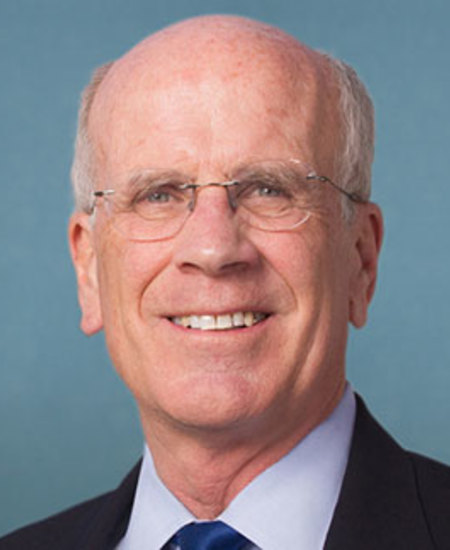
Welch Pushes Bipartisan Bill to Lower Cost of Prescription Drugs, Streamline Drug Patent Litigation
About About Peter Committee Assignments My Work (so far) Combating Trump’s Illegal Agenda Issues News Press Releases Press Kit Services Newsletter Sign-Up Help with a Federal Agency Academy Nominations Congressionally Directed Spending Requests Flag Requests Flooding Resources Internships Resources Resources for Immigrants Scheduling Requests Visiting DC Women’s Economic Opportunity Conference Contact Email Peter Press Release Welch Pushes Bipartisan Bill to Lower Cost of Prescription Drugs, Streamline Drug Patent Litigation Nov 17, 2026 WASHINGTON, D.C . — In a Senate Judiciary Committee hearing this week, U.S. Senator Peter Welch (D-Vt.) encouraged support for the advancement of his bipartisan bill, the Eliminating Thickets to Improve Competition (ETHIC) Act . The ETHIC Act , which he co-leads with Judiciary Committee colleagues Sens. Josh Hawley (R-Mo.) and Amy Klobuchar (D-Minn.) , aims to streamline drug patent litigation, encourage fair market competition, and lower prescription drug prices by making it easier for generic and biosimilar companies to enter the market. “My hope is that we’re going to be able to do some bipartisan legislation that focuses on competition; that takes away the manipulation of the patent system. Senator Hawley and I have the ETHIC Act which would essentially get rid of patent thickets,” said Senator Welch . “We’ve got a reset opportunity here. This is not at all a Republican-Democratic deal. I mean, we’ve got people who’ve been working on this forever. They’re very practical. Nobody who is on this panel is anything but supportive of the benefits of good medication. They’re all in favor of making that accessible and essentially, not by taking away the incentive, but by taking away the ripoff. So, my hope is that we could work together to incorporate the ideas that have been presented here by this panel to benefit all the people we represent, including in your wonderful state of Iowa, and my state of Vermont.” Watch the Senator’s full remarks below : Read key excerpts from Senator Welch’s exchange with Merith Basey, CEO of Patients For Affordable Drugs Now: Sen. Welch: I’ll just ask a little bit about the patent thickets, because I am working on that with Senator Hawley. Ms. Basey, could you talk a little bit about that? You know, you have a patent system—I support a patent system, it gives exclusivity and rewards innovation. But the thicket system means that the patent system is just rampantly abused for self-gain and beyond what the purpose of what the patent system is. Could you talk a little bit about that? Ms. Basey: So, the patent system was designed to incentivize genuine innovation—novel treatments that save lives. Right now, the patent system isn’t just incentivizing innovation, it’s incentivizing manipulation. That is the subject of these bills. What patent thickets are: a drug company can file multiple duplicative non-obvious, non-innovative patents on a single drug. Even if they expire at the same time, they create a thicket which makes it much harder for a generic or biosimilar competitor to enter the market. Sen. Welch: As a matter of principle, if you have one invention, does it make sense to have one patent? Ms. Basey: The simple answer’s yes, but I think on the key elements that are truly innovative, the system should reward those. But there’s an example with a drug called SYMBRAVO, and there’s two patents in particular of the 90-something that it has: one of them is for pain relief, and one is for pain freedom. Now, that is not the type of innovation that patients in our community are seeking. Sen. Welch: That’s a verbal manipulation. Ms. Basey: Yeah, and it’s mocking. The U.S. Patent system was designed to promote innovation and foster competition. However, pharmaceutical companies are exceedingly abusing the patent system through patent extension strategies such as “patent thicketing,” a strategy in which pharmaceutical companies develop a “web” of patents around their most profitable drugs. These patent thickets deter generic and biosimilar drugs from entering the market, due to the high cost of legally challenging each patent in a thicket. The ETHIC Act codifies the practice that many federal district courts across the country already apply by limiting the number of patents or patent claims a company can assert in litigation. Specifically, this bipartisan bill: Streamlines patent litigation by limiting the number of patents per thicket a pharmaceutical company can assert in litigation to one. Prohibits a patent owner from asserting multiple patents from the same thicket in separate actions against the same alleged infringer to circumvent the intent of the law. Safeguards quality patents that improve existing drugs, benefiting patients. The ETHIC Act is endorsed by the Association for Accessible Medicines and Generation Patient. U.S. Representatives Jodey Arrington (R-TX-19), Lloyd Doggett (D-TX-37), Issa Darrell (R-CA-48), August Pfluger (R-TX-11), Pramil
c7c0f91b-d1fa-48d7-a018-a6a0f5c959d3Issued within 24 hours
Other senators' releases published in the day before or after this one.