Kiggans’ Statement on New Federal Approach to Improving Chesapeake Bay Water Quality
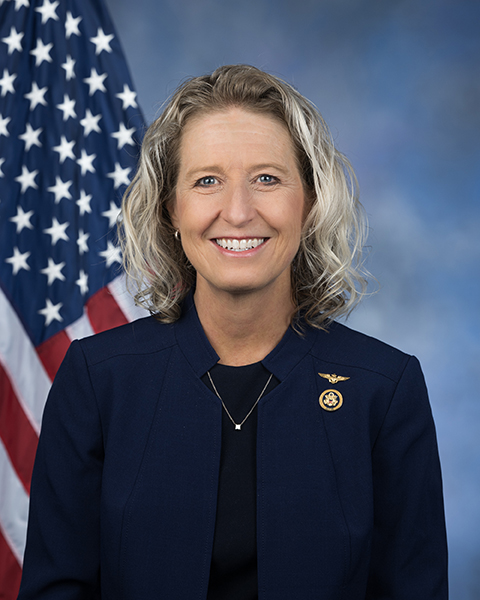
Kiggans’ Statement on New Federal Approach to Improving Chesapeake Bay Water Quality September 17, 2026 | Press Releases WASHINGTON, D.C. — Today, Congresswoman Jen Kiggans (VA-02) released the following statement after President Trump signed an Executive Order regarding “Providing meaningful water quality improvements through collaboration and oversight of federal support,” which repeals Obama-era EO 13508 and directs six federal agencies, including the Environment Protection Agency (EPA) to take practical and effective action to support water quality improvements in the Chesapeake Bay Watershed. Congresswoman Kiggans said , “As a member of the House Committee on Natural Resources and the representative of a coastal district, I understand the importance of protecting the environmental assets that define our communities, including the Chesapeake Bay Watershed. Yesterday’s Executive Order eliminates outdated, vague regulations that have allowed local officials to hinder economic development. Virginians need to know that with commonsense, responsible reforms, they don’t have to choose between environmental stewardship and economic prosperity. While I appreciate the administration shifting its focus to measurable solutions that build on decade-long cleanup efforts, I will be closely monitoring the next steps and working with EPA Administrator Zeldin to ensure any action taken is done with the economic and recreational opportunities the Bay provides and the complex Bay ecosystem in mind.” “The Chesapeake Bay is a natural treasure and environmental lifeline for families, visitors, and native species to the Commonwealth of Virginia and Maryland, and it must be preserved for future generations,” Kiggans continued . “I look forward to continuing work with the Environmental Protection Agency, our state and local partners, and communities to direct resources where they can have the greatest impact, advance our nation’s economic goals while safeguarding the natural resources that are so important to Coastal Virginia,” she concluded . Read the Executive Order here . Background: In September 2026, the Chesapeake Bay WATERS Act passed the House of Representatives. The bill reauthorizes key programs at the National Oceanic and Atmospheric Administration’s (NOAA) Chesapeake Bay Office (CBO) to advance the restoration of the Bay and support local businesses, schools and coastal resilience. The Chesapeake Bay WATERS Act was co-lead by Congresswoman Kiggans, Congressman Rob Wittman (VA-01), Congressman Bobby Scott (VA-03), and Congresswoman Sarah Elfreth (MD-02). Read about the bill here . The Advancing Water Research and Collaboration (AWRC) Act passed the House with Congresswoman Kiggan’s support reauthorizing the national network of Water Resources Research Institutes (WRRIs) in each state that work to address state and regional water challenges. Read the press release here . The Chesapeake Bay is the largest estuary in the United States and supports significant economic, recreational, environmental, and commercial activity throughout the watershed. In 2009, President Obama issued Executive Order 13508, Chesapeake Bay Protection and Restoration , establishing a federal framework for coordinating Chesapeake Bay restoration efforts across federal agencies and watershed jurisdictions. The September 16, 2026 Executive Order revokes EO 13508 and establishes a new federal approach focused on measurable water-quality improvements and direct, on-the-ground projects. The new Executive Order does not repeal the Clean Water Act , Chesapeake Bay TMDL, or State and local water-quality requirements. Rather, it changes federal executive-branch policy and directs agencies to prioritize resources toward projects that can demonstrate reductions in nitrogen, phosphorus, and sediment pollution. As of 2025 the Chesapeake Bay watershed jurisdictions had collectively achieved 100% of their sediment-reduction goal, 90% of their phosphorus-reduction goal, and 57% of their nitrogen-reduction goal. The Administration cites this progress as part of its rationale for replacing the 2009 framework. The Bay has also experienced recent ecological improvements. In 2026, researchers projected the Bay’s annual dead zone would be approximately 31% below the long-term average and among the smallest since monitoring began in 1985. The order also addresses stormwater management fees, which some State and local governments use to finance stormwater infrastructure and pollution-control requirements. The new order directs EPA to assess their financial impact and encourage States and localities to repeal or rescind resident-funded stormwater fees. Moving forward, the Departments of War, Interior, Agriculture, Commerce, Homeland Security, and the EPA are directed to focus Chesapeake Bay resources on areas of greatest need and projects demonstrating measurable improvements in water quality. Agencies are instructed to use measurable performance indicators and scientific data to document results. The order does not itself rescind existing congressional appropriations or identify specific programs for funding reductions; implementation will depend on subsequent agency actions and available appropriations.
ccb578d0-ba90-4fc3-b8d7-b5270f728af2Issued within 24 hours
Other senators' releases published in the day before or after this one.