TRANSCRIPT: Congresswoman Escobar Speaks at MILCON-VA Subcommittee, Questions VA Secretary
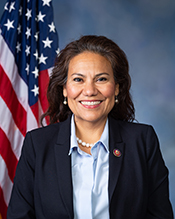
This morning, Congresswoman Veronica Escobar (TX-16) spoke twice during a House Appropriations Military Construction, Veterans Affairs, and Related Agencies (MILCON-VA) Subcommittee hearing. Testifying at today’s subcommittee hearing were Doug Collins, Secretary of the Department of Veterans Affairs (VA) and Richard Topping, Assistant Secretary of Management and Chief Financial Officer. The first part is regarding military construction, including the new VA medical center in El Paso. The second part is regarding VA Home Loans, veteran homeownership, and a preview of upcoming legislation the Congresswoman is working on. The videos can be found here and here , and a transcript of both parts can be found below: PART I Congresswoman Escobar: Thank you Mr. Chairman (Carter) and Ranking Member (Wasserman Schultz). And gentlemen, thank you so much for for being here this morning. Appreciate the opportunity. And I, too, am very proud of the fact that our subcommittee put together a bipartisan appropriations product that I wish could serve as a model for the other appropriations subcommittees. Secretary Collins, as you know, El Paso, Texas, the community I am privileged to represent, is home to more than 40,000 veterans. In fact, El Paso has a veteran population concentration roughly 40% higher than both the Texas and national averages. And because of Fort Bliss and the strong military community there, that number continues to grow, and we are proud of that. Veterans in our region are spread across a large area of West Texas and southern New Mexico. This creates real access and capacity challenges for the VA health care delivery in the region. So I think it's fair to say that ensuring reliable access to VA health care in the region is a significant priority for the department. Would you agree? Secretary Collins: As it is all over the country. Congresswoman Escobar: Thank you. I'm glad to hear that. That's why in 2022, I helped secure roughly $700 million for the construction of a new VA medical center in El Paso. This facility will serve not just El Paso, but the broader region. It will be a major anchor for care in West Texas and southern New Mexico. The facility is expected to open around 2029 or 2030, and even though that sounds like it's quite some time away, planning for the staffing, quality care and operations of a facility of this scale and scope needs to start early. William Beaumont, the VA hospital that will be adjacent to this new VA facility, was $400 million over budget and was three years delayed. Thankfully, that's not the case with this facility, but as you can imagine, veterans have apprehension about making sure that the new facility is opened on time, on budget, with adequate staffing. I am so proud that the Fiscal Year 2027 MILCON-VA bill included my provision that directs the VA to brief Congress on activation planning for the new medical center. Secretary Collins, will you commit that the department will work closely with my office and this subcommittee as activation planning for this facility moves forward? Secretary Collins: Of course. Congresswoman Escobar: Wonderful. Secretary Collins: Can I bring up something here, though? Congresswoman Escobar: Yes, absolutely. Secretary Collins: And I do appreciate you looking at this. And maybe something we could actually [unintelligible] because you've experienced it: Construction. I brought this up on - this is my 10th or 11th time on the Hill. I'm down - somebody told me that there's only, I think Scott Bessent and Pete Hegseth [are about] the only two that's been up here more than me, but I bring this up every time. And you - I appreciate you so much doing this. Construction at the VA is abysmal. It is awful. It's terrible. I can't come up - with my thesaurus runs out of words. And the reason is, is because over the years we have tried to piecemeal stuff, place it out, and we'd give 200 million here, 200 million here, 200 million here, 200 million here. And at the end of the day, we got a 15 year project that costs 1.6 billion. Example. You know - we're - so one of the things I did was change that. I said, let's look for a major like hospital construction, which yours is ongoing, which by the way is about 49% completed. And we're completing that out. But when we look at this, we're putting in the facilities to be built with all the money up front so that we're not coming in and giving the land one year, the paving one year, whatever else, one year. So that's one thing that we're changing. The other thing though, that we're also changing and we'd love to have help, is we're internally changing - [Undersecretary] Richard's over this. I don't know if y'all know this. Did y'all know that - everybody's heard of National Building Standards, right? We all know what national building standards are. Somewhere in the VA though a number of years ago we decided those wasn't good enough. So we added an entire VA on top of it, which makes stuff that's going on in El Paso cost more, and it's basically not functional. We're taking that out. We're taking that whole thing out and making it going to the standards at Mayo and everybody else uses. The other thing is this, and I'm and I say this with love and trepidation, but many times, just like the wait times and how wait times got started in the VA, the construction, some of the construction delay, there's two fold. One is set aside and number two, the other one is the big one. And that is that we put the Corps of Engineers in the middle of major projects after Aurora, which Aurora was a debacle. But we put a core of engineers. Corps of Engineers does not want to be here. They do not want to do our stuff, because what happens? We do our planning and then they get in and try to do planning. So this was slowing your project up. That's what's slowing. I mean, I appreciate what the Corps does. I mean, but they don't need to be in my buildings for hospitals. They don't need to be in my buildings for clinics. So that's got to be statutory. I can't get rid of them as much as I would love to Mr. Chairman, I can't get rid of them out of my system. That's a statutory issue. But you have highlighted perfectly what your veterans need and what you're committed to, and I appreciate that. Congresswoman Escobar: Thank you, Mr. Secretary. I'm just - I'm over time, but my team and I are actually working on reforming MILCON funding. Also want to work on reforming VA funding because you're right, these projects are costing too much. They are taking too much time. It's unconscionable. All of that essentially creates a delay in great projects, and it gobbles up money from other projects that need funding and resources. So I would like to work closely with you on that, because that is a fundamental piece of the work that we are doing in my office. So look forward to working with you on getting that done. I know I'm out of time, Mr. Chairman, I yield back. Secretary Collins: I would like to just say I want to follow up, Mr. Chairman is look, one of you is actually right on all this, but I will say it meets money up from other. We're 70 years old. Our facilities are basically 70 year old. That's our average age. But here's something just to give everybody on the committee and the staff especially to hear this. Saint Louis, which is a facility, has already been done from last year, 1.6 billion, roughly, to build a new facility that they're doing out there. It's smaller than in my hometown. And Mr. [unintelligible] for you and for me with Gainesville, Northeast Georgia medical center built a larger facility with Ors, ERs, same kind of format. Did it for 800,000,000 in 24 months. It's going to cost six years and 1.6 billion in Saint Louis. That's the problem we have right now. PART II Congresswoman Escobar: Thank you, Mr. Chairman. Mr. Secretary, regarding community care, the conversation, the dialog you just had with our ranking member, I associate myself with the issues that she has raised. And I also want to say that my colleague, Mr. Levin raises issues that I have also heard about. I think it's really important that these conversations be an opportunity for the department to look holistically at what members of Congress are hearing from their own districts. I want to pivot and shift gears to an issue that is important to my veterans in my community, which is home ownership. Last year, you described the VA Home Loan program as one of the most effective federal programs in history, and I agree, it is one of the most important benefits that we can provide to our veterans. It's helped millions of service members and veterans achieve the American dream of homeownership, which is increasingly becoming more out of reach for most Americans. In El Paso alone, there have been more than 17,000 VA home loans over the last five years. So I think that you and I agree that helping veterans successfully access the benefits they've earned is a core responsibility of the department, but I think most people would be surprised to learn that fewer than 30% of veterans are even aware that the benefit exists, and fewer than 15% of eligible veterans actually use it. And for many who do, the home buying process can be complex and involve actors who are not always neutral or independent sources of guidance. I think I know the answer to this, but do you agree that veterans should have access to clear, trusted and unbiased guidance when making major financial decisions like buying a home? Secretary Collins: Of course. And it should come from the VA as well. Congresswoman Escobar: Excellent. Thank you. So I and I presume that protecting veterans from fraud and predatory financial practices is also a shared priority for us. Is that correct? Secretary Collins: For yes, personally and in fact, yes. Congresswoman Escobar: Great. And, Secretary Collins, do you believe that there would be value in improving access to trusted, independent guidance for veterans using the VA Home loan benefit? Secretary Collins: I’ll probably do agree, but can you expand on that just a little bit, just so I'm understand what you're saying? Congresswoman Escobar: Well, I'm getting there. I think you will agree with me. Secretary Collins: I know - you’re leading down the questions. Yeah. Whatever you're headed, I'm pretty sure we're going to be pretty close on this. Congresswoman Escobar: Okay. And would you support a program to provide veterans with independent VA home loan navigation services to better protect them? Secretary Collins: Inside the VA? Congresswoman Escobar: Yes. So I'm my team and I are working on legislation called the VA Home Loan Navigator Act, which would do this. [It] would help protect our veterans, ensure they have access to the information they need so that we can get them into the homes that they want to live in. This bill would extend the trusted model used for other VA benefits to the home loan benefit. It would create a voluntary network of independent accredited housing counselors. They would help veterans navigate the home loan process from start to finish: buying a home, resolving loan issues, preventing foreclosure, free for veterans, and fully independent from lenders, servicers and brokers. I understand you have not had a chance to review the text. We're working on this, but based on what I believe are shared goals of improving utilization and the VA of the VA home loan benefit and protecting veterans from fraud, I'd like your commitment that the department will work with me and my team as we develop this proposal. Secretary Collins: Not a problem. We’ll work with any member on technical assistance on bills that you come up with. Congresswoman Escobar: Great. Thank you so much, Mr. Secretary. This is a priority for us and we look forward to working with you. Mr. Chairman, I yield back. # # #
d6029034-d9a2-448d-9a79-1bf69f9338a0Issued within 24 hours
Other senators' releases published in the day before or after this one.