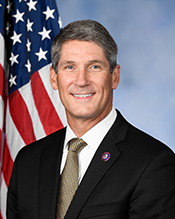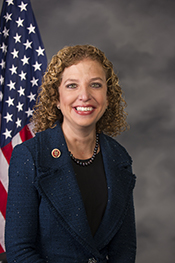
Reps. Massie, Pingree Introduce the Red Meat Inspection Exemption Act
For Immediate Release Contact: massie.press@mail.house.gov Contact #: 202-225-3465 Washington, D.C.- Today, Rep. Thomas Massie (R-KY) and Rep. Chellie Pingree (D-ME) introduced the Red Meat Inspection Exemption Act (RMIEA). The bill allows qualifying small farmers to slaughter and process their own livestock for direct-to-consumer sale without federal interference. Similar inspection exemptions already exist for poultry producers. Rep. Massie's legislation fulfills a promise that President Trump made in August " to allow Farmers and Ranchers to be given the right to PROCESS THEIR OWN FOOD ." "Americans are concerned about the rising cost of red meat and are looking for solutions that will lower prices," said Rep. Thomas Massie. "The Red Meat Inspection Exemption Act will reduce the regulatory burden placed on small meat producers and enhance their ability to sell directly to local consumers. President Trump announced this great idea, but pressure from the international meat packing lobby and limits on executive power prevent him from making good on his promise. It’s up to Congress to change the law and deliver relief to American farmers and ranchers. Under U.S. law, poultry farmers are already allowed to process their own birds, so why not let small-scale livestock farmers do the same?" "Americans increasingly want to know where their food comes from. Maine has established a constitutional right to food, with rural communities across the state adopting direct farm-to-consumer sales. Our bipartisan bill would build on that work," said Congresswoman Pingree . "By allowing producers to process a limited number of animals on their farms and sell meat directly to consumers, this bill will strengthen access to locally-raised meat and provide another avenue for farmers to sell their products. Farmers and consumers have waited long enough for relief, and this bill will deliver." "The biggest obstacle to a prosperous local food system in this country is the lack of slaughterhouse infrastructure," said Pete Kennedy, consultant for the Weston A. Price Foundation (WAPF) . Kennedy continued, "This situation has primarily been brought on by the 1967 Wholesome Meat Act which preempted state laws on meat regulation and generally prohibited the sale of on-farm slaughtered meat. This bill restores a deeply rooted historical tradition, the sale of meat from livestock slaughtered on a farm direct from the farmer to the consumer, which can help strengthen food security and the rural economy. Many thanks to Representatives Massie and Pingree for taking a significant step towards food emancipation and improving the quality of the American food supply." "Why is beef so expensive? Because beef processors act as a cartel, paying farmers too little for their herds and charging customers too much," said Dr. Meryl Nass, M.D., President, Save Our Food and Farms, a project of Door to Freedom. "All three of the largest beef processors in the US (JBS, Tyson, and Cargill) were forced to settle with the DOJ for price-fixing in 2025 and 2026. Isn't it time our local farmers and ranchers were allowed to compete with them? This bill throws a life raft to America's small farmers. Between 2017 and 2022 the US lost 142,000 farms. Providing farmers a chance to avoid being squeezed by the Big 4 meat processors will give them another chance at prosperity." The Red Meat Inspection Exemption Act creates a federal meat-inspection exemption for small livestock producers who slaughter and process animals raised on their own farms for direct distribution to consumers. Producers seeking an inspection exemption may slaughter no more than 25 cattle, 60 swine, 250 sheep, or 250 goats annually. The legislation requires that meat exempted from inspection requirements must be labeled “Exempt—21 U.S.C. 623,” must include the name and address of the producer, must remain subject to federal adulteration and misbranding standards, and must comply with any food-safety or special-handling requirements established by the United States Department of Agriculture (USDA). The bill also expressly preserves state laws that provide broader exemptions for on-farm slaughter, processing, or sale of meat. The text of the Red Meat Inspection Exemption Act is available at this link . ###
d8f1aa2c-536f-4be9-87c9-962a7334efd0Issued within 24 hours
Other senators' releases published in the day before or after this one.