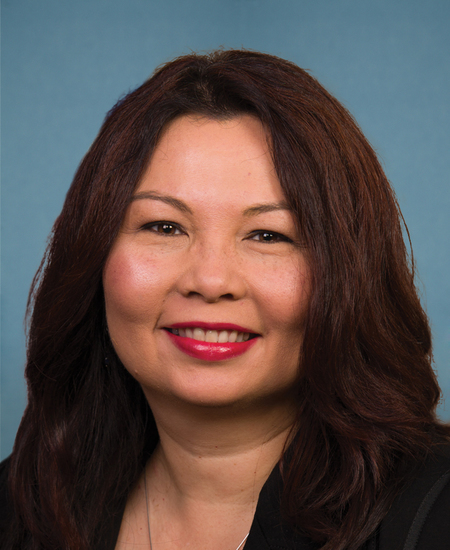
Duckworth Report Outlines What It Would Take to Replace Lead Pipes and Deliver Clean Drinking Water Five Years After Her Landmark Water Infrastructure Law
November 25, 2026 Duckworth Report Outlines What It Would Take to Replace Lead Pipes and Deliver Clean Drinking Water Five Years After Her Landmark Water Infrastructure Law [WASHINGTON, D.C.] — Five years after her Drinking Water and Wastewater Infrastructure Act (DWWIA) became law to help get rid of our nation’s lead service lines and expand access to clean drinking water, U.S. Senator Tammy Duckworth (D-IL) today unveiled a report detailing the progress her law has made and what actions need to be taken to finish the job. With authorized funding set to expire in December, Duckworth’s “Getting the Lead Out” report calls on a whole-of-government approach to replace lead pipes and ensure no child in America is forced to drink toxic water contaminated by lead simply because of their zip code. Duckworth’s full report is available on the Senator’s website . “Five years after we passed the largest federal investment in our water infrastructure in American history, this report makes it clear: there is still so much work to be done to replace lead pipes and ensure every child in America has access to clean drinking water,” said Duckworth. “ The money is running out just as the federal deadline to replace lead pipes kicks in, and I’m not going to let our communities get stuck with the bill or be forced to pay the price with their health. It’s going to take a whole-of-government approach to achieve total lead pipe replacement—with local, state and federal levels working together to stay on track and deliver the funding necessary to finish the job. The pipes carrying our drinking water are a century old—and it cannot take another century to replace them. ” There is no safe level of lead exposure. And yet, despite Duckworth’s DWWIA law representing the largest federal investment in our water infrastructure in history, there are still about 4 million lead pipes serving homes, schools and childcare centers throughout the country. Meanwhile, President Donald Trump wants to cut the Clean Water and Drinking Water State Revolving Funds by 89 percent—the only major federal funding provided to states for all water infrastructure. Key takeaways from Senator Duckworth’s “Getting the Lead Out” report: DWWIA produced the largest federal investment in water in American history and made lead pipe removal a national priority: EPA has allotted nearly $15 billion for lead service line replacement, and Illinois has received about $1.18 billion of it, the most of any state in FY 2025. The law’s equity reforms are working as designed, but the communities that need help most often lack the capacity to use it: DWWIA’s equity reforms are working, but roughly 6,300 mostly small water systems still haven’t filed their inventories and EPA reclaimed $1.1 billion that states hadn’t put to work. Money alone does not remove pipes. State and local laws, codes, coordination, program design and execution determine the pace: Newark replaced more than 23,000 lines in under three years at about $8,000 each by doing mandatory, free and block by block replacement. Chicago has more lead lines than any other city but has replaced less than 4 percent of its roughly 400,000 lines in five years. The Chicago Department of Water Management has since cut the average cost of replacing a lead service line by $4,000, bringing the cost down to $31,000 per LSLR. The nation is approaching a funding cliff just as the federal mandate begins: FY 2026 was the last year of dedicated funding for LSL replacement, Congress cut $125 million from it and President Trump’s FY 2027 budget would slash both the State Revolving Funds by roughly 89 percent. Senator Duckworth’s recommendations at the local, state and federal levels: For Cities and Counties: Though much smaller than Chicago, Newark proved a city can get this done, and every city and county with lead pipes should follow its lead by making replacement mandatory, free and block by block. For States: States have to back them up with the legal authority, firm deadlines, coordination across departments and agencies, and matching dollars local programs need—and they must ban partial replacements for good. For Congress: Congress has a responsibility to fund this work at stronger, consistent levels, because it is not possible without the support of the federal government and no child should be drinking from a lead pipe just because of their zip code. Duckworth has long advocated for federal investment and intervention in addressing lead service lines. After her DWWIA bill became law as part of the Bipartisan Infrastructure Law , the Senator has since announced $240 million to get the lead out of drinking water throughout Illinois and more than $316 million for cleaner water across the state. With that funding set to expire at the end of this year, Duckworth secured key priorities in the committee-passed Water Resources Development Act (WRDA) in July to keep building on those programs. -30- Print Tweet Previous Article
e28202b5-3b86-4339-8db2-35f48cf67afeIssued within 24 hours
Other senators' releases published in the day before or after this one.