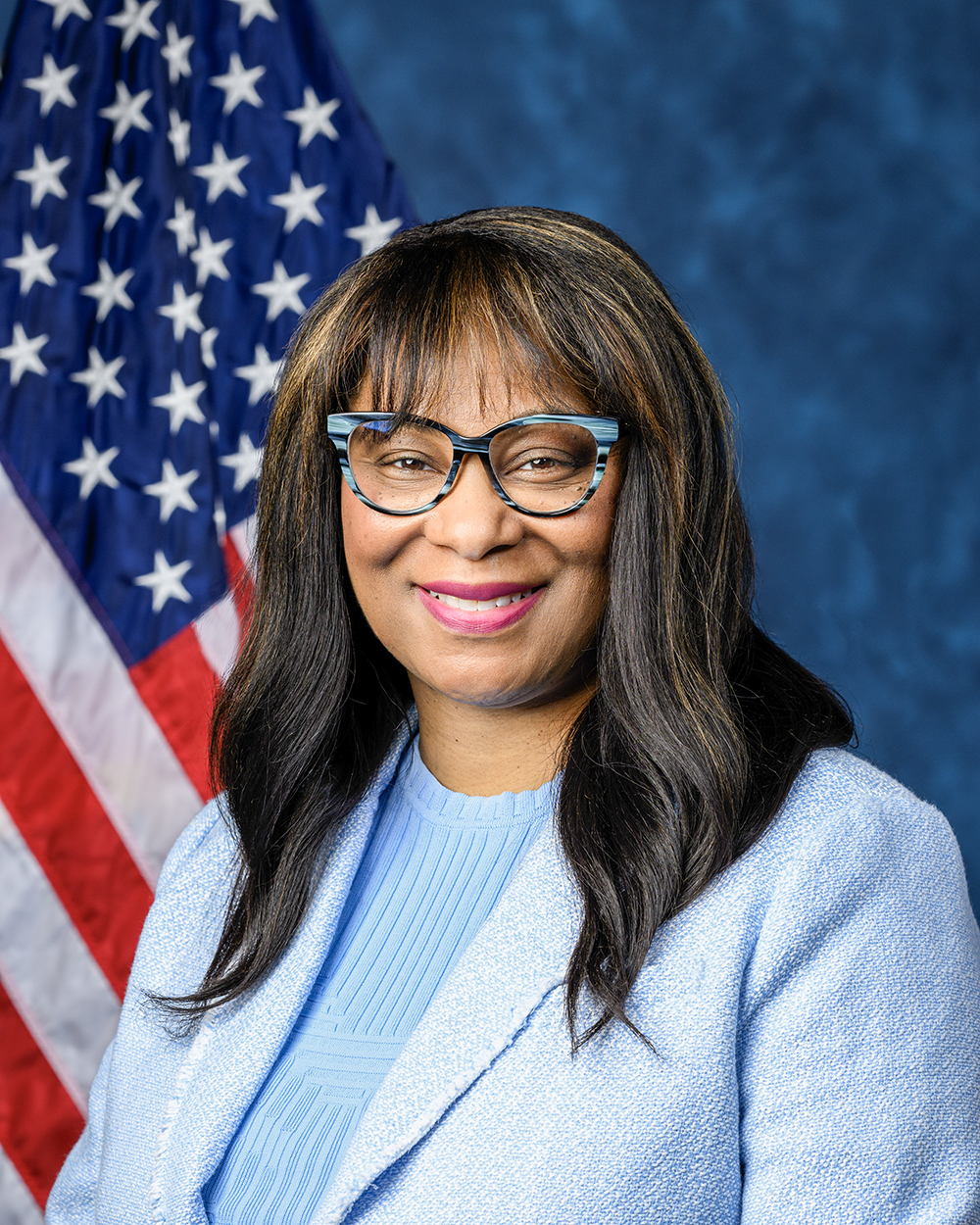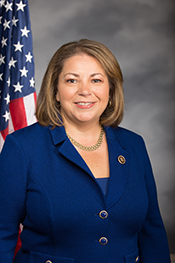
Sánchez, Sewell lead 55 Democrats in opposing U.S. Withdrawal from International Labor Organization
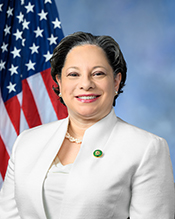
October 15, 2026 Press Release ILO withdrawal would weaken international labor standards, undercut American workers WASHINGTON – Ways and Means Trade Subcommittee Ranking Member Linda Sánchez (D-Calif.) and Oversight Subcommittee Ranking Member Terri Sewell (D-Ala.) today led 55 of their House Democratic colleagues in calling on the Trump administration to maintain United States participation in the International Labor Organization (ILO), which brings together governments, workers and employers to establish international labor standards. Those standards help protect American workers from being undercut by other countries with weaker labor standards. Reports that the administration is considering withdrawal come amid a severe budget crisis at the ILO, driven largely by the Trump administration’s failure to pay approximately $300 million in outstanding U.S. membership dues. “At the same time that the Administration has called on countries to improve labor standards, it is reportedly considering a withdrawal from the very institution that develops those standards and helps governments implement them,” the members wrote. “Notably, USTR relied on ILO data in conducting [its Section 301] investigations, underscoring the organization’s value to U.S. efforts to identify and combat forced labor. “If the Administration believes that weak labor standards distort trade and disadvantage American workers and firms, withdrawing from an institution whose standards, research, and expertise it relies upon to address those concerns runs counter to American interests.” In addition to Sánchez and Sewell, the letter was signed by Representatives Gabe Amo (D-R.I.), Jake Auchincloss (D-Mass.), Donald Beyer (D-Va.), Suzanne Bonamici (D-Ore.), Judy Chu (D-Calif.), Yvette Clarke (D-N.Y.), Jasmine Crockett (D-Texas), Danny Davis (D-Ill.), Rosa DeLauro (D-Conn.), Suzan DelBene (D-Wash.), Christopher Deluzio (D-Pa.), Mark DeSaulnier (D-Calif.), Debbie Dingell (D-Mich.), Lloyd Doggett (D-Texas), Dwight Evans (D-Pa.), Sylvia Garcia (D-Texas), Jimmy Gomez (D-Calif.), Steven Horsford (D-Nev.), Val Hoyle (D-Ore.), Glenn Ivey (D-Md.), Jonathan Jackson (D-Ill.), William Keating (D-Mass.), Robin Kelly (D-Ill.), Ro Khanna (D-Calif.), Greg Landsman (D-Ohio), John Larson (D-Conn.), Stephen Lynch (D-Mass.), John Mannion (D-N.Y.), Morgan McGarvey (D-Ky.), James McGovern (D-Mass.), Gregory Meeks (D-N.Y.), Gwen Moore (D-Wis.), Richard Neal (D-Mass.), Eleanor Holmes Norton (D-D.C.), Ilhan Omar (D-Minn.), Jimmy Panetta (D-Calif.), Nancy Pelosi (D-Calif.), Chellie Pingree (D-Maine), Stacey Plaskett (D-V.I.), Mark Pocan (D-Wis.), Nellie Pou (D-N.J.), Emily Randall (D-Wash.), Andrea Salinas (D-Ore.), Linda Sánchez (D-Calif.), Robert Scott (D-Va.), Terri Sewell (D-Ala.), Brad Sherman (D-Calif.), Melanie Stansbury (D-N.M.), Greg Stanton (D-Ariz.), Thomas Suozzi (D-N.Y.), Mike Thompson (D-Calif.), Dina Titus (D-Nev.), Paul Tonko (D-N.Y.), Norma Torres (D-Calif.), Debbie Wasserman Schultz (D-Fla.), Maxine Waters (D-Calif.) and Frederica Wilson (D-Fla.). The full text of the letter is available HERE and follows: October 15, 2026 Secretary Rubio U.S. Department of State 2201 C Street NW Washington, D.C. 20520 Dear Secretary Rubio: We write to express our deep concern regarding reports that the Administration is preparing to withdraw the United States from the International Labor Organization (ILO). Such a decision would undermine the organization’s core mission of establishing and promoting international labor standards in the global economy and would be difficult to reconcile with the Administration’s stated pro-worker trade agenda. These reports come amid a severe budget crisis at the ILO, which is largely due to the Administration’s failure to pay approximately $300 million in outstanding U.S. membership dues. Unlike most international organizations, the ILO’s unique tripartite structure gives governments, workers, and employers the central role of developing international labor standards to combat the global “race to the bottom” that has undermined wages and working conditions here in the United States and around the globe. The labor standards developed and articulated by the constituents of the ILO underpin the labor provisions in U.S. trade agreements, which require trading partners to adopt, maintain, and effectively enforce labor laws related to eliminating forced labor, child labor, and employment discrimination, while also protecting workers’ fundamental right to organize unions and bargain collectively. Such obligations are vital to levelling the playing field by preventing other countries from gaining an unfair advantage through common forms of labor exploitation. But negotiated commitments are only as effective as the institutions that implement them. For decades, the ILO has helped governments put these commitments into practice through technical assistance, training, advisory services, reporting, investigations, and capacity-building support to labor inspectorates. Several U.S. trading partners have reportedly sought ILO assistance in response to the Administration’s recent imposition of Section 301 tariffs on 60 economies for failing to impose or effectively enforce prohibitions on imports produced with forced labor. Other partners have sought to extend ILO programming that is a key U.S. trade condition for access to the U.S. market. Yet, at the same time that the Administration has called on countries to improve labor standards, it is reportedly considering a withdrawal from the very institution that develops those standards and helps governments implement them. Notably, USTR relied on ILO data in conducting these investigations, underscoring the organization’s value to U.S. efforts to identify and combat forced labor. If the Administration believes that weak labor standards distort trade and disadvantage American workers and firms, withdrawing from an institution whose standards, research, and expertise it relies upon to address those concerns runs counter to American interests. The ILO’s value extends beyond government enforcement and directly benefits American companies operating in global supply chains. Through programs such as Better Work, a joint initiative of the ILO and the International Finance Corporation, factories receive auditing, training, and support to improve compliance with national laws and international labor standards. Improved transparency at the factory level enables companies to identify risks in their supply chains, address problems before they become more serious, and avoid reputational damage through responsible sourcing practices. The American Apparel & Footwear Association and other U.S. business organizations recently highlighted the important role of the ILO in strengthening labor enforcement in sourcing countries, addressing forced labor, and maintaining a competitive environment for American companies and workers. The ILO’s role in advancing U.S. trade policy is well illustrated in Haiti, where U.S. law ties preferential market access to labor law compliance and integrates the ILO into that statutory framework. In September, Congress reauthorized the Haitian Hemispheric Opportunity through Partnership Encouragement Act (HOPE) and the Haiti Economic Lift Program Act (HELP). Under these programs, Haiti is mandated to work with the ILO to implement the Technical Assistance Improvement and Compliance Needs Assessment and Remediation (TAICNAR) program. The ILO’s Better Work program in Haiti operates the core compliance component of TAICNAR, conducting factory assessments, supporting remediation, and providing technical assistance to strengthen industrial relations and labor law enforcement. If the ILO is unable to continue performing these functions, Haiti will be unable to meet the labor compliance requirements Congress established as a condition of these trade preferences—programs that continue to enjoy strong bipartisan support. Finally, the United States withdrawal from the ILO will only serve to expand China’s influence at the organization and deprive us of a key forum for holding them accountable for systemic labor rights violations. For example, in 2022 the United States delegation to the ILO’s annual conference played a decisive role in rallying support from governments, workers, and employers to condemn China’s use of forced labor camps to “re-educate” Uyghurs and other ethnic minorities in China's Xinjiang Uyghur Autonomous Region (XUAR). A U.S. withdrawal will not halt the development of international labor standards; rather, it will strip American policymakers, workers, and employers of their ability to shape their creation and implementation in a manner that reflects our values. Walking away cedes strategic leverage to a major economic competitor over the very rules that govern fair competition in the global marketplace. This exposure is particularly critical as the ILO facilitates the development of standards for emerging issues, including the platform economy, artificial intelligence, and workplace health and safety. American workers and companies will ultimately be impacted by these international standards, regardless of whether the United States chooses to participate in their creation. Accordingly, we urge the Administration to maintain full United States membership in the ILO and utilize appropriated Contributions to International Organizations (CIO) funds to expeditiously pay the approximately $300 million in arrears. Abandoning the ILO does not protect American interests. Instead, it diminishes our ability to enforce trade agreements, taints our supply chains, and hands a strategic victory to our economic competitors. The United States must maintain its seat at the table to ensure that global labor standards are driven by American values, interests, and priorities. To assist Congress in monitoring the implementation of U.S. trade policy and funding mandates, please provide comprehensive responses to the following questions by October 30, 2026: Given the Administration’s extensive reliance on ILO data to execute recent Section 301 tariff enforcement actions, what concrete steps is the Department of State taking to ensure the ILO remains fully funded and operationally viable so that U.S. trade enforcement mechanisms are not compromised? Because Congress has explicitly tied preferential market access for Haiti to the execution of the TAICNAR program, what immediate actions is the Department taking to ensure that the U.S. remains fully engaged in the ILO framework so as not to jeopardize the legal compliance of these congressional trade preferences? In alignment with the 2025 National Security Strategy’s mandate to protect American workers from foreign economic distortion, what is the Department’s explicit plan to utilize the United States' permanent seat on the ILO Governing Body to actively counter China's expanding influence over global standard-setting? Out of funds appropriated by Congress under the CIO account for Fiscal Years 2024, 2025, and 2026, what is the exact timeline for the Department to release the necessary funds to clear the outstanding $300 million in arrears and stabilize U.S. standing and voting rights within the organization? ### Issues : Labor and Trade
e3e3b088-424d-4998-97e9-49d6d949d48dIssued within 24 hours
Other senators' releases published in the day before or after this one.