King, Colleagues Denounce White House Attempt to Restrict Vote by Mail
June 25, 2026
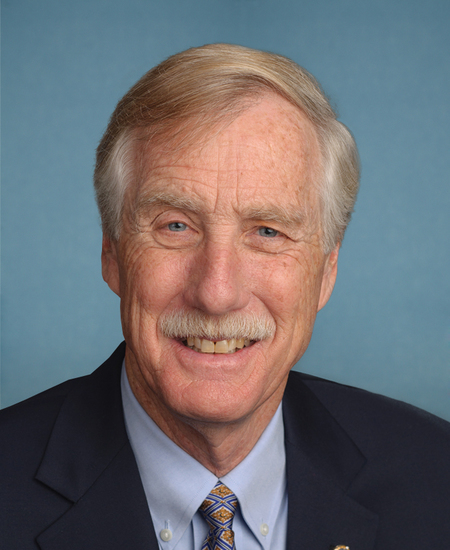
WASHINGTON, D .C. — U.S. Senator Angus King (I-ME) is joining dozens of his Senate colleagues in raising concerns over an unconstitutional executive order that would restrict mail-in voting. In a letter to the Postmaster General and Board of Governors of the United States Postal Service (USPS), the Senators demand that USPS follow existing federal law instead of an executive order signed by President Trump that would direct the USPS to create and maintain “Mail-in Absentee Participations Lists.” These lists would determine which voters are eligible to receive and cast absentee ballots through the mail. The letter follows an earlier letter sent on April 20 th urging the USPS to resist the executive order.
The order attempts to turn the USPS into an election administrator and regulator, when it is supposed to be a nonpartisan agency whose only priority is to deliver the mail. This directive would have a chilling effect on the eligibility of American voters to exercise their constitutional right to vote by imposing unnecessary barriers and would corrupt the independent mission of the USPS by giving the agency the authority to determine who can vote by mail.
“We write for a second time regarding the unconstitutional and illegal attempt to transform the United States Postal Service into an election administration agency controlled by the White House and President Trump,” wrote the senators. “In April, 37 senators wrote to you after President Trump issued his Executive Order directing USPS to issue a rule to establish compulsory specifications for election mail and create a master absentee voter list of millions of American voters – with the power to refuse to deliver their ballots.”
The senators continued , “Despite these grave and serious legal deficiencies, on June 2, 2026, USPS published a proposed rule that, if finalized, would establish President Trump’s control over federal elections and allow USPS to adjudicate who can and cannot vote by mail. This proposed rule risks disenfranchising millions of voters. We again insist that you follow the law, refuse to implement President Trump’s Executive Order, and withdraw this presidentially-directed proposed rule.”
The senators warned that the proposed rule would create a national list of absentee voters that falls under federal control, raising serious concerns about the potential for misuse and abuse. In court filings, the Administration has acknowledged that the Department of Homeland Security (DHS) is already in discussions with USPS about potentially comparing the list to DHS datasets. The senators raised concerns that combining USPS data with unreliable federal records could lead to the disenfranchisement of eligible voters, or the unfair targeting of voters and election officials for investigation.
“Ultimately, the proposed rule seeks to create a centralized national absentee voter database with individualized barcodes connected to the voters’ names under the control of the President that contains the voting information of millions of Americans,” wrote the senators. “That information would be ripe for potential abuse or improper disclosure potentially imperiling the integrity of American elections.”
“Accordingly, we insist that the Postal Service abandon this proposed regulation and return to its core mission of providing universal postal services to every American. The Constitution and federal law demand nothing less,” the senators concluded.
Senator King has been a vocal supporter of the USPS’s critical role in American society and in Maine, one of the nation’s oldest and most rural states that relies heavily on the services provided by the USPS to receive prescriptions and other necessities. Earlier this year, he joined his Senate colleagues on a letter to USPS Postmaster General David Steiner pushing to protect the timely delivery of mail across the nation—resisting a change that would make it harder for Maine people to access basic services like prescription drug deliveries, bill payments, and votes cast by mail. Last year, he sent a letter to then-Postmaster General Louis DeJoy, urging him to stop any changes to the USPS service standards that would result in job losses and further degrade mail delivery performance. That letter came soon after Maine’s postal workers and elected officials voiced their opposition of the USPS’ plans to move some of the Hampden facility’s processing operations to a facility in Scarborough, nearly 130 miles away — raising the possibility of needless delays in delivery.
The full text of the letter can be found here and below.
+++
Dear Postmaster General Steiner, Chairwoman McReynolds, Vice Chairman Kan, Governor Stroman, and Governor Tangherlini:
We write for a second time regarding the unconstitutional and illegal attempt to transform the United States Postal Service (USPS) into an election administration agency controlled by the White House and President Trump. In April, 37 senators wrote to you after President Trump issued his Executive Order directing USPS to issue a rule to establish compulsory specifications for election mail and create a master absentee voter list of millions of American voters – with the power to refuse to deliver their ballots.1 In that letter we urged you not to implement the President’s unconstitutional Executive Order. The Order is a blatant violation of the Constitution, which vests the authority to regulate the time, place, and manner of federal elections with the states, subject to alterations made by Congress. We received no response to that letter and USPS is now taking explicit steps to implement the Order. No federal statute vests the President or USPS with any authority to regulate elections of any kind. Accordingly, multiple states and organizations have filed lawsuits challenging the Executive Order.2
Despite these grave and serious legal deficiencies, on June 2, 2026, USPS published a proposed rule that, if finalized, would establish President Trump’s control over federal elections and allow USPS to adjudicate who can and cannot vote by mail. This proposed rule risks disenfranchising millions of voters. We again insist that you follow the law, refuse to implement President Trump’s Executive Order, and withdraw this presidentially-directed proposed rule.
The right to vote is the most sacred and cherished right of the American people. It is the bedrock of American democracy. The framers of our Constitution understood the dangers of centralizing power over federal elections and accordingly vested the primary authority to regulate the “times, places, and manner ” of federal elections with the states, subject to alterations by statute enacted by Congress.3 The Constitution similarly vests the authority to determine the eligibility of voters with the states—not the President, and certainly not with USPS.4 The Constitution provides no role for USPS in regulating federal elections, and no statute delegates to USPS any authority to regulate elections or voter eligibility. The proposed rule does not grapple with these serious legal deficiencies. The proposal simply cites two sections of the Postal Reorganization Act of 1970 to justify USPS’s regulation of federal elections.5 These sections provide specific postal powers and general authorization to issue regulations but say nothing about regulating federal elections.6 Indeed, Title 39 explicitly says, “In providing services [...] the Postal Service shall not [...] make any undue or unreasonable discrimination among users of the mails,” – this proposal does the exact opposite.7
It is universally understood that the Postal Service does not regulate or administer American elections. By statute, USPS is “an independent establishment of the executive branch” and its Board of Governors is protected from arbitrary removal by the President. This independence, which the proposed rule undermines, is the foundation of the nation’s trust in USPS’s ability to deliver the mail without fear or favor. The Postal Service acknowledged in a rulemaking just last year, “the Postal Service does not administer elections, establish the rules or deadlines that govern elections, or determine whether or how election jurisdictions utilize the mail .”8 This neutral and apolitical role to transmit the mail is critical to ensuring American voters trust that their ballots will be properly delivered. The proposed rule would fundamentally upend this longstanding and vital role of USPS, transforming them into a federal election administration agency – with frightening authorities to disenfranchise Americans.
The proposed rule USPS issued on June 2 suffers from all the same legal deficiencies of the Executive Order and cannot be lawfully implemented. The proposed rule would illegally condition a state’s exercise of its constitutional authority to utilize mail-in ballots on submitting its complete absentee voter rolls to USPS and complying with USPS mandatory election mail specifications. Specifically, the proposal requires any state that permits votes to be cast by mail to submit to USPS each absentee or mail-in voter’s name, address, and their unique Intelligent Mail Barcode. The regulation purports to permit only states to control which of their voters are enrolled on the new master list, but this new and unnecessary master list of American voters would then be controlled by USPS and ultimately President Trump.
In addition, the proposed rule requires that all mail ballots comply with new mandatory specifications, including that they have an election mail logo, a specific design, automation compatibility, and an Intelligent Mail Barcode unique to each voter. All ballots must also undergo design review by USPS prior to being mailed by an election jurisdiction. While some of these requirements are best practices, their compulsory nature creates new onerous, costly, and unfunded requirements on election jurisdictions that do not currently use these practices nor have the resources to do so. Furthermore, the new mandatory specifications provide the USPS with new and subjective authority to reject ballots, even for a missing or misprinted logo.
Critically, the proposed rule requires USPS to conduct a verification process to ensure that states comply with the regulation’s mandates prior to USPS accepting ballots and mailing them to voters. For such a consequential regulation of American democracy, the regulation stunningly lacks any detailed information about the process USPS intends to use to verify each piece of outbound election mail. Nevertheless, this new “verification process” empowers USPS to serve as the final arbiter of whether ballots meet the unilateral federal standards and are adequate to be delivered to voters – granting USPS the ultimate authority to decide which Americans can cast a ballot by mail. What the proposal also makes clear is that if a state chooses not to provide USPS with their voter rolls that state cannot mail ballots to their voters, effectively prohibiting vote-by-mail in those states. Even if a state does provide USPS its voter rolls, USPS can still disenfranchise individual voters if their ballots do not meet USPS’s demanding requirements. While “neither snow nor rain nor heat nor gloom of night” stops the mail, under the regulation a missing election logo will. Nothing in federal law authorizes USPS to restrict states and voters from using the postal system to mail ballots.
This proposed regulation occurs as the federal government is demanding nearly every state’s voter rolls – an effort which has consistently been rejected by federal courts.9 Creating a master absentee voter list for the entire country is a backdoor mechanism to secure access to these voters’ names and addresses. And for states with universal vote-by-mail like California, Colorado, Hawaii, Oregon, Nevada, Utah, and Vermont (in general elections), the proposed regulation is a form of extreme coercion. It creates an untenable scenario, that requires these states to submit their entire voter rolls to the federal government or face the prospects of abandoning absentee voting altogether.
Furthermore, the proposed regulation explicitly articulates that one of its purposes is to assist federal law enforcement, raising serious legal and policy questions about how this information will be used. In fact, the Administration has acknowledged in recent court filings that the Department of Homeland Security (DHS) is currently having conversations with the Postal Service on how it could use the new master list of absentee voters and potentially compare it to DHS datasets.10 Given the ongoing efforts of the Administration to seek voter rolls and put them through U.S. Citizenship and Immigration Services’ Systematic Alien Verification for Entitlements (SAVE) Program, this coordination could lead to the USPS data being used in coordination with other risky and unreliable sources of information to disenfranchise American voters or even target voters or election officials for investigation.11
The proposed rule also raises serious privacy concerns. Ultimately, the proposed rule seeks to create a centralized national absentee voter database with individualized barcodes connected to the voters’ names under the control of the President that contains the voting information of millions of Americans. That information would be ripe for potential abuse or improper disclosure potentially imperiling the integrity of American elections. The proposal provides no discussion of how USPS would safeguard this crucial information and every American’s right to a secret ballot. USPS simply states that its explanation of its privacy controls is “forthcoming.” Compiling a master list of mail-in and absentee voter data is incredibly dangerous in the modern era.
Lastly, notwithstanding the regulation’s major constitutional and legal violations, the proposed timeline and scope is not feasible. The proposed regulation demands that the Postal Service set up an entirely new system and database to process and transmit millions of absentee ballots that is secure and accessible to every American election official, just months prior to a general election. The Postal Service already issued its election mail guidance in January, and states and local governments have been planning accordingly – they will have no ability to change course to respond to this rule. This endeavor will also allegedly be accomplished without any dedicated resources or funding at a time when the Postal Service’s finances are under immense strain. In fact, the Postal Service has recently suspended regular retirement contributions and placed limits on all non-essential spending.12 As such, it is wholly unworkable and impractical.
Accordingly, we insist that the Postal Service abandon this proposed regulation and return to its core mission of providing universal postal services to every American. The Constitution and federal law demand nothing less.
Sincerely,
###
e81a076c-2c6e-4617-8a1e-cc0edf208e6dIssued within 24 hours
Other senators' releases published in the day before or after this one.