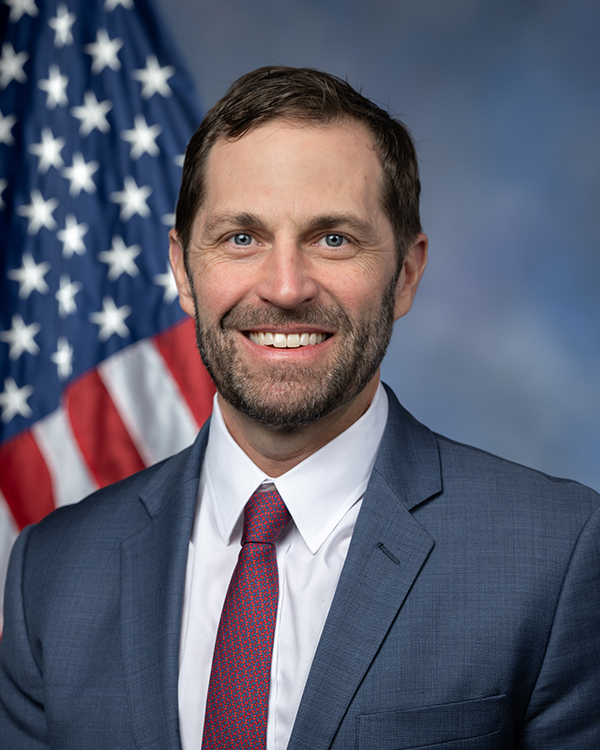
Crow Leads Call for Answers on Trump Plan to Transfer Afghan Allies
June 11, 2026 Press Release WASHINGTON — Congressman Jason Crow (D-CO), a member of the House Armed Services Committee and combat veteran who fought in Afghanistan, is leading a bipartisan group of 82 colleagues calling for answers on the Trump Administration’s reported plans to transfer Afghan refugees to unsafe third-country destinations. These are Afghans who have been rigorously vetted, many of whom served alongside U.S. troops as interpreters, contractors, and security personnel during the 20-year-long war in Afghanistan. The Trump Administration is reportedly considering sending them to unsafe third-country destinations where they could face additional danger in countries unsuited to accommodate them, or be faced with returning to Afghanistan where they likely face persecution or death at the hands of the Taliban. They have been waiting for more than a year at a U.S. government facility at Camp As Sayliyah (CAS) in Qatar for information about where they will go. “I served alongside Afghans who supported the U.S. mission at great personal risk. There are American servicemembers who may not be here today were it not for them,” said Congressman Crow. “We made a promise to those who helped America in our time of need, and it’s wrong to turn our backs on them. It’s both a moral and a national security imperative that our country live up to its promise and watch out for those who put themselves in harm’s way to help keep us safe.” Congressman Don Bacon (R-NE), along with over 81 other members of the U.S. House of Representatives, joined Congressman Crow in the letter to Secretary of State Marco Rubio. In their letter, Crow, Bacon, and their colleagues wrote, “For more than a year, at-risk Afghan individuals and families have resided at CAS uncertain of their fate. Under the suspension of the USRAP and revised entry restrictions on Afghan nationals, many vetted and approved refugees have been unable to move forward with their resettlement to the U.S. Furthermore, they likely face torture, persecution, and even death at the hands of the Taliban if they were to be returned to Afghanistan. “The U.S. has the power to pursue more secure, stable relocation for these Afghan allies than indefinite limbo at CAS, refoulement back to Afghanistan, or bodily harm in unsafe third countries…We stand ready to work with the administration on finding a solution for this situation that honors America’s commitments to our Afghan allies while protecting our national security,” they continued. Crow’s effort is endorsed by advocacy group No One Left Behind. “Last year, my team and I were at Camp As Sayliyah (CAS) when we helped secure flights and resettlement for hundreds of our closest wartime allies. Many of our allies, including the family members of U.S. veterans and servicemembers, are still waiting for a safe path forward,” said Andrew Sullivan, Executive Director of No One Left Behind. “We applaud this bipartisan recognition which shows that finishing this mission and safely resettling our Afghan allies the U.S. government evacuated to CAS is in America’s best interests.” Congressman Crow has been a long-standing champion of our Afghan allies and the Afghan SIV program. Crow has highlighted the importance of the SIV program in U.S. Congressional hearings and worked to ensure the authorization of 12,000 additional Afghan SIVs in the State Department's foreign operations funding bill. He has introduced the Afghan Allies Protection Act to expand and extend the SIV program, helped introduce the Afghan Adjustment Act to provide a legal adjustment process for Afghan allies already in the United States, and started the Honoring Our Promises Working Group following the announcement of the withdrawal to help expedite SIVs and U.S. Refugee Admissions Programs. A PDF of the letter can be found here , with full text appearing below: Dear Secretary Rubio, We write to you today with deep concern over reports of the potential transfer of Afghan refugees to unsafe third-country destinations. Although we understand the Department is no longer pursuing an agreement with the Democratic Republic of Congo (DRC), the existence of such a proposal raises concerns about the Department’s willingness to accept significant risks for individuals who served alongside our mission in Afghanistan. As you are aware, after the U.S. withdrawal from Afghanistan, Afghan allies were evacuated to the U.S. government facility at Camp As Sayliyah (CAS) near Doha, Qatar for additional processing and final vetting for their onward movement to the U.S. These Afghan nationals were only prioritized and considered for potential entry to the U.S. subject to the rigorous standards and eligibility criteria of lawful pathways codified in statute including the U.S. Refugee Admissions Program (USRAP) or the Afghan Special Immigrant Visa (SIV) program. These individuals are not random applicants. In our nearly 20-year mission in Afghanistan across four administrations, Afghan allies served in essential roles in support of U.S. operations, fighting alongside our servicemembers as interpreters, contractors, and security personnel. Many of those at CAS served alongside U.S. forces in the Global War on Terror and the fight against the Taliban, and some are relatives of U.S. servicemembers. Before any possibility of entry and admission to the U.S., they are subject to extensive vetting by interagency processes including the Department of Homeland Security (DHS), the Department of Defense (DOD), the Federal Bureau of Investigation (FBI), the Department of State, and more. For more than a year, at-risk Afghan individuals and families have resided at CAS uncertain of their fate. Under the suspension of the USRAP and revised entry restrictions on Afghan nationals, many vetted and approved refugees have been unable to move forward with their resettlement to the U.S. Furthermore, they likely face torture, persecution, and even death at the hands of the Taliban if they were to be returned to Afghanistan. We understand that your department pursued negotiations to transfer some or all of these Afghans at CAS to the DRC, a country the Department classifies as level 4, Do Not Travel. Relocating Afghan allies to countries without the infrastructure to safely or sustainably support resettlement will require substantial long-term humanitarian and security spending, exceeding the costs of processing individuals through established, safe pathways like the USRAP. And relocating them to unsafe countries would expose them to predictable harm, undermine the commitments the U.S. made to those who stood with us, and expose our allies and families to additional danger. The U.S. has the power to pursue more secure, stable relocation for these Afghan allies than indefinite limbo at CAS, refoulement back to Afghanistan, or bodily harm in unsafe third countries. We appreciate that the Administration is no longer pursuing an agreement to transfer individuals from CAS to the DRC, and we urge the prioritization of secure, stable, and cost-effective pathways that uphold U.S. national security interests and honor our commitments. We also believe that Afghan refugees who clear enhanced vetting and are approved for travel should be considered for entry and admission under national interest exemptions or waivers, or under the FY 2027 Presidential Determination on Refugee Admissions. We request a briefing on this matter by June 24, 2026, and seek clarification regarding any current or proposed plans involving relocation of Afghan nationals at CAS. We also request answers to the following questions: What is the current status of negotiations for third country relocation options for the Afghans at CAS? What legal authority would the administration assert to compel relocation of CAS evacuees to a third country? What steps and assessments were made to ensure that the proposal to send nationals to the DRC would not drive further humanitarian, national security, counter-terrorism or operational risks, and when will you share those assessments with Congress? What plans are in place to uphold our duty of care, commitments, and national security obligations should individuals be relocated to a third country? Specifically, what steps has the Department taken to ensure onward monitoring and support for our relocated allies and their families? How will the Department monitor and report to Congress to ensure those relocated to CAS are not subjected to arbitrary detention, torture, violence, and a return to danger as a result of a U.S.-backed relocation? What steps has the Department taken to consult with other agencies on safely resettling individuals they referred for relocation who are currently at CAS, including the DOD referred family members of American servicemembers and veterans? What is the status of the USRAP cases for the approximately 1,100 Afghan evacuees at CAS? How many have expired medical, biometric, or security checks? How many also have open SIV cases? How many children are among the population held at CAS? We stand ready to work with the administration on finding a solution for this situation that honors America’s commitments to our Afghan allies while protecting our national security. We look forward to your swift response. ### Issues : National Security
efcf7166-4f86-464f-b034-4edeaf8cec7fIssued within 24 hours
Other senators' releases published in the day before or after this one.