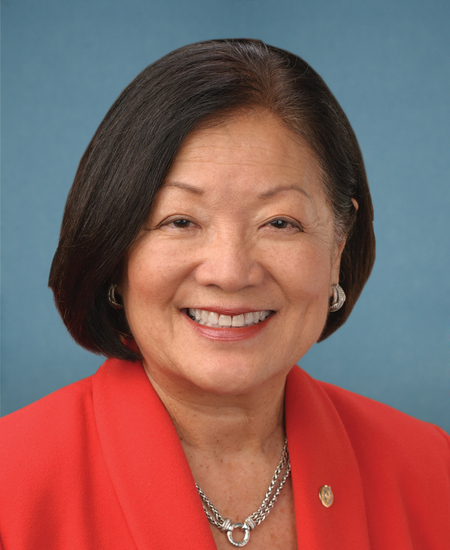
PHOTOS & VIDEO: Hirono Holds Spotlight Forum on National Private School Voucher Program, Highlights Funding Diversions from Public Schools
WASHINGTON, D.C. –U.S. Senator Mazie K. Hirono (D-HI) held a spotlight forum titled: “ Raising the Alarm: How the National School Voucher Program Will Be Harmful to Students,” examining how the new national private school voucher program will harm the over 50 million students who rely on public schools. During the forum, a panel of witnesses comprised of policy and legal experts, education advocates, district leaders, and classroom educators spoke about how the national private school voucher program is set to divert over $51 billion each year in taxpayer funding—which could otherwise be used for public education—to private schools. The panel also outlined the potential ramifications for states that participate in the national program and the negative impacts the program will have on low-income students, rural students, students with disabilities, students of color, and LGBTQ+ students. “Donald Trump and his allies have long championed private school voucher programs under the pretense of ‘school choice,’ but we all know where the real choice lies: not with families, but with private school voucher organizations and private schools, said Senator Hirono. “ By diverting more than $51 billion each year—by some estimates—to school vouchers, the national program will drain funding that we could otherwise use to strengthen public schools. The result will be a two-tiered system: exclusive private schools for the wealthy, and underfunded public schools for everyone else.” Last year, the enactment of H.R. 1 created the first ever national private school voucher program, which lets individuals claim a dollar-for-dollar tax credit for donations of up to $1,700 made to “scholarship granting organizations” (SGOs) that distribute school vouchers—meaning that none of the funding from this program will go directly to the states, school districts, or schools that actually serve our students. Instead, these SGOs will determine which students receive the vouchers and private schools will decide whether to accept those students. The program is expected to cost American taxpayers tens of billions of dollars—with some estimates showing that it could cost as much as $51 billion per year. In June, the Treasury Department previewed its guidance for the program and indicated that the full guidance for the program would be available in September—giving state governors only three months to decide whether they should “opt-in” or “opt-out” of the program before it goes into effect on January 1, 2027. At the time of the spotlight forum, Treasury had not yet released the full guidance for the program. Even more concerning, the preview of the guidance confirmed that so-called “opt-in” states will be significantly limited in terms of how they can regulate the program, with governors being prevented from placing substantive requirements on SGOs that provide scholarships to students in their states. In addition to these concerns, Senator Hirono also highlighted how the program is designed to function as tax break for wealthy families whose children are already enrolled in private schools, rather than offering a true “choice” to more students. While federal programs designed to support low-income students and students with disabilities remain underfunded, this program diverts tens of billions of public dollars to third-party organizations, which will significantly benefit from the program. “Every dollar claimed is federal revenue unavailable for public schools or other essential services. That structure raises three fundamental questions for policymakers, families, and taxpayers alike: Who benefits? Who is protected? And who is accountable? The [Federal Voucher Tax Credit] falls short on each,” said Augustus Mays, Vice President of Partnerships & Engagement, EdTrust . “Rather than funneling public dollars into private, exclusionary institutions, we must invest these billions of dollars back into our public education system, explicitly targeting the students who are most underserved.” “Protecting the rights of students with disabilities has always been a critical government interest; therefore, it is so deeply troubling that this program, funded with federal tax dollars, will be implemented without regulation or further clarification of rights and protections for students with disabilities. A program that was designed to fund private school tuition is not a solution for public schools. Instead, we need to increase federal funding for IDEA and other programs that help our public schools serve students with disabilities,” said Dr. Jacqueline Rodriguez, Chief Executive Officer, National Center for Learning Disabilities. “Connecticut has consistently rejected voucher programs. As a direct result of investing in public education, our state boasts the highest average ACT score in the nation and ranks #3 overall in academic outcomes. This success is not an anomaly: the top-performing states in the nation- and all top five performing state systems-do not divert public funds to private or religious voucher schemes. High standards and strong outcomes are built through robust public investment and committed professionals— not privatization,” said Dr. Maureen Brummett, Superintendent, Newington Public Schools “During the 2025 Legislative cycle, Texas had a surplus of $24 billion dollars. Yet the legislature has made a choice. They have chosen not to fully fund our public schools, but to divert funding instead to private school vouchers, which overwhelmingly help wealthier families whose children were already enrolled in private schools,” said Alejandra Lopez, President, San Antonio Alliance of Teachers and Support Personnel. “Imagine if policymakers at all levels of government were committed to fully funding public education instead of undermining and privatizing it. Fully funded public schools would mean full staffing where students are able to get the support they need from the professionals who are committed to serving them.” "There is ZERO reliable evidence that vouchers improve student success. In fact, numerous recent studies show that vouchers consistently lead to drops in student achievement. What conclusive evidence does show is that investing more money in public education improves student achievement,” said John Quesenberry, High School Teacher, Woodrow Wilson High School. “Vouchers subsidize tuition for families who are already paying for it. America cannot afford to fund two education systems—one private and one public. It should be a federal priority to strengthen public education, not undermine it." “States should not opt in to the federal voucher program, and Congress should repeal it. Like all vouchers, the federal program is part of a broader assault on public education. State and federal efforts must instead focus on supporting and adequately resourcing our public schools, which serve the vast majority of America’s students and are a keystone common good underpinning American democracy,” said Jessica Levin, Litigation Director, Education Law Center. Senator Hirono has consistently fought back against President Trump and Congressional Republicans’ attacks on public education. In April 2026, she and U.S. Senator Mark Kelly (D-AZ) led 34 of their Democratic Senate colleagues in introducing the Keep Public Funds in Public Schools Act , which would fully repeal the private school voucher program. The bill currently has 34 other cosponsors in the Senate, and a companion bill has 107 cosponsors in the House. Senator Hirono has also hosted seven spotlight forums, bringing together educators, students, administrators, advocates, and experts, to demonstrate the widespread consequences of President Trump’s efforts to undermine public education. Her most recent forum highlighted the dangerous consequences of the Trump Administration’s efforts to dismantle the U.S. Department of Education (ED) for our nation’s students with disabilities and their families. Videos from the forum can be found here and photos can be found here. A full transcript of Senator Hirono’s opening remarks can be found below: Aloha, thank you all for being here today as we discuss the national private school voucher program and its threats to public education. This fall, students across the country returned to school. But instead of supporting the over 50 million students who rely on public schools, Donald Trump and Congressional Republicans are sending tens of billions of dollars in critical taxpayer funding to private school voucher organizations and private schools. Donald Trump and his allies have long championed private school voucher programs under the pretense of “school choice,” wrongfully claiming these programs allow families to choose the best educational opportunities for their children. But we all know where the real choice lies: not with families, but with private school voucher organizations and private schools. Because unlike public schools, which are required to serve all students, regardless of family income, race, ethnicity, sexual orientation, gender identity, or disability status, private schools have discretion about which students they admit and what services they provide. They have the freedom to do so as private schools. For that same reason, they should not be able to access public funds for private education. Which is exactly what the private school voucher program is going to do: take public funds to be used for private education. While the national program is new, state programs have existed for decades; currently, two-thirds of states nationwide have school voucher programs. We are still awaiting guidance from the U.S. Department of the Treasury regarding how this program will be implemented. But data from existing state voucher programs shows us how voucher programs have failed to meet students’ needs. First, there is no guarantee that vouchers will cover the full cost of tuition at private schools. On average, private schools charge around $32,000 per year. Nationally, state vouchers only cover around $8,000 per year. Even worse, there have been specific examples of private schools increasing their tuition as soon as vouchers were implemented. In Iowa, private schools increased their tuition by up to 25 percent for kindergarten, and 16 percent for other grades, shortly after the state adopted a universal voucher program. Designed by the Big Ugly Bill (H.R. 1), the national voucher program gives Scholarship Granting Organizations (SGOs) the ultimate say on which students get the funding, and how much they receive. Without clear guidance on which students can get funding or how much they can get, middle class families cannot depend on the program to cover the cost of private school tuition. Instead, wealthy families can continue sending their kids to private schools, with the potential bonus of receiving a government subsidy to help cover the cost. Second, school vouchers are not accessible to all students, such as those with disabilities. Some states like Florida and Louisiana have reported that around 8-30 percent of students with disabilities who received vouchers later returned them because their parents could not find private schools that were willing or able to meet their children’s needs. Third, school vouchers do not deliver funding directly to schools. Rather than sending funding directly to states, school districts, or schools, the national program will send funding to private school voucher organizations that decide which students benefit. In fact, states that “opt-in” will not even be able to regulate these organizations after the program goes into effect next year. They will be very restricted. Lastly, reports on how voucher funds have been used by families in states with existing programs raise alarms about whether these funds are going to education at all. In states like Arizona and Florida, school vouchers were used for driving lessons and flatscreen TVs, at golf stores and ski resorts, and even at Disney World. There has been very little oversight of these state programs to prevent this kind of misuse of funds, and I have no reason to believe the national program will be any different. By diverting more than $51 billion each year by some estimates to school vouchers, the national program will drain funding that we could otherwise use to strengthen public schools. To compare, last year, Congress provided $18 billion to Title I programs and $15 billion to IDEA—both federal programs that support public education for low-income students and students with disabilities. These are the kinds of public programs we should be increasing support for with our public dollars. Instead, this national private school voucher program will result in a two-tiered system: exclusive private schools for the wealthy, and underfunded public schools for everyone else. In the coming months, governors will need to decide whether they should “opt-in” to the national program. How can they make an informed decision without clear guidance from Treasury, or a full understanding of how this program will be implemented? They need to hear these concerns. In the meantime, we are working to build support for the Keep Public Funds in Public Schools Act, which Senator Kelly and I, along with 33 other senators, have introduced to fully repeal the national program. Families deserve a government that defends the rights of all students to receive a quality public education. But Donald Trump is doing everything he can to undermine public education from the inside out. Today, we are going to hear directly from K-12 education leaders, disability advocates, civil rights advocates, and educators about the harm that the national private school voucher program will have on our students. I look forward to hearing more from my colleagues and today’s panelists as we work to keep our public funding in our public schools. Mahalo. ###
f099cdc2-e894-49d2-bcb7-ab02dc56cb97Issued within 24 hours
Other senators' releases published in the day before or after this one.