McConnell Opening Statement at SAC-D Hearing on FY 26 Budget Request for the Department of Defense
Washington, D.C.
–
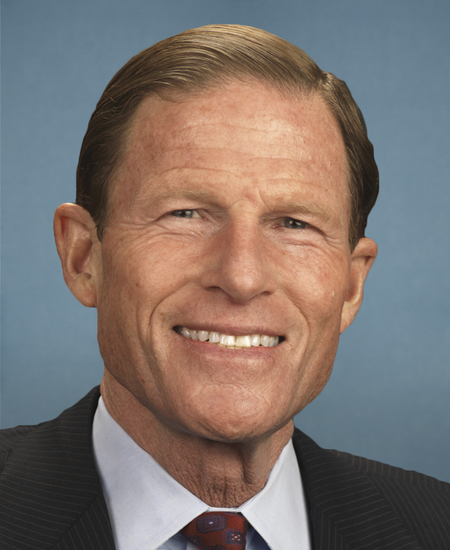
U.S. Senator Mitch McConnell (R-KY), Chairman of the Senate Appropriations Subcommittee on Defense, convened today’s hearing “A Review of the President’s Fiscal Year 2026 Budget Request for the Department of Defense”. Prepared text of his opening statement follows:
“Secretary Hegseth, General Caine, Ms. MacDonnell, welcome. My colleagues and I are looking forward to your candid testimony.
“There’s no doubt that the global threat environment demands from us an uncompromisingly lethal force. And your efforts over recent months to renew the Department’s focus on lethality – and your attention to the concerns of servicemembers at the tip of the spear – are worthwhile and appreciated.
“Of course, sustaining this shift requires a clear strategy and adequate investments in capabilities. So we’re looking forward to hearing, in detail: What, exactly, the Office of Management and Budget is requesting on behalf of the Department of Defense for the coming fiscal year…And whether this budget flows from a strategy or instead defines and limits a strategy.
“This hearing will be the first public demonstration of what we hope to be a productive relationship between the Subcommittee and the Department. In the past, this relationship has functioned best when it’s been based on timely and forthcoming communication.
“Last year, details from the Department and the services about their growing requirements informed the Subcommittee’s efforts to mark up a bill to provide the military with $18.8 billion in resources above President Biden’s FY25 request. But that didn’t become law. Regrettably, the CR we’re under right now was yet another missed opportunity that compounded the constraints facing the Department today.
“On this subcommittee, you’ll find plenty of support for the Department’s efforts to – for example – improve air and missile defense systems, grow the pipeline for unmanned technologies, modernize our nuclear triad, and expand shipbuilding capacity. But lumping reconciliation spending in with full-year appropriations risks conflating different objectives. Chairman Wicker and his House counterpart have pointed out already that even an important, one-time investment in military modernization is not a substitute for steady growth in the annual budget topline. In fact, it may well end up functioning as a shell-game to avoid making the most significant annual investments that we spent years urging the Biden Administration to make.
“I struggle to understand why the Administration would cut procurement funding in the base FY26 budget by $14.4B and move funding for programs that have strong bipartisan support to a simple-majority reconciliation bill. The FY26 annual request seems to do just this for Virginia class submarines, Arleigh Burke class destroyers, and B-21 bombers. Like with critical munitions, we should send the Services and industry a sustained demand signal by incorporating them into annual appropriations.
“If we’re really serious about making the sustained, long-term investments in our military, then let’s do more than a one-time injection of funding. If the Administration wants to request a trillion-dollar defense budget for FY26 and make a full-year investment in urgent priorities and new programs, they ought to do it.
“In the meantime, let’s not overstate the FY26 request. The Administration’s requested base defense budget is lower than fifteen of the last twenty annual requests…including President Biden’s request for FY25. In fact, FY26 extends your predecessors’ streak to five straight base budget requests that would fail to keep pace with inflation – let alone with the pacing threat of China. But say we do take reconciliation into account. Even then, this is hardly the largest funding request for the Department of Defense.
“In constant dollars, the FY26 Department of Defense budget request still falls short of the annual funding requests from FY08, FY09, FY10, and FY11. As a share of GDP, even including reconciliation, the FY26 request is still just around 3%. That’s not just half the level of the Reagan buildup that secured peace through strength… it’s even less than the 4.5% of GDP requested for defense under President Carter.
“Why should we expect our allies to spend 5% of GDP on defense if we’re investing barely half that share? The failure to spend more on defense is compounded by another dynamic. Every year, a greater share of the defense budget goes to cover costs other than modernizing and procuring new weapons and equipment for our fighting forces.
“Without additional resources, rising Personnel and Operations & Maintenance costs risk crowding out new capabilities. How we allocate taxpayer dollars is an expression of our political will. We can’t expect our adversaries to take American hard power seriously if we don’t put our money where our mouth is. But as I mentioned, we’re also interested in your articulation of the strategy that informs – or is informed by – the Administration’s budget. How does that strategy account for adversary alignment? How does it address not only the threat of conflict in the Indo-Pacific, but the reality of conflict and military threats to our interests in Europe and the Middle East?
“Most of us on this panel believe that Russia’s war in Ukraine, its alignment with the aims of other U.S. adversaries, and its eventual outcome are profoundly important to American interests and offer more than just a glimpse into the future of warfare.
“I’d like to hear your views on this conflict. Who is the aggressor? What are the stakes for America and the West? What is the return on investment of our assistance to Ukraine? I don’t see funding for the Ukraine Security Assistance Initiative in your budget request. Is it the Administration’s view that terminating security assistance to Ukraine will make lasting peace more or less likely?
“What lessons is the U.S. military learning from the conflict? How will the Department or industry continue to learn if we cut off our partnership with the world’s leading battlefield innovators? Why would Asian partners trust us if we abandon partners in Europe? What lessons are China, Iran, and North Korea learning? And how much more will they benefit if Russia prevails?
“I’d like to hear your views on the impact of war in Europe on other theaters. The Asian and Pacific allies you just met with recently are under no delusions about how unchecked Russian aggression influences the calculus of Xi Jinping. They understand that strategic alignment among adversaries is global.
“America must recognize, in turn, that the risk of simultaneous conflict on multiple fronts is real and growing. Your Undersecretary for Policy acknowledged this reality in his confirmation hearing this spring. But the capabilities America needs to prevail in such a conflict do not seem to be reflected in the request we’ve received from OMB.
“So, there’s a lot we need to cover today. We’ll invite you to make opening comments in just a moment. But first, I’ll recognize Ranking Member Coons.”
f2b30759-7d1f-4296-9d49-6d9bc05ec87dIssued within 24 hours
Other senators' releases published in the day before or after this one.