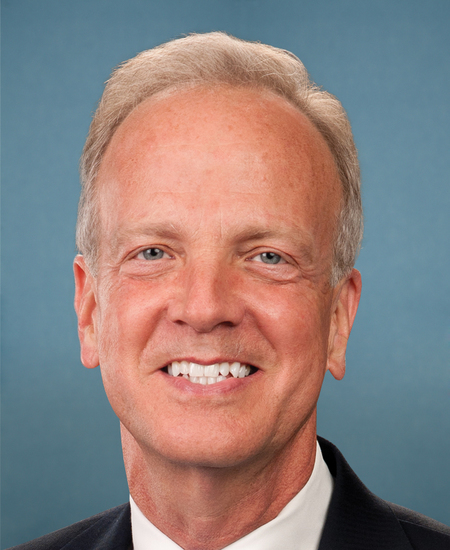
Sens. Moran, Rosen Introduce Bipartisan Legislation to Consolidate National Guard Duty Statuses
WASHINGTON – U.S. Senators Jerry Moran (R-Kan.) – a member of the Senate Appropriations Subcommittee on Defense – and Jacky Rosen (D-Nev.) – a member of the Senate Armed Services Committee – this week introduced the bipartisan Duty Status Reform Act to make comprehensive reforms to the National Guard by consolidating and streamlining the duty status framework. The legislation is cosponsored by Sens. Tim Sheehy (R-Mont.), Tammy Duckworth (D-Ill.), Mike Crapo (R-Idaho), Richard Blumenthal (D-Conn.), Jim Risch (R-Idaho) and Cory Booker (D-N.J.). Reps. Gil Cisneros (D-CA-31) and Jack Bergman (R-MI-01) led the legislation in the U.S. House of Representatives. “The men and women of the National Guard in Kansas and across the country play a critical role in serving our communities and defending our nation,” said Sen. Moran. “As the Guard’s mission has evolved, the duty status system has become increasingly complex. This legislation will simplify the structure and strengthen the Guard’s ability to carry out its missions by standardizing pay and benefits, bolstering readiness and better supporting those who serve.” “Duty Status Reform is a necessary overhaul to antiquated administrative systems that have negatively impacted our Reserve and National Guard servicemembers' quality of life and readiness,” said Sen. Rosen. “That’s why I’m proud to help introduce this bipartisan bill to cut through the red tape by simplifying the duty status structure from nearly 30 statuses down to four so the reserve component will receive timely and equitable pay and benefits without preventable delays or disruption. This legislation ensures the reserve component receives fair and equitable treatment when answering the call to service at a moment’s notice.” “In our ever-changing operational environment, our military leaders need the flexibility to act quickly and effectively. But the duty status system has limited commanders' ability to quickly mobilize guard and reserve units. The broken duty status construct is hurting our readiness and fixing this long-standing issue has remained my number one priority since returning to Congress,” said Rep. Cisneros . “The Duty Status Reform Act is a bipartisan, bicameral solution that will bolster our readiness and improve our servicemembers' lives by giving them predictability, pay parity, and hard-earned points towards TRICARE and Post-9/11 GI Bill benefits. I am thankful to Senators Moran and Rosen for leading the Senate's efforts on this complex issue, and I look forward to working with partners in Congress, the administration, and the Department of Defense to get this legislation across the finish line.” “Michigan’s National Guard members are among the most dedicated servicemembers in the country, and they deserve a system that works as hard as they do,” said Rep. Bergman. “The current duty status framework — nearly 30 classifications — creates unnecessary confusion, delays pay and benefits, and limits commanders’ ability to mobilize quickly when the nation calls. The Duty Status Reform Act fixes that by cutting through the bureaucracy and giving our Guardsmen the clarity, consistency, and equity they’ve earned. I’m proud to lead this effort in the House alongside Rep. Cisneros, and I thank Senators Moran and Rosen for carrying this forward in the Senate.” Specifically, the Duty Status Reform Act would: Standardize pay and benefits; Improve deployment readiness by clearly outlining mission eligibility requirements; Provide servicemembers and commanders with greater clarity on the duties servicemembers can perform before extensions are required; Ease transitions as servicemembers move from one status to another; and Improve consistency in veterans’ benefits eligibility for Guard members by reducing disparities resulting from differing duty statuses. The legislation would create four duty statuses: Category 1: Active Duty – war, national emergency, disaster response, cyber/WMD events, presidential call-ups and pre-planned missions. Category 2: Active Duty – disciplinary jurisdiction, missing status, required active-duty training and Active Guard and Reserve (AGR) functions. Category 3: Reserve Component Duty – required annual training, musters, Inactive Duty Training (IDT)-like duties and additional training with consent. Category 4 : Remote Assignments – flexible tasks, online learning and individually assigned non-supervised duties. “The National Guard has become an indispensable operational force for this country, but the duty status system has not kept pace with the way our Soldiers and Airmen serve today,” said Maj. Gen. (Ret.) Francis M. McGinn, President, National Guard Association of the United States (NGAUS). “Duty Status Reform will reduce administrative burdens, simplify a system that has become too complex, and make the Guard easier to access and employ when the nation needs us most. NGAUS is grateful to Senators Moran and Rosen for their leadership, and we are encouraged by the broad bipartisan support behind this legislation. That momentum reflects a growing recognition that the Guard deserves a modern system that matches the reality of its service.” “Duty Status Reform replaces a burdensome maze of statutory authorities governing reserve service with a clear, predictable framework, allowing the military to operate faster and directly tying service to defined pay and benefit entitlements,” said Maj. Gen. (Ret.) John Hashem, CEO, Reserve Organization of America (ROA). “It ensures uniform benefit accrual, reduces record disputes, and delivers equal DoD/W and VA benefits for identical service. ROA thanks Senators Rosen and Moran for introducing the Duty Status Reform Act and urges the 119th Congress to enact it into law.” “The Duty Status Reform Act is about ensuring our National Guard members can focus on the mission - not the patchwork of benefits, entitlements, and protections tied to the type of orders they are serving under. Whether responding to wildfires, hurricanes, civil emergencies, overseas deployments, or national security missions, Guardsmen answer the call without hesitation,” said Chief Master Sgt. Josh J. Baker, President, Enlisted Association of the National Guard of the United States (EANGUS). “They should not have to stop and wonder whether the orders they were placed on will impact their healthcare coverage, pay protections, retirement credit, or family support programs. HR 6976 moves us closer to a more equitable and modern system that recognizes the operational reality of today’s National Guard. EANGUS strongly supports this legislation because taking care of our service members and their families strengthens readiness, improves retention, and allows Guardsmen to remain fully focused on serving their state and nation.” “For the Marine Corps Reserve, the Duty Status Reform Act represents a long-overdue transition from a legacy Cold War administrative framework to a model that reflects the high-tempo, operational reality of the 21st-century Reserve Component. Our Reserve Marines are no longer a ‘force in waiting’; they are a force in execution, seamlessly integrating with the active component to meet global contingencies,” said Col. (Ret.) Ken Hopper, President & CEO, U.S. Marine Corps Reserve Association (MCRA). “Streamlining these statuses ensures that pay, healthcare, and retirement credit are tied to the service itself, rather than a confusing array of statutory authorities. This legislation is a critical step in removing the 'bureaucratic fog' that distracts from lethality and readiness. The Marine Corps Reserve Association fully supports this reform because it honors the sacrifice of our Citizen-Marines and provides their families with the stability and equity they have earned through their selfless service to the Corps and the Country.” "Guard and Reserve members have long navigated a maze of 30 duty status classifications that created confusion, large administrative burdens, errors, and in some cases pay and benefit inequities,” said Lt. Gen. (Ret.) Brian Kelly, President & CEO, Military Officers Association of America (MOAA). “The introduction of this Senate companion legislation marks a critical step toward delivering the clarity these servicemembers deserve. MOAA applauds Senators Moran and Rosen for championing this reform and urges swift action to get it across the finish line." Full text of the legislation can be found HERE . # # #
ff9cb972-de40-47a4-8797-abea1019b29eIssued within 24 hours
Other senators' releases published in the day before or after this one.