August 13th, 2026Heinrich Calls for a Full GAO Audit of Trump’s Ballroom Project
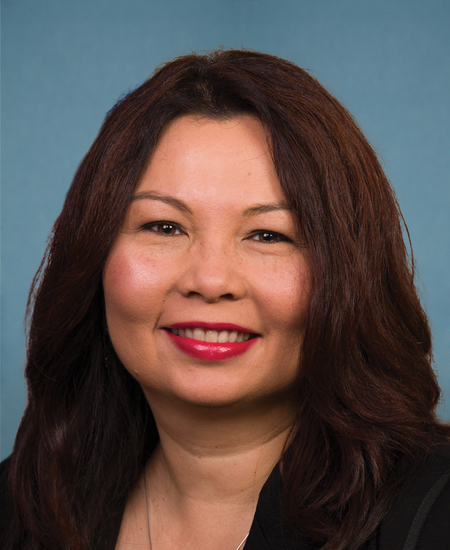
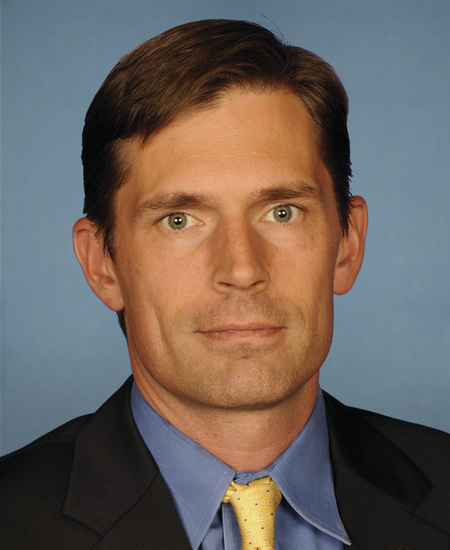
ALBUQUERQUE, N.M. — Today, U.S. Senator Martin Heinrich (D-N.M.), Ranking Member of the U.S. Senate Energy and Natural Resources Committee, joined top Senate Democrats in sending a letter to the Government Accountability Office (GAO) Acting Comptroller General Orice Williams Brown to audit and assess the full scope and cost of the White House ballroom project. After Heinrich successfully defeated Republicans’ attempt to gift President Trump $1 billion in federal funding through their partisan reconciliation bill in June, and although President Trump repeatedly claimed that the ballroom and demolition of the East Wing would be privately funded, reporting shows that the administration has inappropriately and illegally diverted more than $300 million in federal funding for the President’s White House ballroom project. “Congress has neither authorized nor appropriated funding for the ‘East Wing Modernization Project,’ nor has Congress been provided any planning details or justifications that would allow for informed consideration of the White House’s plans that would be a prerequisite for authorization or appropriation of funds. The lack of congressional authorization has been central to the ongoing litigation challenging the ballroom project, National Trust for Historic Preservation in the United States v. National Park Service . This month, the U.S. Court of Appeals for the D.C. Circuit affirmed that President Trump lacks the legal authority to construct a White House ballroom without congressional authorization,” the Senators wrote. “Simply put, no president has the authority to unilaterally demolish and remodel the country’s White House in such a significant manner without congressional approval,” the Senators continued. “The Trump administration has not provided transparency into the use of federal funds for the East Wing project, and they have limited congressional oversight, meaningful public input, and adherence to established federal processes,” the Senators wrote. The ballroom is part of a larger White House construction project that has ballooned to a cost of at least $900 million, the majority of which would be borne by American taxpayers. The letter was led by U.S. Senator Jeff Merkley (D-Ore.), Ranking Member of the U.S. Senate Budget Committee. In addition to Heinrich, the letter was co-signed by Senate Democratic Leader Chuck Schumer (D-N.Y.) and U.S. Senators Dick Durbin (D-Ill.), Sheldon Whitehouse (D-R.I.), Patty Murray (D-Wash.), Jack Reed (R-RI.), and Gary Peters (D-Mich.). As Ranking Member of the U.S. Senate Energy and Natural Resources Committee, Heinrich has led the fight to ensure that taxpayer dollars are not being spent on Trump’s vanity projects, especially as working families are being squeezed by skyrocketing costs on everyday essentials due to the President’s tariffs and reckless, illegal war with Iran. In June, Heinrich led a letter demanding answers from U.S. Department of the Interior (DOI) Secretary Doug Burgum regarding the Department's rushed rehabilitation project of the Lincoln Memorial Reflecting Pool. In August, he joined a letter with U.S. Senator Sheldon Whitehouse (D-R.I.), Ranking Member of the U.S. Senate Energy and Public Works Committee, calling for an investigation from DOI Deputy Inspector General Caryl Brzymialkiewicz into what Department officials knew about engineering failures at the Lincoln Memorial Reflecting Pool and whether DOI employees withheld evidence from federal prosecutors. In June, Heinrich also joined a letter with U.S. Senator Ben Ray Luján (D-N.M.), where he pressed DOI Secretary Doug Burgum for answers on the Trump administration redirecting tens of millions of dollars from fees paid to the National Park Service (NPS) to fund President Trump’s vanity projects in Washington, D.C. – including redirecting funds collected at New Mexico sites such as Carlsbad Caverns National Park and Bandelier National Monument. In May, Heinrich successfully blocked Senate Republicans from funding Trump’s ballroom project with $1 billion in taxpayer dollars through their partisan reconciliation budget bill, arguing it violated the Byrd Rule — a Senate rule designed to prevent unrelated policy provisions from being jammed into reconciliation bills that can pass with a simple majority instead of the usual 60-vote threshold. Heinrich has also voted to prohibit the construction of a ‘‘Triumphal Arch,’’ proposed by President Trump in 2025. Read the full text of the letter here and below: Dear Acting Comptroller General Williams Brown: Many of us in Congress have watched with alarm as the Trump administration unilaterally made the decision to demolish the East Wing of the White House—an historic and symbolic structure—without congressional authorization, meaningful public engagement, or following long-established practice for government facilities modernization and historic preservation. The subsequent construction of a new White House ballroom represents one of the most sweeping alterations to the White House complex in modern history. The scale of this project, the destruction of historic architecture, the opaque and unorthodox combination of public funds with private funding sources, and the absence of standard federal review processes raise serious concerns about transparency, accountability, and stewardship of this national landmark. Congress has neither authorized nor appropriated funding for the “East Wing Modernization Project,” nor has Congress been provided any planning details or justifications that would allow for informed consideration of the White House’s plans that would be a prerequisite for authorization or appropriation of funds. The lack of congressional authorization has been central to the ongoing litigation challenging the ballroom project, National Trust for Historic Preservation in the United States v. National Park Service. This month, the U.S. Court of Appeals for the D.C. Circuit affirmed that President Trump lacks the legal authority to construct a White House ballroom without congressional authorization. Simply put, no president has the authority to unilaterally demolish and remodel the country’s White House in such a significant manner without congressional approval. President Trump repeatedly claimed that the demolition of the East Wing and construction of a dramatically expanded gilded ballroom would be carried out solely using private donations, and that no taxpayer funds would be used. Despite those assurances, the administration first tried and failed to secure $1 billion in federal funding for the ballroom through a partisan Republican reconciliation bill, then shifted tact to inappropriately and illegally pay for over half of the $600 million ballroom with previously appropriated funding not intended for this project. It has also been reported that the Trump Administration is utilizing a $500 million no-bid contract to fund the construction of the ballroom—funding that Congress did not approve. The Trump administration has not provided transparency into the use of federal funds for the East Wing project, and they have limited congressional oversight, meaningful public input, and adherence to established federal processes. To support Congress’s oversight responsibilities, we request that GAO conduct an audit and assessment of the White House ballroom project and related documentation, including the following: Planning, Review and Approval Processes: What design, review, and construction approval processes are being applied to the ballroom project? How do these processes and timelines compare to those used for other similar federal construction efforts involving the White House, other historic properties, executive facilities, or national security sensitive sites? Please assess whether required architectural, preservation, environmental, and interagency reviews were conducted and whether any were bypassed, abbreviated or ignored. What documents, if any, were filed with required approval entities prior to initiation of work? Funding Sources and Cost Transparency: How is the project being funded, including appropriated funds, reconciliation funds, transfers, reprogramming actions, or donated materials and services? Was an initial cost estimate prepared and if so, by what agency or entity and what were the projections from that estimate? What are the total estimated project costs, how much has been obligated and expended to date, and what is the anticipated timeline for completion? What cost control measures were specified for use under this project? Are the funds that were transferred from U.S. Secret Service account to a “White House Repair and Restoration” account within the Executive Residence at the White House, as reported by the Office of Management and Budget, intended for use in the East Wing Modernization Project? Have any federal agencies involved in the East Wing Modernization Project included funding for this project in spend plans submitted to the Office of Management and Budget? Security Related Components and Interagency Roles: Which elements of the project have been designated as national security related, what criteria were used to make those determinations, and what funding sources are being used for those components? How have appropriate congressional committees been updated on cost and design planning considerations? What is the role of the U.S. Secret Service, the White House Military Office, the White House Communications Agency and the Department of Defense in planning, approving, and coordinating construction activities (including facility communications upgrades and installation of security equipment and other non-construction features), and how are these agencies collaborating among themselves and with other federal entities? Public Input and Transparency: What opportunities, if any, were provided for public input, expert consultation, or stakeholder engagement prior to demolition of the East Wing and initiation of the ballroom project? Please assess whether federal agencies followed standard public notice and comment practices for major alterations to historic federal properties, whether relevant preservation and advisory bodies were consulted, and how the level of public transparency compares to similar federal construction projects involving historic or iconic sites. Contractor Donations, Potential Corruption, and Safeguards: Recent public reporting indicates that several contractors and donors associated with the ballroom project have subsequently received substantial federal contract awards, reportedly totaling more than $50 billion. Please assess what safeguards, if any, federal agencies applied to prevent conflicts of interest, preferential treatment, or corruption related to contractors who donated materials, services, or funds to the project. Specifically, what controls exist to ensure that contributions to the project did not influence contract award decisions, and how do these safeguards compare to standard federal procurement integrity requirements? What evaluation criteria were used in identifying and selecting contractors for this effort? Please evaluate whether agencies documented their rationale for contract awards to donor contractors and whether any deviations from standard competitive procedures occurred. Given the scale, visibility, and long-term implications of this project, an independent GAO review is essential to ensure accountability, transparency, and responsible management of federal resources and historic assets. We request that you provide an update on your proposed plan for this audit by no later than December 1, 2026, with subsequent updates and a final report to be provided at a mutually agreed upon date. Sincerely, ###
0024b5a0-0561-4c94-b6f9-6b1a57aeeb2fEdit history (1 prior version)
This release was edited after publication. Earlier captures are preserved below.
- Captured Aug 14, 2026, 5:11 PM EDT
Show prior body text
ALBUQUERQUE, N.M. — Today, U.S. Senator Martin Heinrich (D-N.M.), Ranking Member of the U.S. Senate Energy and Natural Resources Committee, joined top Senate Democrats in sending a letter to the Government Accountability Office (GAO) Acting Comptroller General Orice Williams Brown to audit and assess the full scope and cost of the White House ballroom project. After Heinrich successfully defeated Republicans’ attempt to gift President Trump $1 billion in federal funding through their partisan reconciliation bill in June, and although President Trump repeatedly claimed that the ballroom and demolition of the East Wing would be privately funded, reporting shows that the administration has inappropriately and illegally diverted more than $300 million in federal funding for the President’s White House ballroom project. “Congress has neither authorized nor appropriated funding for the ‘East Wing Modernization Project,’ nor has Congress been provided any planning details or justifications that would allow for informed consideration of the White House’s plans that would be a prerequisite for authorization or appropriation of funds. The lack of congressional authorization has been central to the ongoing litigation challenging the ballroom project, National Trust for Historic Preservation in the United States v. National Park Service . This month, the U.S. Court of Appeals for the D.C. Circuit affirmed that President Trump lacks the legal authority to construct a White House ballroom without congressional authorization,” the Senators wrote. “Simply put, no president has the authority to unilaterally demolish and remodel the country’s White House in such a significant manner without congressional approval,” the Senators continued. “The Trump administration has not provided transparency into the use of federal funds for the East Wing project, and they have limited congressional oversight, meaningful public input, and adherence to established federal processes,” the Senators wrote. The ballroom is part of a larger White House construction project that has ballooned to a cost of at least $900 million, the majority of which would be borne by American taxpayers. The letter was led by U.S. Senator Jeff Merkley (D-Ore.), Ranking Member of the U.S. Senate Budget Committee. In addition to Heinrich, the letter was co-signed by Senate Democratic Leader Chuck Schumer (D-N.Y.) and U.S. Senators Dick Durbin (D-Ill.), Sheldon Whitehouse (D-R.I.), Patty Murray (D-Wash.), Jack Reed (R-RI.), and Gary Peters (D-Mich.). As Ranking Member of the U.S. Senate and Natural Resources Committee, Heinrich has led the fight to ensure that taxpayer dollars are not being spent on Trump’s vanity projects, especially as working families are being squeezed by skyrocketing costs on everyday essentials due to the President’s tariffs and reckless, illegal war with Iran. In June, Heinrich led a letter demanding answers from U.S. Department of the Interior (DOI) Secretary Doug Burgum regarding the Department's rushed rehabilitation project of the Lincoln Memorial Reflecting Pool. In August, he joined a letter with U.S. Senator Sheldon Whitehouse (D-R.I.), Ranking Member of the U.S. Senate Energy and Public Works Committee, calling for an investigation from DOI Deputy Inspector General Caryl Brzymialkiewicz into what Department officials knew about engineering failures at the Lincoln Memorial Reflecting Pool and whether DOI employees withheld evidence from federal prosecutors. In June, Heinrich also joined a letter with U.S. Senator Ben Ray Luján (D-N.M.), where he pressed DOI Secretary Doug Burgum for answers on the Trump administration redirecting tens of millions of dollars from fees paid to the National Park Service (NPS) to fund President Trump’s vanity projects in Washington, D.C. – including redirecting funds collected at New Mexico sites such as Carlsbad Caverns National Park and Bandelier National Monument. In May, Heinrich successfully blocked Senate Republicans from funding Trump’s ballroom project with $1 billion in taxpayer dollars through their partisan reconciliation budget bill, arguing it violated the Byrd Rule — a Senate rule designed to prevent unrelated policy provisions from being jammed into reconciliation bills that can pass with a simple majority instead of the usual 60-vote threshold. Heinrich has also voted to prohibit the construction of a ‘‘Triumphal Arch,’’ proposed by President Trump in 2025. Read the full text of the letter here and below: Dear Acting Comptroller General Williams Brown: Many of us in Congress have watched with alarm as the Trump administration unilaterally made the decision to demolish the East Wing of the White House—an historic and symbolic structure—without congressional authorization, meaningful public engagement, or following long-established practice for government facilities modernization and historic preservation. The subsequent construction of a new White House ballroom represents one of the most sweeping alterations to the White House complex in modern history. The scale of this project, the destruction of historic architecture, the opaque and unorthodox combination of public funds with private funding sources, and the absence of standard federal review processes raise serious concerns about transparency, accountability, and stewardship of this national landmark. Congress has neither authorized nor appropriated funding for the “East Wing Modernization Project,” nor has Congress been provided any planning details or justifications that would allow for informed consideration of the White House’s plans that would be a prerequisite for authorization or appropriation of funds. The lack of congressional authorization has been central to the ongoing litigation challenging the ballroom project, National Trust for Historic Preservation in the United States v. National Park Service. This month, the U.S. Court of Appeals for the D.C. Circuit affirmed that President Trump lacks the legal authority to construct a White House ballroom without congressional authorization. Simply put, no president has the authority to unilaterally demolish and remodel the country’s White House in such a significant manner without congressional approval. President Trump repeatedly claimed that the demolition of the East Wing and construction of a dramatically expanded gilded ballroom would be carried out solely using private donations, and that no taxpayer funds would be used. Despite those assurances, the administration first tried and failed to secure $1 billion in federal funding for the ballroom through a partisan Republican reconciliation bill, then shifted tact to inappropriately and illegally pay for over half of the $600 million ballroom with previously appropriated funding not intended for this project. It has also been reported that the Trump Administration is utilizing a $500 million no-bid contract to fund the construction of the ballroom—funding that Congress did not approve. The Trump administration has not provided transparency into the use of federal funds for the East Wing project, and they have limited congressional oversight, meaningful public input, and adherence to established federal processes. To support Congress’s oversight responsibilities, we request that GAO conduct an audit and assessment of the White House ballroom project and related documentation, including the following: Planning, Review and Approval Processes: What design, review, and construction approval processes are being applied to the ballroom project? How do these processes and timelines compare to those used for other similar federal construction efforts involving the White House, other historic properties, executive facilities, or national security sensitive sites? Please assess whether required architectural, preservation, environmental, and interagency reviews were conducted and whether any were bypassed, abbreviated or ignored. What documents, if any, were filed with required approval entities prior to initiation of work? Funding Sources and Cost Transparency: How is the project being funded, including appropriated funds, reconciliation funds, transfers, reprogramming actions, or donated materials and services? Was an initial cost estimate prepared and if so, by what agency or entity and what were the projections from that estimate? What are the total estimated project costs, how much has been obligated and expended to date, and what is the anticipated timeline for completion? What cost control measures were specified for use under this project? Are the funds that were transferred from U.S. Secret Service account to a “White House Repair and Restoration” account within the Executive Residence at the White House, as reported by the Office of Management and Budget, intended for use in the East Wing Modernization Project? Have any federal agencies involved in the East Wing Modernization Project included funding for this project in spend plans submitted to the Office of Management and Budget? Security Related Components and Interagency Roles: Which elements of the project have been designated as national security related, what criteria were used to make those determinations, and what funding sources are being used for those components? How have appropriate congressional committees been updated on cost and design planning considerations? What is the role of the U.S. Secret Service, the White House Military Office, the White House Communications Agency and the Department of Defense in planning, approving, and coordinating construction activities (including facility communications upgrades and installation of security equipment and other non-construction features), and how are these agencies collaborating among themselves and with other federal entities? Public Input and Transparency: What opportunities, if any, were provided for public input, expert consultation, or stakeholder engagement prior to demolition of the East Wing and initiation of the ballroom project? Please assess whether federal agencies followed standard public notice and comment practices for major alterations to historic federal properties, whether relevant preservation and advisory bodies were consulted, and how the level of public transparency compares to similar federal construction projects involving historic or iconic sites. Contractor Donations, Potential Corruption, and Safeguards: Recent public reporting indicates that several contractors and donors associated with the ballroom project have subsequently received substantial federal contract awards, reportedly totaling more than $50 billion. Please assess what safeguards, if any, federal agencies applied to prevent conflicts of interest, preferential treatment, or corruption related to contractors who donated materials, services, or funds to the project. Specifically, what controls exist to ensure that contributions to the project did not influence contract award decisions, and how do these safeguards compare to standard federal procurement integrity requirements? What evaluation criteria were used in identifying and selecting contractors for this effort? Please evaluate whether agencies documented their rationale for contract awards to donor contractors and whether any deviations from standard competitive procedures occurred. Given the scale, visibility, and long-term implications of this project, an independent GAO review is essential to ensure accountability, transparency, and responsible management of federal resources and historic assets. We request that you provide an update on your proposed plan for this audit by no later than December 1, 2026, with subsequent updates and a final report to be provided at a mutually agreed upon date. Sincerely, ###
Issued within 24 hours
Other senators' releases published in the day before or after this one.