ICYMI: Moran Warns Foreign Adversaries Are Exploiting U.S. Tax Code to Harvest American Data
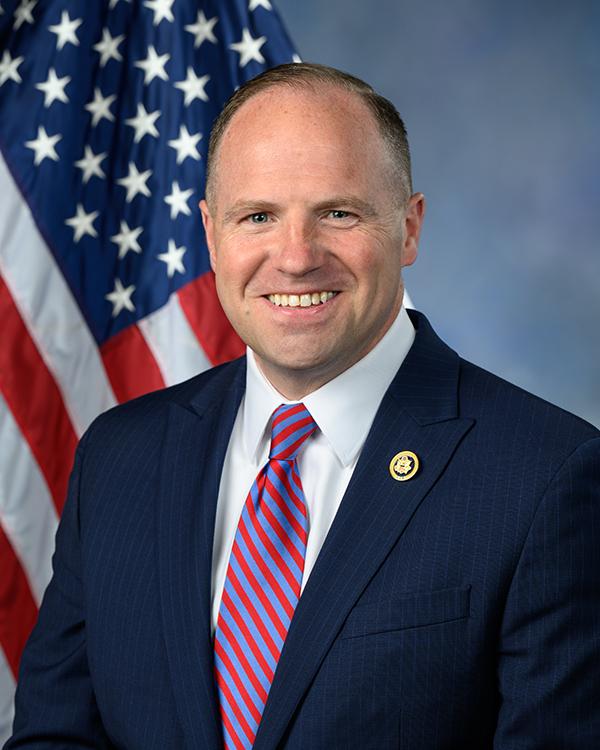
Congressman Nathaniel Moran (TX-01) joined Jason Hsu, a senior fellow at the Hudson Institute, to discuss the importance of securing American data. The discussion centered on Rep. Moran’s Deterring Adversarial Access to Americans’ Data Act, key legislation preventing federal tax incentives from supporting foreign adversary-controlled technologies — a gap that currently allows companies doing business with Chinese-controlled platforms to claim billions in U.S. tax benefits. “Every day that adversarial nations can freely harvest Americans’ personal data, they gain ground in a competition that will define our economic and national security for decades to come,” said Rep. Moran. “We have to make sure our laws keep pace with the threat, and that starts with cutting off the pipelines that let foreign adversaries exploit our own data against us.” The legislation closes a gap in current law by extending Foreign Entity of Concern (FEOC) restrictions to major business tax incentives. FEOC restrictions currently apply to certain energy incentives but do not extend to major business tax provisions. The bill would require companies to sever ties with foreign adversary-controlled technology in order to remain eligible for benefits such as bonus depreciation, research and development expenses, research tax credits, and interest deductibility. Rep. Moran on the importance of securing our own data: “Knowledge of the enemy is the number one thing that helps you achieve success on the battlefield. Whether or not it’s the economic battlefield, the military battlefield, or the diplomatic battlefield. If you know what the enemy is thinking and saying and doing, you can actually win, even if your force is less.” Rep. Moran on balancing national security and American business development: “This bill was laid out to smoke out the realities of what’s going on, on the ground… The self-evaluation that needs to happen in this moment. [Companies] have to realize there is going to be a long-term economic consequence to a long-term relationship.” “What our bill tries to do is be flexible… We try to lay it out in such a way that it can be malleable as technology grows. We’re not trying to stifle innovation. This is not at all a regulatory bill… I’m a guy that believes you got to have tons of liberty and tons of innovation.” “Here in the United States, we are the most innovative people there are. We’ve got to let innovation reign, but we also have to put guardrails in place for national security, public safety purposes.” Rep. Moran on addressing China's threat to America: “In 2017, [China] passed a law that said… any company or individual that’s involved out there in the world, you’re beholden to us and you’ve gotta provide us information that we want. And, there’s no geographic boundary to that.” “[China’s] law in 2015 says we’re going to broadly define what national security means. And so national security can basically just now be anything the Chinese government wants it to mean when it regards your duty, as individuals or corporations, to provide [China] with information we think is relevant to national security.” “[Companies] should think about it in terms of you’ve got a known espionage agent trying to get in the door. They want to get in the door. Don’t let them in the door. They’re going to really try and find their way in the door. Don’t just open the door for them and don’t just let them in and give them access to all kinds of stuff.” “Just remember they see us as adversaries. Their intentions are not good intentions.” Watch the full conversation here . Read the full bill text here . ###
0032dc74-d2bd-4f37-a8ce-a37ff06f09fdIssued within 24 hours
Other senators' releases published in the day before or after this one.