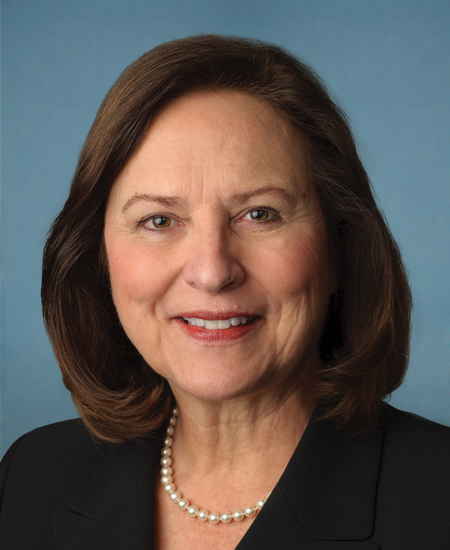
Fischer Joins FOX News Sunday to Discuss Iran, National Security
WASHINGTON – Today, U.S. Senator Deb Fischer (R-NE), a senior member of the Senate Armed Services Committee, joined FOX News Sunday live with Shannon Bream to discuss the potential peace deal between the United States and Iran. Fischer’s exchanges below: BREAM: I want to go back to start with the Iran deal, because there are those out there who are skeptical across the political spectrum. John Heubusch writes about this. He was longtime director in the past of the Ronald Reagan Foundation and [has a] deep resume here on the hill. He says this, “Let's state the obvious: there is a difference between forcing Iran to sign a piece of paper and forcing Iran to change its nature. The first is diplomacy. The second is pure fantasy. The danger is not that Iran refuses to sign, the danger is that it signs and then does what it always does.” So, can we do a deal with Iran? FISCHER: We're going to find out. I'm not going to listen to the rumors. I want to see what kind of deal the president has made here. When he gets it signed, we'll know all the facts to it. But let's remember we have gone through 47 years of Iran being the state sponsor of terrorism, killing Americans. This is not a country that we wanted to see continue down that path. They're enriching uranium, they were on their way to getting a nuclear weapon. They had short, medium, and long-range ballistic missiles that could reach cities like London, Rome, and then it's a hop, skip, and a jump until it reaches the United States. I support the president in going in and trying to take them out and being successful. We don't want to see Iran continue to have control over the Strait of Hormuz, but we also want to make sure that they are not capable of getting a nuclear weapon, and that we can account for the enriched uranium that's there. Let's remember the president is negotiating now from a position of strength. Iran is weak. We have gone in, we've showed the strength of America, and now the president is able to negotiate from a position of strength this time. BREAM: How do you answer your colleagues, like Senator Reed, who say this came at an enormous cost, that we didn't need to do this. We had the JCPOA, there was a way to stop their program diplomatically, and now we've had enormous costs financially, but more importantly, American lives as well. FISCHER: The American lives lost is a tragedy, but we have to be able to negotiate from a position of strength. We didn't do that with the JCPOA. I was not a supporter of the JCPOA. Iran played us on that, and we ended up sending pallets of cash to them. I doubt that that's going to happen under President Trump. BREAM: I want to get to some breaking news this morning as well, because Israel is carrying out some strikes in Lebanon, and there's been a lot of reaction to that. Our Trey Yingst is hearing from some folks who are on the other side of this conversation, saying that they feel like Israel is trying to scuttle the deal that President Trump is trying to get across the finish line today. There's some daylight between our interests, their interests in the region, although there's a lot of praise from Israeli leaders, including the prime minister on the president's birthday today. But what do you make of these allegations that Israel may be trying to quote unquote blow up the deal the president is trying to get done because they have different interests? FISCHER: Israel is defending its country, and it is defending its people. We understand completely the terrorists that are on Israel's border. When you have Hezbollah causing disruptions, bombings in northern Israel, they have a right—they have a right to go in and defend themselves. I doubt that they are trying to scuttle any kind of deal, because they know the importance of being able to have a secure area in the Strait. They know the importance of taking out the nuclear program of Iran, and so they want to see a negotiation that's going to be successful on those points. BREAM: I want to talk about the National Defense Authorization Act, because the committee has just worked through this. It's now headed to the full Senate for consideration. One of the components of this, the part of the framework for this, reportedly includes a provision that would authorize the Pentagon to establish a war reserve stockpile program for Taiwan. There have been concerns about our munitions, what we're able to supply to others, what Taiwan is able to get. What exactly would this provision do? Can Congress force the fulfillment of orders to Taiwan as it's waiting with these allegations that the president may be slow walking some of this to appease China? FISCHER: You know, munitions is something that I focused on for a number of years now. I think I was one of the first in Congress to bring it up after Russia invaded Ukraine, because I want to make sure that the United States has what we need to protect our homeland. We also want to make sure that our allies, our partners, have what they have. The provision that we saw in the NDAA, I think that is more of reassurance to Taiwan and a challenge to the defense contractors that this is something that needs to happen and needs to go forward. ###
01499312-e8ec-4f8e-8a5b-8a7dfaa6ca6eIssued within 24 hours
Other senators' releases published in the day before or after this one.