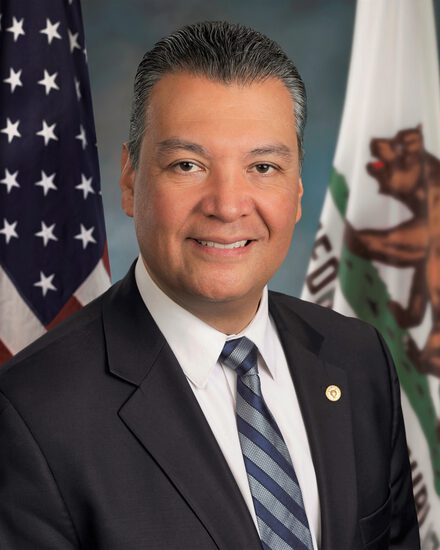
Padilla Demands Answers from Governor Abbott on Texas Voter Registration Errors
WATCH : Padilla: “Texas is where the redistricting war last year began. So, coincidence? I’m not so sure.” WASHINGTON, D.C. — Today, U.S. Senator Alex Padilla (D-Calif.), Ranking Member of the Senate Rules Committee with oversight over federal elections, demanded answers from Texas Governor Greg Abbott and Texas Secretary of State Robert Howden regarding recent disclosures showing potentially hundreds of thousands of Texas voter registration applications were not properly processed, leaving newly registered voters at risk of being disenfranchised in the 2026 midterm elections. Ranking Member Padilla stressed that Congress has an oversight responsibility over Texas’ mass failure to process voter registration, due to federal laws like the National Voter Registration Act (NVRA), also known as the “Motor Voter Law”, writing: “[t]he NVRA requires states to offer voter registration at the state’s motor vehicle registration agency, and these issues raise questions about the state’s compliance with the law. Understanding both the scope of this error, how it occurred, and how the state will remedy it to ensure that eligible voters are not disenfranchised is therefore an important subject for congressional oversight.” In his letter to Abbott and Howden, Padilla also pointed out that the error cannot be viewed in isolation and instead placed it within a broader pattern of state actions that have made it more difficult for Texans to make their voices heard at the ballot box. “The late timing of this announcement threatens the voting rights of more than a hundred thousand Texas voters on the heels of other intentional actions by the state that harm voting rights, such as mid-decade gerrymandered electoral maps and Senate Bill 1 that streamlined mass voter purges and restricted voting methods – including harsh limits on vote by mail. Voting rights advocates have also expressed concern that the state has failed to fund efficient election administration, greenlighted reductions in polling locations, and other additional obstacles and confusions for voters,” wrote Senator Padilla. “ Texas has also proactively cooperated with the Trump Administration’s election interference agenda by handing over its voters’ personal information and utilizing the flawed SAVE program, both actions which other states have successfully resisted on a bipartisan basis. Alternatively, if the state considered other commonsense reforms like online voter registration and same day registration, that could help voters avoid these issues.” With the midterm elections approaching, Padilla emphasized that time is of the essence and urged Abbott and Howden to respond quickly and transparently. “Local officials and potentially impacted voters have real reason to be concerned about the state’s ability to work quickly enough to ensure that all eligible voters who registered can cast their ballot without obstacle. Further, the state and its localities have an obligation to contact affected voters to ensure they are aware of their right to cast a provisional ballot, which should be counted for the November 3rd election,” continued Senator Padilla. “Due to the size and timing of this voter registration process error, the eyes of voting rights advocates across America are on Texas and how the state will respond. I urge you to be transparent on this matter and provide real relief for eligible voters in your state.” Padilla reinforced his concerns in an interview on MS Now earlier today, where he questioned whether politics may be at play. “I just can’t help but remember, back in the 2020 presidential election, Donald Trump called the secretary of state of Georgia and said, ‘find me 11,000 more votes.’ Right? In this case, isn’t that about finding additional votes that didn’t go his way; it’s about risking hundreds of thousands of Texas voters from being able to cast their ballots or have their vote counted. And Texas, by the way, is where the redistricting war last year began. So, coincidence? I’m not so sure. But these are some of the questions that we need to get to the bottom of.” The full letter is available here and below. Padilla’s MS Now interview is here . Dear Governor Abbott and Secretary Howden, The United States Senate Committee on Rules and Administration has oversight jurisdiction over federal elections, including voter registration. I write with serious concern over recent disclosures that potentially hundreds of thousands of Texas voter registration applications were not properly processed by the Texas Department of Public Safety (DPS) and/or the Texas Secretary of State’s office, leaving newly registered and updated voters at risk of being disenfranchised in the 2026 midterm elections. All eligible Americans have a right to register to vote, cast their vote, and have their vote counted. The U.S. Constitution gives authority for elections to the states and to Congress. Pursuant to this authority, Congress has enacted a number of federal laws that protect voter registration, including the National Voter Registration Act (NVRA), the Help America Vote Act, and the Voting Rights Act to guarantee those rights are not infringed. The NVRA requires states to offer voter registration at the state’s motor vehicle registration agency, and these issues raise questions about the state’s compliance with the law. Understanding both the scope of this error, how it occurred, and how the state will remedy it to ensure that eligible voters are not disenfranchised is therefore an important subject for congressional oversight. While the state has failed to produce an overall number, the Texas Association of County Election Officials is expecting a backlog of potentially hundreds of thousands of applications, noting that individual “[c]ounties have received anywhere from several hundred to tens of thousands of records to process.” These numbers are particularly high for populous counties, including but not limited to 45,000 in Bexar County, more than 40,000 in Collin County, and approximately 32,000 in Travis County which brought their overall backlog to 35,000 – a total of over 100,000 in those three counties alone. If numbers are similar in other large Texas counties, the total figure will be much higher. There are only seven business days before the state’s voter registration deadline (October 5th). Texas counties are now facing a daunting backlog of potentially hundreds of thousands of applications as they are already busy with the work of preparing for the upcoming state and federal elections, which includes an election for the United States Senate. Local officials and potentially impacted voters have real reason to be concerned about the state’s ability to work quickly enough to ensure that all eligible voters who registered can cast their ballot without obstacle. Further, the state and its localities have an obligation to contact affected voters to ensure they are aware of their right to cast a provisional ballot, which should be counted for the November 3rd election. In addition, there are serious questions as to why this growing backlog of unprocessed voter registrations was not identified for so long. The state has also not yet provided public assurance that the issues that led to this backlog have been resolved, and whether new registrations are being processed appropriately. These issues have occurred amidst scrutiny of Texas’ statewide voter registration system, known as TEAM, which has caused a host of issues during its “once- in-a-decade upgrade” that may relate to this huge registration backlog on election eve. The late timing of this announcement threatens the voting rights of more than a hundred thousand Texas voters on the heels of other intentional actions by the state that harm voting rights, such as mid-decade gerrymandered electoral maps and Senate Bill 1 that streamlined mass voter purges and restricted voting methods – including harsh limits on vote by mail. Voting rights advocates have also expressed concern that the state has failed to fund efficient election administration, greenlighted reductions in polling locations, and other additional obstacles and confusions for voters. Texas has also proactively cooperated with the Trump Administration’s election interference agenda by handing over its voters’ personal information and utilizing the flawed SAVE program, both actions which other states have successfully resisted on a bipartisan basis. Alternatively, if the state considered other commonsense reforms like online voter registration and same day registration, that could help voters avoid these issues. To ensure that Congress can conduct its constitutional oversight role on this matter, please provide responses to the following questions no later than Friday, October 2nd. 1. What specific issues caused this failure to process voter registration applications? Who is conducting the investigation, and is there a coordinated review that involves both DPS and the Office of the Secretary of State? 2. How many eligible voters were impacted by this error? When will this be known with certainty and with what degree of confidence? 3. Has DPS and/or the Office of the Secretary of State resolved the underlying issues that led to the unprocessed applications, so that the backlog is not continuing to grow? 4. What support is the state providing to county officials as they address this backlog of applications? Is the state hiring additional personnel or authorizing overtime or supporting such actions on the local level? 5. Are all relevant Texas state agencies committed to processing all registrations that were filed on time but the process is delayed due to potential issues related to state agencies and not the eligible voter? 6. What outreach or education will be provided to voters who took steps to register on their rights to cast a ballot if they are not on the voter rolls by the November 3rd election? Relatedly, what education will be provided to election officials and volunteer poll workers who will be supporting these potential voters? 7. What safeguards will Texas state agencies put in place to ensure this error does not occur again? 8. Is the State of Texas complying with the 2021 settlement agreement in Stringer v. Hughs related to the state’s failure to comply with the motor voter provisions of the NVRA? Due to the size and timing of this voter registration failure, the eyes of voting rights advocates across America are upon Texas. I urge you to be transparent on this matter and ensure that all eligible voters in Texas who registered to vote can cast their ballot and make their voice heard. Thank you for your attention to this critical matter and I look forward to your response. Sincerely, ###
04b6c88c-8ad1-4361-9ac5-a11c890fa4e1Issued within 24 hours
Other senators' releases published in the day before or after this one.