Murray, Baldwin Call on Education Department to Abandon its Latest Tactic to Cut Grant Funding to Communities
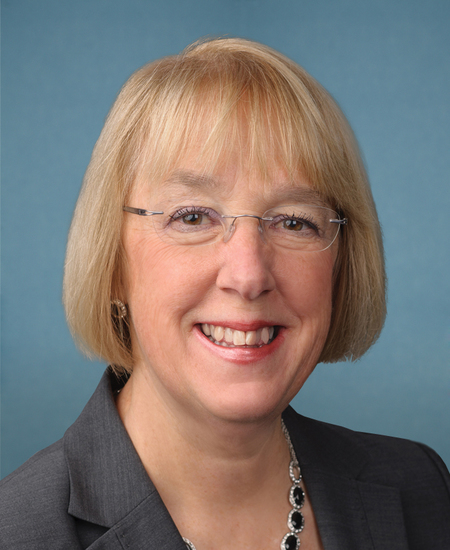
By significantly increasing the “frontloading” of grants, the Trump admin is preventing over $600 million from reaching schools and students this year Washington, D.C. — U.S. Senators Patty Murray (D-WA), Vice Chair of the Senate Appropriations Committee, and Tammy Baldwin (D-WI), Ranking Member of the Senate Appropriations Subcommittee on Labor, Health and Human Services, and Education, sent a letter to Department of Education Secretary Linda McMahon calling on her to reverse the department’s significantly expanded use of “frontloading” grants, which has dramatically reduced the number of recipients of federal funding. The Department of Education began using the tactic—wherein it pays for a multi-year grant fully up front instead of one year at a time, thereby dramatically decreasing the number of grants it awards—across a number of grant programs in unprecedented ways in fiscal year 2026. This has occurred at the same time the Department of Education and the Office of Management and Budget are seeking broader authority to terminate grants, raising the specter that they will terminate some of these grants in the future, and the funding will never reach communities that need it—yet another backdoor way of withholding appropriated funding. “This administration has chosen—brazenly and repeatedly—to prioritize its own backwards agenda over the needs of students, families, and communities across the United States. The Department of Education’s extensive ‘frontloading’ of grants is just the latest example,” write Murray and Baldwin. “By ‘frontloading’ grants—paying out many years of a multi-year grant in one lump sum instead of funding a larger number of grants right now—your Department is dramatically reducing the number of students and schools that are helped by federal funding. This policy defies congressional intent and effectively cuts investment in communities across the country.” In their letter, Murray and Baldwin explain how frontloading grants for several programs resulted in a steep drop-off in awards made in fiscal year 2026: “Instead of deploying funds immediately to hundreds of additional communities for essential education and related services, the Department is withholding approximately $630 million in appropriated resources across approximately 35 grant programs, preventing those funds from reaching students and families now. These are all programs where the Department has historically funded grants on an annual basis. If the Department continued that practice in administering these programs, the Department could have awarded well over 1,000 additional grants this year, supporting everything from evidence-based student literacy programs, to improving student mental health, to recruiting and preparing high-quality teachers, to supporting additional education research and to helping first-generation students succeed in college.” They conclude: “This policy is indefensible. The Department must immediately abandon this approach and administer appropriated funds in full alignment with both the law and the needs of the communities that rely on these programs.” The full letter is available HERE and below: Secretary McMahon: This administration has chosen—brazenly and repeatedly—to prioritize its own backwards agenda over the needs of students, families, and communities across the United States. The Department of Education’s (Department) extensive “frontloading” of grants is just the latest example. By “frontloading” grants—paying out many years of a multi-year grant in one lump sum instead of funding a larger number of grants right now—your Department is dramatically reducing the number of students and schools that are helped by federal funding. This policy defies congressional intent and effectively cuts investment in communities across the country: the Department could have funded well over 1,000 more grants by committing funds for use without delay. The Department should immediately reverse this deeply misguided and unacceptable approach to implementation of federal appropriations, including funds provided in the FY2026 appropriations law. In implementing this policy, the Department is intentionally and sharply limiting the number of new grants it will award, by concentrating funds into fewer grants and withholding significant portions of appropriated resources for use in future budget periods. The decisions made to frontload a huge swath of departmental grants came just weeks after the Secretaries of Education and Health and Human Services and Acting Secretary of Labor wrote a letter to Congressional leadership touting the purported success of the illegal interagency agreements (IAAs) they have reached, which highlighted there were “record application levels” for certain grant competitions compared to prior years . 1 Needless to say: record application levels are meaningless to students and families when the Department is choosing to fund fewer new grants under these competitions . 2 This policy blatantly disregards congressional directives and withholds urgently needed federal resources from the very communities these programs are meant to serve. Instead of deploying funds immediately to hundreds of additional communities for essential education and related services, the Department is withholding approximately $630 million in appropriated resources across approximately 35 grant programs, preventing those funds from reaching students and families now. These are all programs where the Department has historically funded grants on an annual basis—if the Department continued that practice in administering these programs, the Department could have awarded well over 1,000 additional grants this year, supporting everything from evidence-based student literacy programs, to improving student mental health, to recruiting and preparing high-quality teachers, to supporting additional education research and to helping first-generation students succeed in college. This policy is indefensible. The Department must immediately abandon this approach and administer appropriated funds in full alignment with both the law and the needs of the communities that rely on these programs. Congress expects no less, and the public deserves no less. Last year, the Department stated that literacy was its top priority. 3 Yet its recent actions tell a different story. The FY2026 appropriations law provided $30 million for the Innovative Approaches to Literacy (IAL) program, which supports improved literacy for children and students from birth through 12th grade—including strengthening school libraries and expanding early literacy services in low-income communities nationwide. When the Department issued its grant competition notice earlier this year, it indicated that it would make 25 to 35 new awards using these funds . 4 Unfortunately, just weeks ago, the Department announced that it would make only four new awards and would set aside $13 million for future years of these grants. Those funds could have been used to make roughly 25 additional awards. It is inexplicable that a Department claiming literacy as its top priority would so drastically limit the number of new grants supporting evidence-based literacy programming. In addition, the number of new awards is also a dramatic reduction from the last grant competitions under the Biden administration in FY2023 when 12 new awards were made and FY2021 when 29 new awards were made with total IAL program funding at the same or a smaller level. 5 This Department of Education is doing significantly less to support evidence-based literacy despite its claim of “supercharging” evidence-based literacy programming. 6 Sadly, the Department also has chosen to restrict grants that support child care for low-income student parents so they can pursue postsecondary education and workforce training. Congress provided $75 million to the Child Care Access Means Parents in School Program (CCAMPIS) in the final FY2026 appropriations law, funding that is critical to ensuring low-income students receive the support they need while attending college. The Department estimated it would make 148 awards with the CCAMPIS appropriation when it published the notice inviting applications earlier this year and did not announce an intention to frontload. 7 Yet, when the Department announced the new CCAMPIS grantees for FY2026, it made only 40 total new awards and set aside $53 million for future years of these grants. It is perplexing that an Administration that says it wants to improve affordability for Americans and help Americans find good-paying jobs would curtail a program that helps Americans afford higher education and workforce training. In addition, there are widespread teacher shortages facing our local public schools. According to a recent analysis of Department data, there are an estimated 425,412 teaching positions either unfilled or filled by teachers not fully certified for their assignments, representing about 1 in 8 of all teaching positions nationally . 8 Yet, the Department restricted the number of new grants to help train effective educators through the Supporting Effective Educator Development program this year, limiting it to just 16 new awards when it could have funded dozens more. 9 Similarly, the Department only awarded 12 grants under the Teacher Quality Partnership (TQP) program and set aside $59 million of the $70 million appropriation for future years of these grants. Sadly, the Department also chose to front load most of the appropriation for the Augustus Hawkins Centers of Excellence Program which supports teacher preparation programs in minority-serving institutions, by setting aside over $14 million for future years. Finally, while state and local education leaders and educators continue to face an ongoing and urgent need for actionable evidence on challenges for education policy and practice, the administration has basically shuttered its research arm, the Institute for Education Sciences (IES) since last January. 10 IES chose not to make new awards from grant competitions posted in 2024 to which institutions had already applied for funding and issued no new awards from grant competitions in FY2026. 11 As a result, IES simply frontloaded existing research grants in order to meet its spending requirement by September 30, 2026. 12 Unfortunately, this same story is repeated throughout the Department’s mishandling of many grant programs this year. There is no meaningful benefit to this policy change, and certainly nothing that outweighs the significant costs of withholding this funding. The Department is doing this because it wants to eliminate the Department of Education, eliminate these programs, and significantly cut funding for schools. It does not increase certainty for grantees because at the same time, the Department and Office of Management and Budget are both proposing changes to grants management rules that empower agencies to terminate grants for any reason. This suggests even more nefarious motives—awarding funding that can only be used in future years now while empowering agencies to terminate that very funding in the future before it ever reaches students and schools. The Department has proposed to rewrite the Education Department General Administrative Regulations (EDGAR) that govern grant programs Congress has authorized it to administer. 13 One of the major changes in the EDGAR proposal would allow the Secretary of Education to terminate multi-year grants “for convenience”. OMB has proposed similar changes in its federal financial assistance regulation that would rewrite uniform guidance governing grants management government-wide. That proposed rule would empower political appointees to terminate grants for any reason. If the proposed changes to EDGAR or OMB’s uniform guidance were to go into effect, this means the Department could easily terminate all these frontloaded funds, effectively terminating a large swath of FY2026 funds that Congress appropriated on a bipartisan basis. This would also make it more difficult for grantees to hire staff and plan to achieve grant objectives as efficiently and effectively as possible. And it would mean that the Department could satisfy Congressional requirements to obligate funds for programs and activities and later turn around and terminate the very grants that were made to satisfy Congressional spending requirements in future fiscal years. Students deserve timely access to evidence-based literacy resources; parents deserve access to childcare services that allow them to pursue postsecondary education; and all students should have a classroom staffed by a high-quality educator. Congress provided resources for these purposes, and the Department has an obligation—not an option—to use them accordingly. Sincerely, ###
0bed2393-21cf-485f-baf1-f8f04545167cIssued within 24 hours
Other senators' releases published in the day before or after this one.