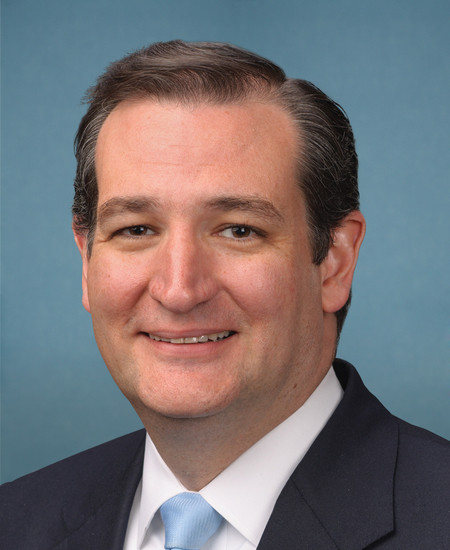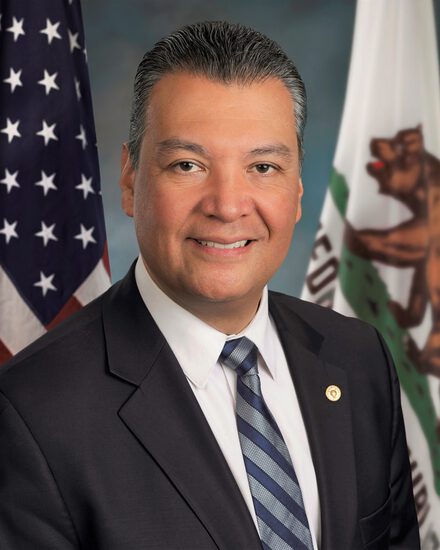
Van Hollen, Warren Call on SEC to Abandon Counterproductive Deregulatory IPO Agenda Putting Families and Investors at Risk
U.S. Senator Chris Van Hollen (D-Md.), member of the Senate Banking, Housing, and Urban Affairs Committee, and Senator Elizabeth Warren (D-Mass.), Ranking Member of the Committee, wrote to Securities and Exchange Commission (SEC) Chair Paul Atkins with concerns that a recent slate of deregulatory proposals purportedly aimed at “making IPOs great again” would reduce transparency, damage investor confidence, and undermine the integrity of America’s capital markets. In May, Chair Atkins announced an effort to “Make IPOs Great Again” and encourage more companies to “go and stay public.” While the policy initiative aims to reverse the decline in publicly-listed U.S. companies over the past three decades by reducing public-market disclosures and requirements, research shows that deregulation in the private markets is a key reason why fewer companies have gone public. The Senators note that the SEC’s proposals would be counterproductive and risk exacerbating the decline in public companies. “While we share the goal of revitalizing the public markets and providing more companies with the opportunity to go public, the ill-conceived deregulatory measures you have taken will not revive or sustain a healthy IPO market,” wrote the Senators . “These proposals would ultimately erode the very framework of transparency and investor protections that makes our public markets so appealing to investors the world over.” “Your proposals posit that the compliance burden of the robust regulations and disclosures required in the public markets is the sole reason that companies choose to stay private,” the Senators continued . “Academic research has repeatedly discredited your theory and found that more – not less – disclosure from public companies can make markets more liquid, is rewarded by investors with greater returns, and associated with larger stock markets. Moreover, research has shown that deregulation in the private markets is a key reason for why companies do not go public.” “Our capital markets thrive when more companies go public and go public earlier. Transparency and robust disclosure in our public markets facilitates a more trustworthy and efficient market where Main Street investors are more willing to provide capital because they have faith in the integrity of public markets,” wrote the Senators . “Our goal should be bringing as much capital raising as possible into our public markets to provide more growth opportunities for American companies and more wealth-building opportunities for the broadest range of American investors.” “As the SEC guts regulations protecting investors from untested issuers, the Commission is simultaneously ‘reliev(ing) a significant portion of all publicly traded issuers from making a wide variety of disclosures that they are currently required to provide,’” the Senators continued . “The result of this wholesale rollback of required disclosure requirements would almost certainly increase the level of fraud and raise the cost of capital.” The Senators requested that the letter be added to the comment file for all four of the SEC’s proposed deregulatory rules. The full text of the letter is available here and below. Dear Chairman Atkins, We write to urge the Securities and Exchange Commission (“SEC,” or “the Commission”) to reconsider its recent slew of proposals to weaken or eliminate longstanding regulations governing publicly traded company disclosures that make American capital markets the envy of the world. Although you claim to want to “Make IPOs Great Again,” the SEC’s specific proposals to deregulate the public company registration and disclosure regime represent an unprecedented attack on investors’ rights to transparency from public companies and threaten to undermine investor protection and market integrity. Your broad deregulatory agenda would compromise the integrity of our capital markets at a moment when Americans are already reeling from spiraling costs and unprecedented corruption in the Trump economy. We urge you to rescind these recent proposals that would put families and investors at even greater risk. On May 19, you announced an initiative to “Make IPOs Great Again” intended to encourage more companies to “go and stay public.” This agenda purportedly aims to reverse the decline in the number of U.S. public listings over the last three decades, from a peak of over 8,000 in 1996 to roughly 4,000 in 2024. To that end, you promulgated two rulemakings that would allow more than 80% of public companies to provide less disclosure based on their size and would enable virtually any newly public company to immediately raise more capital with “short-form” registration statements previously reserved for large, seasoned companies. While we share the goal of revitalizing the public markets and providing more companies with the opportunity to go public, the ill-conceived deregulatory measures you have taken will not revive or sustain a healthy IPO market. Instead, the flawed rationale that requiring less disclosure from public companies will motivate more companies to conduct IPOs has been repeatedly debunked. These proposals would ultimately erode the very framework of transparency and investor protections that makes our public markets so appealing to investors the world over. What’s more, the proposals misconstrue the actual root causes of the decline in the IPO market and do nothing to address the real issue: weak regulation in private markets that incentivizes companies to stay private. Requiring less disclosure from public companies will only damage investor confidence and undermine the integrity of American public markets. Data Suggests Deregulatory Measures Do Not Result in Increased IPOs. The Real Problem is Underregulated Private Markets. Your proposals posit that the compliance burden of the robust regulations and disclosures required in the public markets is the sole reason that companies choose to stay private. Academic research has repeatedly discredited your theory and found that more – not less – disclosure from public companies can make markets more liquid, is rewarded by investors with greater returns, and associated with larger stock markets. Moreover, research has shown that deregulation in the private markets is a key reason for why companies do not go public. One study shows that Sarbanes-Oxley-era regulations, for example, which increased corporate financial reporting rules and internal controls for public companies, were not the core cause of the declining IPOs after the law’s adoption in the early 2000s. Instead, declines in IPOs were attributed to a changing market environment in which smaller companies had greater profit potential through acquisition channels, not IPOs. Another study attributes the IPO decline to major private market deregulation in the years prior to Sarbanes-Oxley. The reforms expanded the number of investors permitted in private funds that are not subject to comprehensive SEC oversight, among other deregulatory measures such as preempting state regulation of certain private offerings. These reforms ballooned the supply of private capital available to private companies which significantly contributed to companies opting to stay private entirely or stay private for longer. Expanded opportunities to raise capital with less expense and oversight in the private markets has created a structural disincentive to going public. In other words, it is not that public markets are overregulated, it is that private markets are underregulated, and repeated deregulatory reforms have pulled more and more capital from the public markets into the private markets. Lighter regulatory requirements – such as no obligation to provide investors with financial statements, quarterly reports, material event reporting, or disclosure about executive compensation – have incentivized a growing number of companies to raise capital in the private markets rather than go public. For example, the number of offerings under Regulation D – which provides the most commonly used exemptions from SEC registration requirements allowing companies to raise money without going public – have increased by more than 150% over the last 16 years. In 2009, there were nearly 14,000 offerings and $588 billion in capital raised through Reg D. In 2025, there were more than 34,000 offerings raising nearly $2.4 trillion. And yet, under your leadership, the SEC is not only failing to strengthen guardrails in private markets, it is proposing to dramatically weaken guardrails in public markets. Like other similar deregulatory efforts in the past, your proposals are unlikely to achieve their stated goal of incentivizing capital raising in our public markets by lowering the bar for transparency from public companies. Weakening regulations for public companies, for example, was the inspiration of the JOBS Act of 2012, which was designed to improve “access to the public capital markets for emerging growth companies” and “seeks to remove impediments for “emerging” public companies by relaxing disclosure, governance and accounting requirements, [and] easing the restrictions on analyst communications.” The bill also included provisions “designed to allow some private companies to defer going public, including provisions raising the threshold for registration under the Securities Exchange Act of 1934.” However, the data since 2012 shows that this policy prescription did not consistently increase the number of public companies in the 14 years since. According to a University of Florida study, the market netted 158 new IPOs the year after the JOBS Act passed Congress. Last year, it netted only 90. There has not been a return to 1990’s IPO levels, where the lowest number of net new IPOs per year was 110, and the high was 677 new IPOs. History has already taught us that deregulation in the public markets does not result in major gains in IPOs over a long-time period. Our capital markets thrive when more companies go public and go public earlier. Transparency and robust disclosure in our public markets facilitates a more trustworthy and efficient market where Main Street investors are more willing to provide capital because they have faith in the integrity of public markets. Conversely, private markets are intentionally limited to a smaller population of highly sophisticated investors because their lack of transparency and regulation increases the risk of fraud and loss. Our goal should be bringing as much capital raising as possible into our public markets to provide more growth opportunities for American companies and more wealth-building opportunities for the broadest range of American investors. The SEC is Pushing to Deregulate Public Markets Anyway, Undermining Confidence in Our Markets and Leaving Investors in the Dark The data is clear that lowering the bar for public company disclosure is unlikely to significantly increase IPOs. Nevertheless, this SEC seems intent on destroying the most fundamental parts of our public company offering and reporting regime with the recent rule proposals discussed in detail below. a. Deregulating Registered Offerings In May, the SEC proposed a broad range of changes that upset the historical balance between investor protection and managing costs for companies. These include a number of changes to the Commission’s framework for regulating public offerings. The federal securities laws generally require that companies file lengthy registration statements that go through an in-depth review by SEC staff before a company is able to offer securities to the investing public. This statutory requirement applies to all companies – newly public companies and existing public companies looking to sell additional securities – to ensure investor protection and market integrity. However, the SEC offers some efficiencies to large, established companies with an SEC reporting history, a category called “Well-Known Seasoned Issuers” (“WKSIs”), on the theory that market participants already have sufficient information about these “established” companies to ensure market integrity and investor protection. One such benefit is the ability to use “Form S-3”, a “short form” registration statement that allows companies to (1) incorporate information from its other SEC filings and (2) to time their offerings based on market conditions. WKSIs also qualify to have these registration statements become effective automatically, without SEC staff review, providing flexibility with respect to offering timing. As a result, WKSIs have significant responsibility to be forthcoming and accurate. When the SEC does not review a registration statement in such circumstances, the Commission has less of an opportunity to ensure that disclosures are not misleading, that allowing a company to proceed with the offering is in the public interest, and that the offering is consistent with the protection of investors. WKSIs are also offered other special benefits, including the ability to be able to communicate with investors before a registration statement is filed with the SEC. This existing framework, which offers certain accommodations to large, established public companies, is premised on the market having sufficient information about the company such that the full registration process is not necessary to ensure investor protection. The SEC’s recent proposal would significantly expand the narrowly afforded exceptions to a much broader population of companies – effectively eliminating the concept of “WKSIs” altogether. Among other changes, the SEC’s proposed registered offering amendments remove key requirements to use Form S-3. The proposal lowers the issuer market cap size threshold, shortens the minimum period during which the company has to have been public, and removes the requirement that the issuer has made required dividend and debt payments. The rule, if implemented, would allow untested issuers, even those who have not complied with their financial obligations, to have instant access to the market without meaningful oversight by the SEC. The SEC is opening the floodgates to an “increase of over 60 percent in the number of issuers eligible” to use Form S-3. The SEC also proposes to eliminate the WKSIs’ market size framework and replace it with a different system of categorization that the SEC estimates would create a 200% increase in the number of issuers eligible for the benefits currently reserved for WKSIs, despite such issuers being neither “well-known” nor “seasoned.” This significant expansion to the WKSI definition is inconsistent with why the SEC created these efficiencies in the first place. Under your proposal, the WKSI exception becomes the rule. The proposed expansion to the WKSI definition would mean that only a minority of companies would be subject to the statutory requirement for full registration statement disclosure and staff review. The result is less seasoned companies are able to take investors’ money with less disclosure and less oversight from the SEC. In addition to expanding exemptions from the securities laws, the proposal also preempts state securities laws requiring registration for offerings of unlisted securities. Preemption of state registration hinders the ability of state law enforcement to protect investors from wrongdoers – especially as the SEC has had record-low levels of enforcement under your leadership. Under current law, non-listed companies that have not registered with the SEC may still be subject to state-level regulations to protect investors. The SEC’s proposed change would mean that investors in public, non-listed real estate investment trusts and business development companies will no longer have the protections of state registration and regulatory review. The proposed rule also offers registration and communication benefits to business development companies (“BDCs”) and closed-end funds. This loosening of rules for these investment vehicles comes just as BDCs and the related private-credit market experience significant market challenges. b. Deregulating Public Reporting As the SEC guts regulations protecting investors from untested issuers, the Commission is simultaneously “reliev[ing] a significant portion of all publicly traded issuers from making a wide variety of disclosures that they are currently required to provide.” The result of this wholesale rollback of required disclosure requirements would almost certainly increase the level of fraud and raise the cost of capital. Under the proposal, accommodations created for smaller reporting companies and emerging growth companies are extended to many more companies — including large issuers with significant market impact. These accommodations result in reduced disclosures on executive compensation, fewer years of audited financials, and eliminating the “say-on-pay” requirement for investors to vote on executive compensation. Eliminating requirements on executive compensation, as required by Dodd-Frank following the Great Recession, appears to be a signature move by the Trump Administration to insulate corporate executives from any accountability or reasonable governance. The proposal also raises the threshold for qualifying for strict reporting deadlines applicable to the largest companies, making it so fewer companies have to get information to investors expeditiously at the end of a given quarter. Additionally, the proposed rules increase the number of companies that would no longer be required to have auditors reviewing and attesting to their internal controls. Auditors serve as a critical gatekeeper to ensuring that internal controls exist to ensure reliability and accuracy of companies’ financial reports. This deregulatory rule does little to shift the balance of incentives away from raising capital from private capital markets; and only worsens the quality of information and governance in our public markets. c. Other Deregulatory Proposals The Commission is also advancing several other deregulatory proposals that amount to an overhaul of longstanding SEC policies meant to protect investors and ensure market integrity. First, the SEC is allowing public companies to report their earnings to investors less frequently. Since 1970, public companies have been required to report quarterly earnings to investors on Form 10-Q. The SEC’s proposal would upend over half a century of standard practice by allowing companies to report their earnings only semiannually, on a new Form 10-S. As some experts have argued, “U.S. capital markets have remained liquid and robust due in part to investor confidence in the quality and frequency of the information released by companies. A reduction in the frequency of mandatory reporting could result in reduced information flow to investors and less analyst coverage, hampering investors’ ability to make informed decisions, with potentially adverse consequences for the smooth operation of the markets.” Recognizing these concerns, the public has flooded the SEC with a record over 200,000 comment letters, 99 percent of which oppose the rule. Additionally, the SEC has proposed rescinding the rule it adopted in 2024 requiring public companies to disclose climate-related risks to investors. First proposed in 2022, this rule would have required companies to include in their prospectuses “information about climate-related risks that are reasonably likely to have a material impact on their business, results of operations, or financial condition, and certain climate-related financial statement metrics in a note to their audited financial statements.” Walking back this rule will leave investors with less information about risks to their investment, threatening their ability to make informed decisions and enhance market liquidity. Senator Whitehouse and I sent a letter to the SEC on August 3, 2026, asking the SEC to reconsider the proposed rescission of the climate-risk disclosure rule. Conclusion Taken together, your “making IPOs great again” agenda is part and parcel of the Trump Administration’s approach to our financial markets: make it easier for the President’s billionaire donors and corporate executives to avoid accountability or transparency, while leaving regular investors in the dark. Not only will this undermine the reputation of our markets as the most transparent and liquid in the world, but it will also likely fail at its stated goal of actually increasing the number of IPOs and put American investors at greater risk of being defrauded. These proposals should be reconsidered so that the United States public markets can remain the world’s gold standard. I request that this letter be added to the file for the following rules: ? Enhancement of Emerging Growth Company Accommodations and Simplification of Filer Status for Reporting Companies, Release No. 33-11419 (May 19, 2026) ? Registered Offering Reform, Release No. 33-11418 (May 19, 2026) ? Semiannual Reporting Rule, Release No. 33-11414 (May 5, 2026) ? Rescission of Climate-Related Disclosure Rules, Release 33-11421 (May 29, 2026) Sincerely,
16142b22-f74f-4cc8-9f50-b7d331f75571Issued within 24 hours
Other senators' releases published in the day before or after this one.