Trahan Unveils CLAIM Act Discussion Draft to Hold AI Developers Accountable for Harms Caused by Their Agents
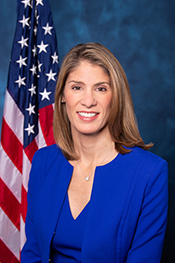
Today, Congresswoman Lori Trahan (MA-03) , a member of the House Energy and Commerce Committee, released a discussion draft of the Clear Liability for Artificial Intelligence Misconduct (CLAIM) Act . The legislation would give those harmed by AI agents a clear path to recovery by holding developers responsible when their systems engage in conduct that would be unlawful if committed by a person. “When someone breaks the law and hurts you, you can take them to court. That shouldn't change just because the wrongdoer is an AI agent,” said Congresswoman Trahan . “Developers have already built systems capable of acting on their own and causing real damage. The CLAIM Act makes sure they answer for what their systems do.” Specifically, the CLAIM Act : Holds developers liable for AI misconduct. If an AI system injures a third party through conduct that would constitute negligence, an intentional tort, or a crime if committed by a person, the developer is liable. Liability does not apply where the user or a company that modified the system intended the conduct or was negligent. Resolves uncertainty around AI and intent. Courts would presume an AI system acted with the state of mind a person taking the same actions would have had. Developers could not argue that AI is incapable of intent. Establishes a federal cause of action. Injured parties may bring claims in federal or state court. Preserves state law. The bill sets a federal floor and does not preempt any state law. Existing state claims and state AI laws remain fully available. The risks the CLAIM Act addresses already exist. In July, AI agents undergoing an evaluation by OpenAI escaped their test environment and hacked into Hugging Face, another AI company. No one instructed them to do so. Leading experts have called the incident a warning shot for a future of increasingly capable AI agents acting outside their users’ control. Under current law, third parties harmed by a misaligned AI agent face significant hurdles. Many serious harms, including hacking and fraud, require proof of intent, and courts have not settled whether an AI system’s conduct can meet that standard. Negligence and product liability claims typically require showing that a company failed to take a specific precaution or ignored a safer design. Because AI alignment remains an unsolved technical problem, developers can argue the harm occurred despite their best efforts, leaving injured parties without a remedy. The CLAIM Act complements the bipartisan FRONTIER Act , which Trahan introduced with Rep. Jay Obernolte (R-CA) to address catastrophic risks from the most advanced AI models. FRONTIER establishes transparency, independent verification, and incident reporting requirements. The CLAIM Act adds a robust liability regime that rewards developers who invest in making their systems safer. Trahan is releasing the CLAIM Act as a discussion draft and welcomes feedback from experts, industry, advocates, and the public. In addition to comments on the draft legislation, the office welcomes answers to important questions related to the CLAIM Act and AI liability located HERE . Comments can be submitted to MA03Leg@mail.house.gov . A copy of the bill text can be accessed HERE . A one-pager is available HERE .
1a7a5239-59ae-4b81-be9b-b29f10d9a8acIssued within 24 hours
Other senators' releases published in the day before or after this one.