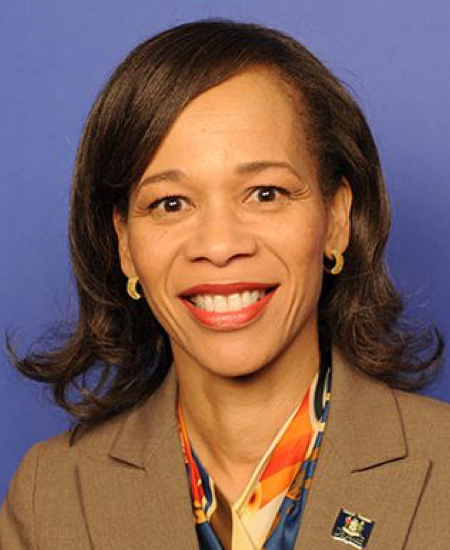
NEWS: Senator Blunt Rochester Questions Experts on How to Protect American Workers in the New AI Economy
“I’m a person who is generally a very hopeful person, and the conversations around AI a lot today are very fear based.” Click here to watch Senator Blunt Rochester’s remarks. U.S. Senator Lisa Blunt Rochester (D-Del.), a member of the Senate Committee on Health, Education, Labor, and Pensions, today participated in a subcommittee hearing on how AI will impact the American workforce. Senator Blunt Rochester’s questions focused on ensuring proper data collection to understand AI’s impact and ensuring protections for workers in AI-vulnerable jobs. Witnesses Include: Ken Clark, President and CEO, EmployIndy Carol Rogers, Director, Indiana Business Research Center Dr. Liya Palagashvili, Director of the Labor Policy Project, Mercatus Center at George Mason University Jonathan Liebert, CEO, BBB of Southern Colorado Dr. Justin Heck, Senior Director of Research and Data Production, Opportunity@Work Senator Blunt Rochester’s remarks can be found here , and a key excerpt can be found below: Senator Blunt Rochester : “Last year, Black women experienced one of the steepest one-year employment declines in the past century, past quarter of a century. And last week, we marked Black Women’s Equal Pay Day, which indicates the amount of time that it takes a Black woman to earn equal her white counterparts since last year. “Analysis from the National Partnership for Women and Families found that women make up over half of workers that are in the most AI-vulnerable occupations, with women of color making up nearly a third of workers in AI-vulnerable jobs. “Dr. Heck, in your testimony, you focus on worker mobility. What can you share with us about how the economic mobility of women and people of color in the workforce might be impacted by AI.” Dr. Heck: “I want to introduce a concept of adaptive capacity. It’s this idea of how well any worker can weather an involuntary job loss. And so, in the moments where AI exposure does lead to job loss, not all workers can handle that to the same degree. Some workers will find it harder to see their skills transfer and to be able to weather out that financial storm. “The workers who are in gateway roles are often women and workers of color, and those are often among the most exposed roles. Women are 93% of secretaries and administrative assistants. 49% of customer service representatives are workers of color. Nearly half, 46% of Black women are earning median wages or higher are in gateway occupations. “We need to think about these pathways and how we can strengthen them and think about the new ones that we’ll build alongside them.”
250b8a3a-650a-45c4-8933-502f11abec76Issued within 24 hours
Other senators' releases published in the day before or after this one.