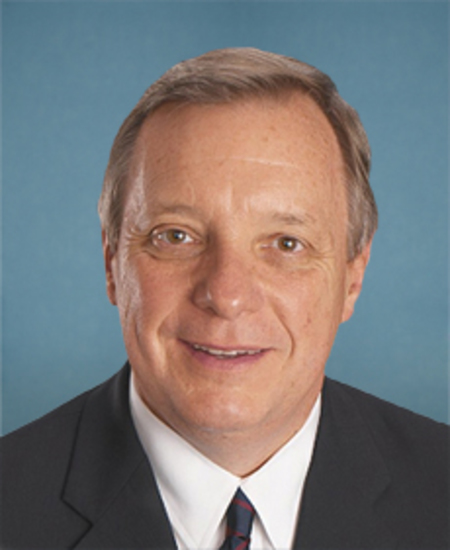
In Front Of Epstein Survivors, Durbin Presses Attorney General Nominee, Todd Blanche, To Meet With Survivors Within The Next 30 Days
July 15, 2026 In Front Of Epstein Survivors, Durbin Presses Attorney General Nominee, Todd Blanche, To Meet With Survivors Within The Next 30 Days During Blanche’s nomination hearing, Durbin asked for confirmation under oath that Blanche would meet with survivors of Epstein’s abuse; Durbin also demanded answers regarding the IRS settlement & January 6 pardons WASHINGTON – U.S. Senate Democratic Whip Dick Durbin (D-IL), Ranking Member of the Senate Judiciary Committee, today questioned President Trump’s pick to be Attorney General of the United States, Todd Blanche, during his Senate Judiciary Committee nomination hearing. Durbin pressed Mr. Blanche on whether he would personally meet with survivors of Jeffrey Epstein’s abuse within the next 30 days. Following Durbin’s repeated questions, Mr. Blanche would not commit to doing so. “[There are] 10 individuals who were exploited and abused by Mr. Epstein [and they] are here today. None of them have had a chance to speak to anyone in the Department or FBI though they have asked repeatedly. Can I get your word under oath that within the next 30 days, you will personally sit down with these 10 victims and hear their case in terms of what needs to be done by the Department of Justice?” Durbin pressed. Mr. Blanche dodged Durbin’s question about meeting directly with the survivors and replied, “I have somebody from my office who spent her entire career working on cases like Mr. Epstein’s… She’s available to talk to them.” “She can sit right next to you when you meet with these survivors… Will you meet with these 10 survivors?” Durbin asked. Mr. Blanche repeatedly dodged Durbin’s multiple requests for him to meet directly with the survivors and attempted to claim that “[i]f they have lawyers, I am prohibited from meeting directly with them.” Nothing prohibits a Department attorney, including the Attorney General, from meeting with represented parties if their counsel is present or gives explicit consent, and Durbin continued to press Mr. Blanche to meet with survivors within 30 days, and that Mr. Blanche must be in the room—not just his counsel. “You are dancing on the head of a pin here… We have these survivors who have the courage to come before this Committee and tell their terrible stories of how they were exploited,” Durbin noted. Durbin added, “If you are truly committed to extraordinary transparency, and you are willing to meet with these victims, I hope you will do it immediately or we’re going to hold you to it.” The Trump Administration has repeatedly mishandled the Epstein files. Former Attorney General Bondi told the House Oversight Committee in May that Mr. Blanche was “in charge of the process and the entire release of the Epstein files.” Last year, FBI personnel reviewing the Epstein files were ordered to flag records that mentioned Donald Trump. Congress passed the Epstein Files Transparency Act (EFTA), which set a December 19, 2025, deadline for DOJ to provide a full, public production of the Epstein files. DOJ did not comply with this deadline. On December 31, DOJ sent an email seeking Assistant U.S. Attorney volunteers to review these records, and the review of the overwhelming majority of these files did not even begin until January 5, 2026—weeks after the statutory deadline. Durbin then asked Mr. Blanche about President Trump’s “Anti-Weaponization Fund” and its accompanying immunity provision. As part of the settlement agreement in President Trump’s lawsuit against the IRS, Mr. Blanche signed a document in which he attempted to provide President Trump, his family, and his businesses with immunity for any potential federal tax law violations committed prior to May 19. “Would you like to explain how we can give the President and his family and his businesses exemptions from complying with tax laws of the United States?” Durbin asked. Mr. Blanche responded, “It is not an exemption to comply with the tax laws of the United States, it was part of a settlement… it was an agreement [that] any past audits would end.” The settlement, which Mr. Blanche signed, stated the United States “releases, waives, acquits, and forever discharges each of the plaintiffs” when it comes to tax liability. “That’s how it reads. It’s pretty sweeping. You don’t believe that is a discharge forever from liability?” Durbin asked. Mr. Blanche responded, “of any past filings, yes.” “How do you explain that to the American people? Everyone in this room, all of us, we have to follow the tax laws of the United States and if we don’t, we can be held responsible for it, to the point of criminal prosecution. Why did you decide that President Trump and his family and their businesses should be exempt from that same responsibility?” Durbin asked. Mr. Blanche continued to defend the Trump family and the IRS settlement. “No matter what their liability [and] no matter what their violation of tax law, you signed a document that forever discharged them from any legal responsibility… How often do you think that has been done in the history of the United States?” Durbin asked, to which Mr. Blanche stated that he wasn’t sure if such a settlement has “ever been done with the President of the United States.” “It’s hard to explain to the American people that no one is above the law when that type of document was signed by you, forever discharging that family and that president from any liability for violating tax laws,” Durbin said. Mr. Blanche responded that “nobody is above the law,” despite the fact that the settlement attempts to place President Trump above the law. Durbin then shifted to the January 6 rioters’ pardons. Many of the January 6 rioters pardoned by the President violently assaulted law enforcement officers, have shown no remorse for their actions, and have continued to commit crimes and endanger public safety. “Do you think a blanket pardon by the President of the January 6 rioters was the right thing to do?” Durbin asked. Mr. Blanche deflected and responded that the “the Constitution gives the president the full power to pardon anybody for any reason he wants.” “Some of them physically assaulted policemen in the Capitol, [and] some of them are guilty of serious crimes before that day. For the President to give a blanket pardon to these individuals is something you cannot explain to the American people. You certainly cannot explain it to the policemen who almost lost their lives because of the attackers,” Durbin concluded. Video of Durbin’s questions in Committee is available here . Audio of Durbin’s questions in Committee is available here . Footage of Durbin’s questions in Committee is available here for TV Stations. -30- Print Email Share Tweet
25d73106-46b6-40c6-b515-118f1101cc5fIssued within 24 hours
Other senators' releases published in the day before or after this one.