Ways and Means Democrats lay out priorities in upcoming USMCA review
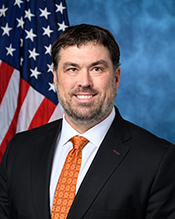
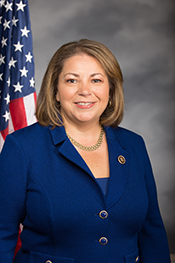
May 18, 2026 Press Release WASHINGTON – Ways and Means Trade Subcommittee Ranking Member Linda T. Sánchez (D-Calif.), along with all Ways and Means Committee Democrats, today called on the Trump administration to prioritize American workers, stronger environmental protections and economic security in the upcoming review of the U.S.-Mexico-Canada Agreement. The members urged the administration to update the agreement to address offshoring, worker rights, environmental protections, economic security and enforcement of existing commitments. “The USMCA Review is a crucial opportunity to fortify the North American economic relationship and the resiliency of the U.S. economy at a time when our most important economic and security relationships have been thrown into disarray and persistent economic uncertainty has raised costs for American families,” the members wrote. “We urge you, moving forward, to forgo the kind of combative rhetoric and coercive behavior that has defined the past year. House Democrats stand ready to work with your office, but USTR must make clear that the United States remains committed to the trilateral structure of USMCA, the defining feature of the North American economic relationship, and to a durable, mutually beneficial relationship with our partners that ensures the gains from trade are shared broadly both within and across our North American markets.” In addition to Sánchez, the letter was signed by Ranking Member Richard Neal (D-Mass.) and Representatives Lloyd Doggett (D-Texas), Mike Thompson (D-Calif.), John Larson (D-Conn.), Danny Davis (D-Ill.), Terri Sewell (D-Ala.), Suzan DelBene (D-Wash.), Judy Chu (D-Calif.), Gwen Moore (D-Wisc.), Brendan Boyle (D-Pa.), Don Beyer (D-Va.), Dwight Evans (D-Pa.), Brad Schneider (D-Ill.), Jimmy Panetta (D-Calif.), Jimmy Gomez (D-Calif.), Steven Horsford (D-Nev.), Stacey Plaskett (D-Virgin Islands) and Tom Suozzi (D-N.Y.). The full text of the letter is available HERE and follows: May 18, 2026 The Honorable Jamieson Greer Ambassador United States Trade Representative 600 17th Street, NW Washington, DC 20508 Dear Ambassador Greer: As we prepare for the July 2026 Review of the U.S.-Mexico-Canada Agreement (USMCA), we write to express our views regarding aspects of the agreement that require updates and improvement. Our assessment reflects both public feedback and the considerable economic and geopolitical uncertainty facing the United States today. The USMCA remains vitally important to the United States' economic security and prosperity. We are proud of our contributions to USMCA, including the bipartisan work by House Democrats and members of the first Trump Administration to secure major reforms and address shortcomings of the North American Free Trade Agreement (NAFTA). Many of the reforms we sought and won remain some of the most groundbreaking provisions in the history of trade. In other cases, the provisions negotiated in 2019 remain broadly fit for purpose. However, the last five years have also made clear that adjustments are needed. New challenges have emerged and some reforms require updates to ensure the agreement delivers for American families, workers, and businesses. In particular, we urge you to negotiate provisions targeting offshoring and threats to economic security; adopt new environmental protections; secure new commitments to strengthen worker rights; and ensure fair and effective enforcement of commitments already made. Additionally, the USMCA Review is a crucial opportunity to fortify the North American economic relationship and the resiliency of the U.S. economy at a time when our most important economic and security relationships have been thrown into disarray and persistent economic uncertainty has raised costs for American families. We urge you, moving forward, to forgo the kind of combative rhetoric and coercive behavior that has defined the past year. House Democrats stand ready to work with your office, but USTR must make clear that the United States remains committed to the trilateral structure of USMCA, the defining feature of the North American economic relationship, and to a durable, mutually beneficial relationship with our partners that ensures the gains from trade are shared broadly both within and across our North American markets. Offshoring Of central importance in our efforts to renegotiate NAFTA was the need to combat the continued offshoring of jobs and production. The global shocks since NAFTA renegotiation have also made clear the value of creating secure supply chains by strengthening North American manufacturing. However, manufacturing continues to leave the United States in pursuit of lower wages and less regulation, undermining the American workforce and jeopardizing our industrial capabilities. A combination of low wages, weak worker protections, and less environmental and business regulation in Mexico has proven a powerful incentive for investors to offshore jobs across the economy. As Democrats, we stand firmly for the proposition that our trade policy must support opportunities for a willing and able U.S. workforce and provide secure supply chains for American businesses and workers. We urge you to identify and implement new tools to ensure that existing and future U.S. enterprises have the appropriate incentives to support a large and growing U.S. workforce, along with concomitant disincentives for corporations that offshore existing jobs as part of a strategy of regulatory or wage arbitrage. USMCA's rules of origin (ROO) are one of the tools that have proven useful in ensuring that more of the benefits of trade accrue to the region and are not unduly captured by third parties. However, we have heard from both industry and labor that certain provisions are overly complex, poorly enforced, or already overtaken by the pace of technological change. In strategic industries, like autos or steel and aluminum, we encourage you to evaluate the ROO regime for its effectiveness in supporting North American manufacturing, and to consider updates that may be appropriate as new technologies have matured. At minimum, it is necessary to clarify the rules around regional value content (RVC) provisions for core parts and ensure that the category of core parts is reviewed and updated. North American Economic Security The USMCA review is also an opportunity to address some of the economic and national security risks arising from U.S. and North American trade and investment with countries of concern. The United States and Canada both maintain investment screening mechanisms for national security purposes, but Mexico has yet to establish a comparable framework. The USMCA joint review provides an opportunity to strengthen cooperation between the U.S. and Canadian regimes, to support the development of a similar regime in Mexico, and to establish clear guidelines that facilitate the sharing of information regarding sensitive investments. This would be an important step toward reducing vulnerabilities in North American supply chains. Similarly, as the United States continues to seek out ready and reliable access to critical minerals, the upcoming USMCA review represents an extraordinary opportunity to work with our allies to enhance economic and national security for the region. An integrated North American market based on high social and environmental standards holds immense promise to ensure supply chain security and can help demonstrate to trusted trading partners the value of robust coordinated policies to ensure transparency and predictability. The review should also discuss coordination on national security tariffs, such as those imposed under Section 232 of the Trade Expansion Act of 1962. When Canada and Mexico are willing to coordinate trade and investment policies with the United States and able to implement well-functioning import monitoring systems to protect the North American economy from predatory trading practices that threaten our national economic security, USMCA should reflect a high level of coordination and alignment. The imposition by the United States of national security tariffs on our closest trading partners, without congressional oversight, procedural safeguards, or efforts to coordinate trade responses with Canada and Mexico, undermines not just USMCA, but the credibility of the United States as a trustworthy trading partner and our own constitutional delegation of powers. Environment We believe it is critical to establish an enforcement mechanism that can quickly address point source pollution in covered facilities that violate environmental standards. House Democrats were proud to have designed a Rapid Response Mechanism for Labor in the 2019 USMCA negotiations, but there is still no comparable mechanism to challenge enterprises that pollute our shared environment for profit. The list of covered multilateral environmental agreements (MEA) should be updated and we urge you, after many years of debate, to finally remove the phrases "sustained and recurring" and "in a manner affecting trade" from the text of the environment and labor chapters. These phrases have served only to offer confusion and ambiguity for labor and environmental advocates. Finally, we note the positive example of transparency and accountability offered in the labor chapter by the Independent Mexican Labor Experts Board (IMLEB). Standing up a similar body of environmental experts would help build public trust in the ability of the agreement to call attention to environmental harms and could help guide the Parties' enforcement efforts. Labor A defining innovation of the 2019 USMCA agreement was the inclusion of the Rapid Response Mechanism (RRM) for labor violations. While the RRM continues to represent a singular advance in the enforcement of trade agreements, a number of procedural and evidentiary concerns have undermined the effectiveness of the mechanism. For instance, procedural delays by employers and the Mexican government threaten nascent organizing campaigns and prolong the threat of violence and intimidation when workers are at their most exposed. We urge you to ensure that panels formed under the RRM operate under strict time limits to complete investigations and issue reports and recommendations. Additionally, labor advocates have pointed to the difficulty of proving that facilities are "covered" under the Agreement when workers themselves lack access to the requisite business records, which remain in the possession and control of the businesses themselves. Mexican workers also note that violations of fundamental associational rights are regularly resolved through negotiations between Mexican officials and business owners without any consultations with the affected workers. We trust that these and other procedural challenges can be addressed through the six-year review to ensure that the RRM can effectively protect workers' rights. Apart from the procedural adjustments needed to strengthen the RRM, labor officials lack the necessary tools to combat practices like union "blacklisting," importation of goods made with forced labor, and the refusal to negotiate in good faith with a duly recognized trade union. Mexican labor officials should be given clear authority and sanctioning powers to combat these insidious practices. In addition, a persistent and widening wage gap between the Mexican and American workforces and the relative weakness of regulatory enforcement in Mexico continues to fuel the offshoring of jobs and manufacturing. We strongly urge the adoption, in these strategic industries, of sectoral collective bargaining agreements. Such agreements can be designed, with the input of the Parties, to close the wage gap by removing the ability of corrupt protection unions and vested business interests to artificially suppress wages for Mexican workers. Upon passage of USMCA six years ago, Mexico committed to providing minimum levels of funding to ensure the effective implementation of critical labor reforms. Mexico lived up to its budgetary commitments, but many of the most critical labor reforms remain incomplete. The Mexican government must again commit to minimum levels of funding and staff to ensure effective monitoring and enforcement of labor rights and environmental protections. Finally, while Mexico and Canada have the most work to do, the U.S. government also has a role to play. The Department of Labor's Bureau of International Labor Affairs (ILAB) funding for USMCA technical assistance was decimated last year through self-defeating funding cuts. Providing full funding for ILAB to provide technical assistance to Mexican labor institutions and civil society is in the best interests of both U.S. and Mexican workers. Effective Enforcement USMCA made strides in creating fair, predictable, and mutually beneficial trade conditions across key sectors of the North American economy. While the agreement has delivered important gains, persistent challenges in the implementation and enforcement of the agreement continue to undermine U.S. workers, farmers, and manufacturers. A glaring example has been Mexico's failure to implement the important intellectual property reforms it made following the last USMCA negotiations. We also note with concern both Mexico and Canada's failure to enforce their respective forced labor import bans as required under the agreement. Agricultural trade through USMCA also provides economic opportunities for U.S. farmers, ranchers, and food manufacturers, and any updates to the agreement should consider the stability needed to support U.S. agriculture. We encourage you to use this review to reinforce existing terms and ensure the fair and effective enforcement of measures to reduce barriers impacting U.S. agriculture. This includes addressing Canada's long-standing allocation of dairy tariff rate quotas, which serve to unfairly deny U.S. dairy producers of the meaningful access to the Canadian market. Canada must also end the regional bans on U.S. wines and spirits and work with your office to resolve existing non-tariff barriers. With respect to widespread consumer boycotts in Canada and Mexico, it will take time to recover the trust and goodwill of foreign consumers; the successful conclusion of the USMCA review without more unnecessary provocations is a critical first step. We urge you to consider that exporters invest heavily in developing foreign markets and earning the business of discerning consumers. Reckless and offensive comments about our neighbors by the President and senior U.S. officials can squander hard-won market share faster, and just as surely, as any formal trade barrier. Finally, USMCA must provide a predictable framework for the digital economy and foster a competitive environment for North American industries while allowing for regulation to meet evolving challenges. The USMCA has helped deliver key benefits to the digital economy. It is critical that an integrated North American market continue to facilitate electronic commerce, reduce barriers for small businesses, and prohibit duties on digital products. We thank you for your efforts to secure these critical changes to the USMCA and look forward to working with you to ensure that the agreement remains the global gold standard for many years to come. ### Issues : Labor and Trade
2d781310-83cc-4bc6-aff8-7ecfadb90d17Issued within 24 hours
Other senators' releases published in the day before or after this one.