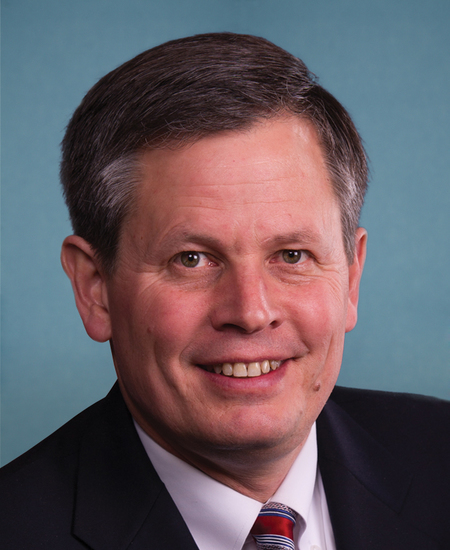
Daines and Bessent in Senate Finance Committee: Working Families Tax Cuts Bringing Economic Growth, Jobs for American Workers and Families
WASHINGTON, D.C. – U.S. Senator Steve Daines today spoke with Treasury Secretary Scott Bessent in a Senate Finance Committee hearing where he discussed benefits of the Working Families Tax Cuts and his digital asset tax framework. Watch the full exchange HERE . Daines on the conservation easement settlement: Daines: Secretary Bessent, it’s good to have you here this morning… I want to start by emphasizing how pleased I was when I saw the IRS’s settlement offer for taxpayers involved with conservation easement tax disputes. For years, I’ve been sounding the alarm here on Capitol Hill on the abusive syndicated conservation easements that falsely were claiming a charitable donation solely to turn a profit. I’m an avid outdoorsman, a guy from Montana, protecting our farmers and ranchers and championing conservation is one of my biggest priorities as I represent the state of Montana here the past 13 years. I know this is a shared priority for you in this administration, which is why I commend you for your help in implementing and enforcing this settlement. So thank you. Daines on benefits of the Working Families Tax Cuts: Daines: I also want to thank you for your hard work because we worked together over much of the last year on the Working Family Tax Cuts Act that was passed and signed the law. We’re seeing some great results in Montana. In fact, Montanans have received an average nearly $3,600 tax cut on their tax returns this year. And about 105,000 Montana small businesses will benefit from permanent tax relief due to that twenty percent pass through deduction. And as we know, the pass-through side of the equation actually supports more jobs than the C-corp side. So we did something here that’s going to be helpful to create more jobs, and importantly, job growth and income growth here for so many American people. Bessent: And, Senator, I have very clear recollection of you in the Cabinet Room expressing to myself, White House staff, the president, the need for permanence. So I think that that will be one of your great lasting achievements once you retire. Daines: Secretary Bessent, thank you. And I know we both knew that permanence was an important part of the equation to remove the uncertainty that’s oftentimes found in the tax code with expiring tax provisions. And there’s enough uncertainty on Capitol Hill, sadly, that happens because of whether it’s overreaching regulations or uncertain tax policy. But to take that off the table, I think, was one of the great achievements that we faced. But thank you for your kind words. And I do think that we’re going to see the benefits of this bill for many years to come. On Capitol Hill, anytime we pass something that’s 800 pages plus in length, usually the more you dig into something, the worse it gets. Oftentimes with big pork barrel spending bills, in this case, the more you dig into that working family tax cut bill, the better it gets. Bessent: Sir, the statistics are unbelievable. We saw at the IRS that 61 million filers filed for at least one of the signature policies, and we are seeing an industrial renaissance because of the immediate expensing for equipment, factories, and farm structures. Daines: It’s music to our ears. It’s what we predicted would happen. You put that kind of incentive structure in place. And I also believe to think about our China strategy, having that 100 percent expensing and the R&D investment to incentivize innovation will be another lasting legacy from what we accomplished together over the course of last year. I’d like just to ask you an open-ended question around how passing that largest tax cut, or said another way, preventing the largest tax increase in American history, why by making it permanent, is that making the American taxpayer better off? Bessent: Sir, I believe that the, as you said, giving great certainty, whether it’s to households, small business, or large business, that provides for them to create capital stock, capital spending and increased productivity, and increased productivity is what leads to higher standards of living across the country. Daines on implementing digital taxation framework: Daines: Last question I have is on digital assets. Digital assets have moved from the margins now more to the mainstream. It’s been clear that our tax code hasn’t kept up. We bear that responsibility now to put a tax structure in place. I’m taking the lead here in the Finance Committee. As many in this committee know, that’s why we’ve been developing a framework that could give us clearer rules for digital asset taxation. Following the passage of the GENIUS Act, digital assets are becoming more integrated in our financial system. And I believe they’re going to play a growing role in our economy with the potential to keep driving investment in the United States. The numbers speak for themselves. The total crypto market cap reached $4 trillion for the first time in history. Stablecoin transaction volume was $33 trillion, a seventy-two percent increase from 2024. The number of crypto mobile wallet users reached an all-time high, up twenty percent from last year. I do believe it’s important that we provide some clarity as well as the tax dollars, and that’s our responsibility here that I’m working on at the moment. Secretary Bessent, as the administration continues its work in digital assets, will you commit to working with Congress on implementing digital asset taxation legislation and I anticipate that will very much be a two-way street? Bessent: I will commit to that. And tax certainty, as we’ve seen with every other industry, is the key to innovation. ### Contact: Matt Lloyd, Gabby Wiggins
3248e504-e024-4510-9a1b-2525715d479cIssued within 24 hours
Other senators' releases published in the day before or after this one.