Pressley in Hearing: Trump Accounts Fail at Closing Wealth Gap and Addressing Affordability Crisis
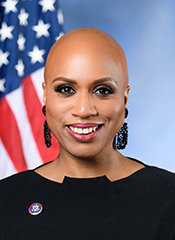
September 2, 2026 Pressley in Hearing: Trump Accounts Fail at Closing Wealth Gap and Addressing Affordability Crisis “Trump Accounts, as currently implemented, actually make the problem worse, and that’s what we would expect from an Administration that is getting richer while working families by the hour are getting poorer.” A Champion of Baby Bonds, Pressley Has Sounded the Alarm on Trump Accounts Urged Trump Admin. to Ensure They Don’t Worsen Inequality Video (YouTube) WASHINGTON – Today, during a House Financial Services Committee hearing, Congresswoman Ayanna Pressley (MA-07) questioned economist Dr. Darrick Hamilton on the Trump Administration’s so-called “Trump Accounts,” highlighting how the program falls short of addressing the racial wealth gap in America and could deepen economic inequality. Congresswoman Pressley instead touted her Baby Bonds legislation, the American Opportunity Accounts Act , as a more effective way of closing the wealth gap and giving all American children an opportunity to generate wealth. Congresswoman Pressley, who has long championed Baby Bonds as a tool for closing the wealth gap, has consistently urged the Administration to ensure the new savings accounts do not widen the wealth gap and worsen economic inequality. A transcript of Congresswoman Pressley’s remarks is available below and the video is available here . Transcript: Rep. Pressley Questions Experts on Baby Bonds and Trump Accounts House Financial Services Committee September 2, 2026 REP. PRESSLEY: Thank you, Mr. Chair. I represent the Massachusetts 7th Congressional District, beautiful, diverse district, also deeply unequal. In fact, in a three-mile radius from Cambridge, home to Harvard and MIT, to Roxbury’s Nubian Square, the Blackest part of my district, life expectancy drops by 23 years, and median household income by $50,000. A new report by the Boston Federal Reserve finds that Black families have $7,800 in net wealth, and on average, compared to white families who have an average $549,000 in median net wealth. Over a third of the people in my state cannot cover a $400 emergency, and over a third of the people in Boston, my district, have zero retirement savings. My constituents sent me to Congress, and I ran to confront these disparities head-on and to close the racial wealth gap. That’s why I was happy to partner with our witness today, Dr. Hamilton, and Senator Booker, to introduce the American Opportunity Accounts Act to create a federal baby bonds program. Now, Trump took this idea, entitled it after himself—he likes to name everything after himself—Trump accounts, and unfortunately watered it down so that the benefits are no longer targeted to the communities who need it most. What was once a bold proposal to ensure that every child, regardless of geography, race, and family income, could prosper is ostensibly now just a tax haven for Trump and his cronies, but we can fix this. Dr. Hamilton, currently, parents of newborns and young kids have to apply to set up a Trump Account, but our bill for Baby Bonds would allow for automatic enrollment. Which approach is better for actually helping working families and investing in all of our children? DR. DARRICK HAMILTON : Without a doubt, having access more universal should be the point. REP. PRESSLEY : Okay, Dr. Hamilton, what about the fact that Trump Accounts gives a one-time payment of $1,000 to rich and poor children equally, rather than our ongoing approach of investments to our most vulnerable babies, does that make economic sense for addressing intergenerational poverty? DR. HAMILTON : It does not. It becomes inflationary, and then here’s the bigger point: the main mechanism to grow the Trump Accounts is a tax-preferred savings mechanism for those people with resources to save in the first place. It ignores the fact that we have an affordability crisis, and the reasons that parents don’t offer resources to their children isn’t a lack of love—it’s a lack of resource. REP. PRESSLEY : Would it be fair to say that the very gaps that we aim to close could be deepened? DR. HAMILTON : They will grow. They will grow. That’s right. And unfortunately, it’s part of a pattern in the ways in which we use our tax code in general. We subsidize the savings of people that have savings to begin with. One quick statistic is that 80% of Americans don’t engage in active savings, again, not because they’re financially illiterate. They don’t have resources to save. The ways in which they grow their wealth is passively, which is why you have that great bill to promote an authentic Baby Bonds program. REP. PRESSLEY : Thank you, Dr. Hamilton. Trump Accounts also punish low-income households by actually kicking them off of public benefits, but our Baby Bonds bill would ensure these assets don’t count against eligibility. I’m losing my time here, but why should the Trump Administration adopt our approach? DR. HAMILTON : Well, it is correct because it is progressively seeding resources so that we can offer everybody the access to wealth to grow their account. The real quick good news is that we have a new interest in now seeding intergenerational mobility for all our people, so we can get it right. REP. PRESSLEY : Thank you, Doctor. Every child deserves an opportunity to grow and thrive and prosper, but our economy is stacked in favor of the ultra-rich. Trump Accounts, as currently implemented, actually makes the problem worse, and that’s what we would expect from an Administration that is getting richer while working families by the hour are getting poorer. So I am pushing for the adoption of our Baby Bonds bill, the American Opportunity Accounts Act. We need real investments to break the cycle of intergenerational poverty, close the racial wealth gap, and create an economy that works for everyone. — In 2019, Congresswoman Pressley introduced Baby Bonds legislation with Senator Cory Booker (D-NJ) that would create a federally funded savings account for every child in order to make economic opportunity a birthright rather than a privilege. The bill was purposefully and expertly drafted to disrupt intergenerational poverty, close the racial wealth gap, and give every 18-year-old support to start a business, buy a house, or pursue higher education. In November 2025, Congresswoman Pressley wrote to the Trump Administration calling for equitable, comprehensive guidance on the implementation of Trump Accounts. In a Washington Post op-ed published in June 2025, Congresswoman Pressley and economist Darrick Hamilton urged Congress to reject Trump Accounts and instead embrace Baby Bonds to close the wealth gap and advance economic justice. In March 2023, Rep. Pressley and Senator Booker urged the Treasury Department’s advisory committee to study the merits of Baby Bonds and embrace them in its upcoming reports to the Treasury Department about ideas that could advance greater equity in the economy. Rep. Pressley has consistently advocated for race-conscious policies to help close the racial wealth gap in America, uplift Black, brown, and other marginalized communities. Building on the legacy of Black women in the civil rights movement, Rep. Pressley led a historic resolution calling for a federal job guarantee . In a House Financial Services Committee hearing, Congresswoman Pressley questioned Federal Reserve Chairman Jerome Powell on the issue of full employment and the Civil Rights history of the Federal Reserve’s dual mandate . Powell conceded, for the first time in Federal Reserve history and on the Congressional record, that the Fed alone cannot get the United States to full employment. Congresswoman Pressley, along with Senator Cory Booker, is the lead co-sponsor of the American Opportunity Accounts Act — also known as Baby Bonds—legislation that would create a federally-funded savings account for every American child in order to make economic opportunity a birthright for every child and help close the racial wealth gap. Rep. Pressley introduced the Equity in Government Act to codify racial equity across federal agencies and improve government services for underserved communities. Rep. Pressley has also called on the five largest banks in America to provide a detailed update on the racial equity commitments the institutions made following the murder of George Floyd in 2020. Rep. Pressley was also a leading voice in Congress urging President Biden to cancel student debt. Following years of advocacy by Rep. Pressley—in partnership with colleagues, borrowers, and advocates like the NAACP—the Biden-Harris Administration announced a historic plan to cancel student debt that stands to benefit over 40 million people. Congresswoman Pressley has also consistently sounded the alarm on the crisis of unemployment among Black women in America, and demanded the Federal Reserve take action. ### Back to News Next Article Share Facebook Twitter LinkedIn Email
3b601a90-89ff-4256-a553-54b7c23922fdIssued within 24 hours
Other senators' releases published in the day before or after this one.