Durbin Highlights Bill To Crack Down On Prescription Drug Advertisements, Boost Price Transparency On Senate Floor
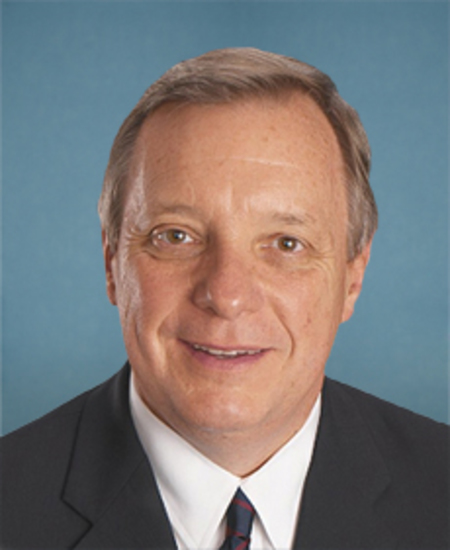
WASHINGTON–U.S. Senate Democratic Whip Dick Durbin (D-IL) today delivered a speech on the Senate floor highlighting hisDrug-price Transparency for Consumers (DTC) Act, a bill he is introducing with Senator Chuck Grassley (R-IA) that would require price disclosures on advertisements for prescription drugs in order to empower patients and reduce Americans’ colossal spending on medications. The Government Accountability Office (GAO) has found that prescription drugs advertised directly to consumers accounted for 58 percent of Medicare’s spending on drugs between 2016 and 2018, while a 2023 study in theJournal of the American Medical Associationfound that two-thirds of advertised drugs offered “low therapeutic value.” By requiring direct-to-consumer (DTC) advertisements for prescription drugs to include a disclosure of the list price, patients can make informed choices when inundated with drug commercials and pharmaceutical companies may reconsider their pricing and advertising tactics. In recent years, the pharmaceutical industry has sued to keep the prices of their drugs out of their TV advertisements.
“As President Trump begins his second term, I am concerned about his immigration actions, pardons for violent insurrectionists, and the grifters seeping into the White House. In each of these areas, I am prepared to fight with every tool at my disposal to stop abuses that harm Americans. But I also believe we must find areas of agreement where we can. And one of those areas could be addressing the astronomical cost of prescription drugs—a real life issue facing American families. Thankfully, last week President Biden announced 15 new drugs that Medicare will now bargain for, to lower prices for seniors across America. Remember, these savings are only possible because of theInflation Reduction Act, which did not receive a single Republican vote,”Durbin said.
Durbin continued,“But there is more work to do. On average, patients in the United States of America pay four times more than people in similar countries pay for the exact same drugs. What is going on here? The drug is made in America and is sold at four times the cost in America as [is the same drug sold] by the same companies overseas. Why is the United States such an outlier? One reason is advertising.”
The United States is one of only two industrialized countries in the world that allow drug advertising on television. The other is New Zealand. Big Pharma spends $6 billion each year to flood the airwaves about the latest wonder-drug, an amount which is the size of the entire budget for the Food and Drug Administration.
“Why does Pharma spend so much money on drug ads? Because it increases their profit margins. Big Pharma thinks that if they pummel you with enough ads, not only will you be able to spell Xarelto but you’ll also tell your doctor that this is the blood thinner you’ve been waiting for,”Durbin said.“Don’t just take my word for it. Here’s what the American Medical Association said about these ads: ‘Direct-to-consumer advertising inflates demand for new and expensive drugs, even when these drugs may not be appropriate.’”
Durbin continued,“So, when President Biden announced the list of 15 drugs that will be negotiated for discounts, I imagine most Americans already recognized many of their names: Ozempic, Trelegy, Ibrance, and Otezla. Manufacturers spent hundreds of millions of dollars encouraging you to ‘ask your doctor’ about these drugs. The result? Medicare spent $22 billion last year on these four heavily advertised medications.”
A recent headline inThe New York Timesread, “Robert F. Kennedy Jr. Wants to Ban Drug Ads on TV. It Wouldn’t be Easy.” It discussed the First Amendment challenges that the pharmaceutical industry would raise to fight such a ban. Since 2017, Durbin and Grassley have advanced legislation to require price tags in pharmaceutical commercials.
When Americans turn on the evening news, one-third of all commercial time is for prescription drugs, resulting in the average American seeing nine drug ads per day. In 2023, Illinois company AbbVie spent $315 million on TV ads for Rinvoq,an eczema and arthritis drug. Nowhere in the commercial do they tell you it costs $6,400 per month.
Durbin said,“That’s why today we [Senators Durbin and Grassley] are introducing bipartisan legislation to require price disclosures in direct-to-consumer drugs ads. Our plan is simple, and it actually passed the Senate once before, in 2018. Eighty-eight percent of Americans support this kind of disclosure.”
“Big Pharma hates being honest with patients about the true price of their drugs. They fear it might cut into their colossal historic profits. With the support of President Trump, Senator Grassley and I believe this will finally be the year we pass this bipartisan legislation to bring sunshine to these ads and actually lower health care costs,”Durbin concluded.
Video of Durbin’s remarks on the floor is availablehere.
Audio of Durbin’s remarks on the floor is availablehere.
Footage of Durbin’s remarks on the floor is availableherefor TV Stations.
-30-
3c2b5e2b-5071-40c1-97c5-61f8c954c0ecIssued within 24 hours
Other senators' releases published in the day before or after this one.