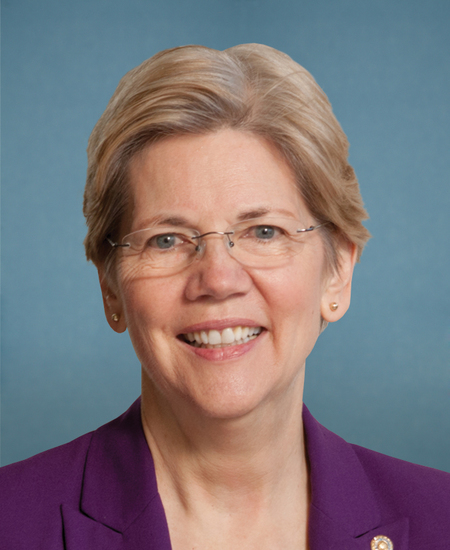
At Hearing, Warren Calls on Congress to Solve Social Security Insolvency Before 2032 Benefits Cuts
If Social Security runs out of money, benefits could be slashed by 22 percent Video of Exchange (YouTube) Washington, D.C. — At a hearing of the Senate Finance Committee, U.S. Senator Elizabeth Warren (D-Mass.) questioned witnesses on potential solutions to the impending insolvency of the Social Security Trust Fund, which could lead to a 22% reduction in benefits for retirees. In the most recent 2026 Trustees Report , the Social Security Trust Fund, which pays out benefits to retirees and other groups, is predicted to be insolvent in 2032. After that, the fund will only be able to pay out 78% of promised benefits. In the hearing, Senator Warren emphasized that “Democrats are fighting to protect and expand Social Security benefits funded by the wealthiest Americans paying their fair share.” Nancy A. LeaMond, Executive Vice President and Chief Advocacy and Engagement Officer, AARP, confirmed that Social Security cuts would devastate seniors who rely on benefits to support themselves, hearing from seniors, “not only about the kind of cost of living, kitchen table economics right now, but also long-term as they think about Social Security.” Ms. LeaMond noted that a 22% cut for seniors receiving the minimum benefit would be about $400. In June 2026, Senators Elizabeth Warren (D-Mass.) and Bernie Moreno (R-Ohio) published a joint op-ed in the New York Times calling on Congress to act to save Social Security by lifting the Social Security payroll tax cap, as the current tax cap creates a system where most Americans pay Social Security taxes on 100% of their earnings, while the highest earners are paying on only part of theirs. During the hearing, Senator Warren asked if making the wealthy pay into Social Security at the same rate as working families would help seniors and Americans with disabilities who rely on Social Security. Rebecca Vallas, Chief Executive Officer, National Academy of Social Insurance, stated, “We will see huge protection for people whose benefits wouldn’t be cut, including seniors and people with disabilities,” and “[E]nd up seeing sufficient revenues to strengthen benefits for some of those folks who aren’t well served.” “Congress has a choice to make: either we can decide to protect the top 6% of all earners in America and let the Social Security trust fund get into trouble, cut benefits for seniors, throw more seniors into poverty, or we can decide that everybody pays the same share, and protect Social Security forever into the future,” concluded Senator Warren. Transcript: Finance Hearing on Exploring Process Approaches for Addressing Social Security Solvency. Senate Finance Committee August 5, 2026 Senator Elizabeth Warren: Social Security is a promise. You pay in year after year, and then when you need it, at the end, it will always, always, always be there for you. But we’ve got six years now ahead of us before the Social Security trust fund faces insolvency, meaning that retirees could see their benefits slashed by 22 percent. Congress needs to act to make sure that doesn’t happen, and this is why Democrats are fighting to protect and expand Social Security benefits funded by the wealthiest Americans paying their fair share. But so far congressional Republicans like to pretend that the only solution is benefit cuts. And when they see how unpopular that is, they then try to pivot and say, “Let’s set up a commission to make the cuts, because then maybe the voters won’t blame the Republicans for it.” Now, Ms. LeaMond, your organization, AARP, represents millions of seniors. Right now, they’re seeing skyrocketing prices for everything from healthcare to gas to groceries. Ms. LeaMond, if Social Security checks already aren’t keeping up with inflation, what happens if they’re cut by 22 percent? Nancy A. LeaMond, Executive Vice President and Chief Advocacy and Engagement Officer, AARP: Well, Senator, thank you for the question, and of course, it would be devastating to our constituency. And that 22 percent cut, if you get the minimum benefit, is already $400. So think about that in terms of people and their daily expenses. We’re hearing more and more from our members, not only about the kind of cost of living, kitchen table economics right now, but also long-term as they think about Social Security. Senator Warren: Yeah. So look, here’s a better idea. How about we make the wealthy pay into Social Security at the same rate that working families pay into Social Security? Right now the Social Security payroll tax is capped at $184,500 in income. That means if you’re a nurse or you’re a construction worker, you’re paying Social Security on 100% of your income. But if you’re a corporate lawyer raking in millions, you’re only paying Social Security on a tiny little fraction of your income. That is not right. That is why Senator Moreno and I have called for Congress to scrap the cap on payroll taxes. That one reform alone would impact about 6% of all households, the highest-earning Americans, and would protect Social Security benefits for at least two decades. So, Ms. LeaMond, do you agree that securing benefits by scrapping the cap on payroll taxes would help seniors? Ms. LeaMond: Well, you’ve described what we hear a great deal from our seniors, and in our position, which is, “Please don’t cut benefits.” We know we have to look for sources of revenue, and we hear all the time from people about, “Is it fair that I’m paying on all of my wages and somebody down the street isn’t?” Sometimes they use examples of people that work in nonprofits, even. Senator Warren: Uh-huh. There you go. There you go. So, that’s not all we could do. You know, while working-class families pay into Social Security on every paycheck, wealthy investors take advantage of loopholes to avoid paying into the trust fund. For example, if you’re an investor in a hedge fund, you can pay yourself millions of dollars in profits each year without paying anything into Social Security. Now, Ms. Vallas, you’re an expert in Social Security and disability policy. Do you agree that securing benefits by closing these loopholes that are available pretty much only for wealthy investors would help seniors and Americans with disabilities who rely on Social Security? Rebecca Vallas, Chief Executive Officer, National Academy of Social Insurance: If those forms of revenue do end up being looked at as solvency options, we will see huge protection for people whose benefits wouldn’t be cut, including seniors and people with disabilities. And just to note, depending on how you structure it, you could also end up seeing sufficient revenues to strengthen benefits for some of those folks who aren’t well served. Something you and others have proposed doing as well. Senator Warren: Yeah. Well, I really appreciate it. Look, I just think Congress has a choice to make: either we can decide to protect the top 6% of all earners in America and let the Social Security trust fund get into trouble, cut benefits for seniors, throw more seniors into poverty, or we can decide that everybody pays the same share, and protect Social Security forever into the future. Thank you all for being here. Senate Democrats’ Social Security War Room coordinates Democrats’ fight to defend Social Security, encourages grassroots engagement by providing opportunities for Americans to share what Social Security means to them, and educates Senate staff, the American public, and stakeholders about Republicans’ agenda and their continued cuts to Americans’ Social Security services and benefits : In August 2026, Senator Elizabeth Warren (D-Mass.) pressed Speaker of the U.S. House of Representatives Mike Johnson (R-La.) and Senate Majority Leader John Thune (R-S.D.) on Republican plans to cut Social Security, Medicare, and Medicaid. In July 2026, Senator Elizabeth Warren (D-Mass.) pressed Social Security Administration (SSA) Commissioner Frank Bisignano for answers on reports that SSA field offices in over a dozen states and territories are or have temporarily been “closed to the public” due to staffing and operational issues — in direct contrast with his clear commitment to “keep every field office open.” In July 2026, U.S. Senators Elizabeth Warren (D-Mass.), Ron Wyden (D-Ore.), Ranking Member of the Senate Finance Committee, and Tammy Baldwin (D-Wis.) led Democratic Senators in pressing Social Security Administration (SSA) Commissioner Frank Bisignano for answers on why the SSA earlier this month sent a misleading, partisan email to Social Security recipients. In June 2026, Senators Elizabeth Warren (D-Mass.) and Bernie Moreno (R-Ohio) published a joint op-ed in the New York Times calling on Congress to act to save Social Security for generations of Americans to come. In June 2026, U.S. Senators Elizabeth Warren (D-Mass), Tammy Duckworth (D-Ill.), and Richard Blumenthal (D-Conn.) wrote to President Trump expressing their renewed concerns that this administration is considering raising the retirement age and demanding answers. In June 2026, U.S. Senators Elizabeth Warren (D-Mass.), a Member of the Senate Finance Committee, and Richard Blumenthal (D-Conn.), Ranking Member of the Permanent Subcommittee on Investigations (PSI), pressed Social Security Administration (SSA) Commissioner Frank Bisignano and three former Department of Government Efficiency (DOGE) staffers on an alarming new whistleblower account detailing Trump administration plans to mark 2.7 million people as dead in a Social Security database as part of its immigration enforcement agenda. In April 2026, U.S. Senator Elizabeth Warren (D-Mass.), Ranking Member on the Senate Finance Committee Ron Wyden (D-Ore.), Minority Leader Chuck Schumer (D-N.Y.), and Ranking Member on the Senate Special Committee on Aging Kirsten Gillibrand (D-N.Y.) led a coalition of over 100 Congressional Democrats in writing to the Acting Commissioner of the Social Security Administration (SSA), Leland Dudek , to demand that he keep Social Security field offices open. In April 2026, Senate Democrats’ Social Security War Room, led by U.S. Senator Elizabeth Warren (D-Mass.), published a new report highlighting how, in its first year, it has fought to protect Americans’ Social Security benefits. In March 2026, at a hearing of the Senate Special Committee on Aging, U.S. Senator Elizabeth Warren (D-Mass.) questioned Dan Adcock of the National Committee to Preserve Social Security and Medicare about Republicans’ plans to raise the retirement age. In March 2026, Senators Elizabeth Warren (D-Mass.), Angela Alsobrooks (D-Md.), Tammy Baldwin (D-Wis.), Richard Blumenthal (D-Conn.), Tammy Duckworth (D-Ill.), Ranking Member of the Special Committee on Aging Kirsten Gillibrand (D-N.Y.), Mazie Hirono (D-Hawaii), Chris Van Hollen (D-Md.), Ben Ray Lujan (D-N.M.), Patty Murray (D-Wash.), Bernie Sanders (I-Vt.), and Ranking Member of the Committee on Finance Ron Wyden (D-Ore.) launched a new investigation into the Social Security Administration’s (SSA) ongoing customer service crisis reaching new extremes, the latest from Senate Democrats’ Social Security War Room. In March 2026, U.S. Senator Elizabeth Warren (D-Mass.) and Representatives Adelita Grijalva (D-Ariz.), Jan Schakowsky (D-Ill.), and James Moylan (R-GU) led over 30 lawmakers in introducing the Supplemental Security Income (SSI) Restoration Act , a bipartisan bill to strengthen critical SSI benefits that support nearly 8 million seniors and Americans with disabilities. In December 2025, U.S. Senator Elizabeth Warren (D-Mass.), Senator Peter Welch (D-Vt.), a member of the Senate Finance Committee, and U.S. Representative Gabe Amo (D-RI-01) introduced the Social Security Survivor Benefits Equity Act, bicameral legislation to increase the Social Security Administration’s (SSA) lump-sum death benefit, which covers costs associated with cremation or burials for surviving family members, to account for inflation. In December 2025, U.S. Senators Elizabeth Warren (D-Mass.); Ron Wyden (D-Ore.), Ranking Member of the Senate Finance Committee; Bernie Sanders (I-Vt.), Ranking Member of the Senate Committee on Health, Education, Labor, and Pensions (HELP); and Kirsten Gillibrand (D-N.Y.), Ranking Member of the Senate Special Committee on Aging, wrote to Social Security Administration (SSA) Commissioner Frank Bisignano , pressing him on reports that the agency has a new goal of slashing field office visits by nearly 15 million annually. In November 2025, Senate Banking Committee Ranking Member Elizabeth Warren (D-Mass.) and Senate Finance Committee Ranking Member Ron Wyden (D-Ore.), both leading members of the Senate Democrats’ Social Security War Room, launched a probe into Social Security Administration (SSA) Commissioner Frank Bisignano’s tenure as chief executive officer at Fiserv. In October 2025, U.S. Senator Elizabeth Warren (D-Mass.) led Senate Minority Leader Chuck Schumer (D-N.Y.), Senate Finance Committee Ranking Member Ron Wyden (D-Ore.), and Senators Mark Kelly (D-Ariz.), Angela Alsobrooks (D-Md.), Tammy Duckworth (D-Ill.), Kirsten Gillibrand (D-N.Y.), Chris Van Hollen (D-Md.), Amy Klobuchar (D-Minn.), Alex Padilla (D-Calif.), Tina Smith (D-Minn.), and Peter Welch (D-Vt.) in introducing the Social Security Emergency Inflation Relief Act . In September 2025, U.S. Senator Elizabeth Warren (D-Mass.), Sen. Bernie Sanders (I-Vt.), Ranking Member of the Senate Subcommittee on Social Security, Pensions, and Family Policy, and Senate Democrats’ Social Security War Room leaders today introduced the Keep Billionaires Out of Social Security Act . In July 2025, U.S. Senator Elizabeth Warren (D-Mass.), a leader of the Senate Democrats’ Social Security War Room, secured key commitments and admissions from Social Security Administration (SSA) Commissioner Frank Bisignano during a private meeting. In June 2025, U.S. Senators Elizabeth Warren (D-Mass.) and Ron Wyden (D-Ore.), Ranking Member of the Senate Finance Committee, pressed top Trump administration officials on how President Trump’s chaotic tariffs — paired with his efforts to dismantle the Social Security Administration — are harming America’s seniors. In May 2025, U.S. Senators Elizabeth Warren (D-Mass.), Ranking Member of the Senate Banking, Housing, and Urban Affairs Committee, Ron Wyden (D-Ore.), Ranking Member of the Senate Finance Committee, and Kirsten Gillibrand (D-N.Y.), Ranking Member on the Senate Aging Committee, pressed new Commissioner of the Social Security Administration Frank Bisignano on reported plans to recategorize thousands of workers as Schedule F “policy-making” employees. In May 2025, U.S. Senator Elizabeth Warren (D-Mass.), Ranking Member of the Senate Finance Committee Ron Wyden (D-Ore.), Minority Leader Chuck Schumer (D-N.Y.), and Ranking Member of the Senate Aging Committee Kirsten Gillibrand (D-N.Y.) welcomed newly-confirmed Commissioner of the Social Security Administration (SSA) Frank Bisignano to the agency with copies of 17 letters — containing nearly 200 unanswered questions — the lawmakers had previously sent to the SSA under Acting Commissioner Leland Dudek. ###
3da07ac0-86c7-43ed-9a0f-c61122cc937eIssued within 24 hours
Other senators' releases published in the day before or after this one.