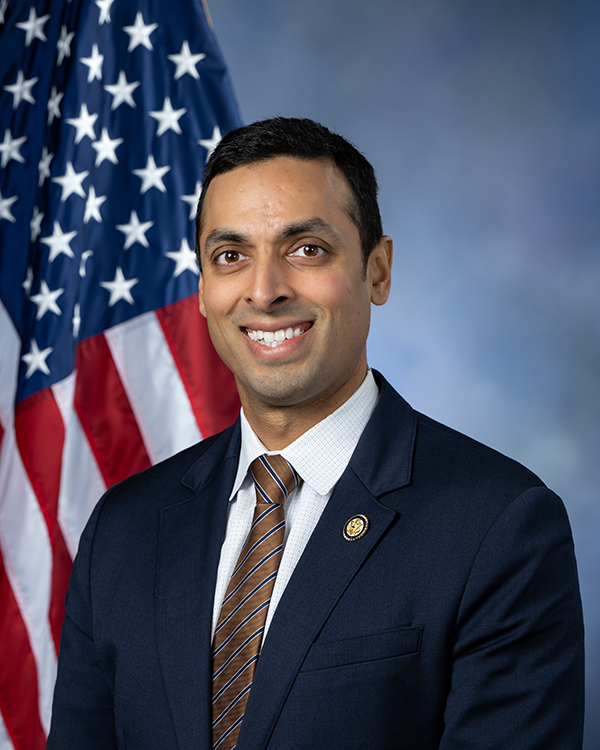
Peters, Evans Unveil Bill to Address Transmission Project Bottlenecks and Lower Electricity Costs
September 8, 2026 The CLEAR Act would close legal gaps and end lengthy delays to build big power lines Washington, D.C. — Today, Representatives Scott Peters (D-CA) and Gabe Evans (R-CO) introduced the Certainty in Litigation for Electric Asset Reliability (CLEAR) Act of 2026, legislation to streamline the buildout of big power line projects. The CLEAR Act would resolve ambiguity in current law so that Department of Energy (DOE)-coordinated transmission projects follow the clear standards of the Federal Power Act instead of traditional judicial review. In California alone, 201 of the 501 transmission projects approved since 2000 are still stuck in the permitting process , and 89 of those remain delayed. Meanwhile, California's electricity prices have nearly doubled in the past decade, and the state now ranks second highest in the nation for residential electricity rates. Every year a transmission project sits in limbo is a year Californians, and ratepayers across the country, continue to foot the bill for an outdated, overburdened grid. "Californians pay some of the highest electricity rates in the country, and part of the reason is that we can't get transmission projects through the litigation process and built on time," said Rep. Peters. "Our grid is too old and too slow to meet our skyrocketing energy demand. We can't wait years for badly needed infrastructure to be built. The CLEAR Act would accelerate the review process for large energy infrastructure projects and establish clear rules for stalled transmission projects, giving developers and local stakeholders the certainty to plan along with relief for ratepayers from rising costs." “As America’s demand for energy continues to rise, it is crucial that we find new and innovative ways to successfully transfer power in an affordable, safe and timely manner. The CLEAR Act will boost energy production, cut red tape and expedite project timelines, and reduce costs related to transmission projects across our country. I’m proud to help lead this important legislation, and look forward to continuing to prioritize permitting reform as I work to make energy and life more affordable for Coloradans and our nation,” said Rep Evans. The CLEAR Act would align judicial review standards for DOE-coordinated transmission projects with those already used for hydropower and natural gas pipelines under the Federal Power Act , ensuring projects are built on time, without unnecessary legal delays. The Federal Power Act governs the regulation of electricity and interstate power lines, and it empowers the DOE to act as a coordinating entity between Federal agencies, states, and local governments. However, for DOE-coordinated transmission projects, parties have up to six years to sue, which drags cases through multiple, lengthy legal battles. This leads to confusion and uncertainty for companies who want to plan and invest with confidence, or local stakeholders who want to engage efficiently in the review process. Under the CLEAR Act , projects would have to follow Federal Power Act judicial review standards, including: A 120-day statute of limitations for filing suit A requirement that petitioners participate in the environmental review process before litigating, improving upfront engagement and making projects better during the review process, instead of on the back end; and Direct elevation of challenges to the U.S. Court of Appeals, ensuring stakeholders can reach a final decision faster Read a one-pager on the CLEAR Act here and bill text here. Background: As leaders of the Problem Solvers Caucus’ Permitting Energy & Environment Working Group, Reps. Peters and Evans have led major bipartisan efforts in Congress to streamline the federal permitting process for energy and infrastructure projects. They are the original authors of the CERTAIN Act to accelerate energy and infrastructure projects by enforcing strict application timelines. This ensures energy projects move forward quickly, preventing agencies from delaying reviews. It also stops Administrations from canceling permits that were already approved legally. Their bill has been supported by almost 40 organizations, made up of the people who build, power, and maintain America's infrastructure. ###
440948a7-87a4-479a-9a10-0e0c8e72b6f9Issued within 24 hours
Other senators' releases published in the day before or after this one.