National redistricting battles hit Washington state and its lawmakers
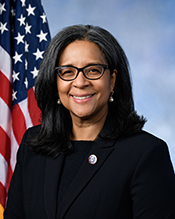
The Seattle Times | National redistricting battles hit Washington state and its lawmakers By Anumita Kaur Shauna Sowersby Dawn illuminates the city of Yakima. (Erika Schultz / The Seattle Times, 2025) WASHINGTON — The landmark Supreme Court decision axing a majority-Black congressional district in Louisiana has intensified redistricting battles across the nation, rippling as far as Washington state. The ruling has renewed a Republican challenge to Washington’s new legislative districts while spurring some Democrats to seek new congressional boundaries. Following the April 29 Supreme Court decision, a group of Washington state Republicans asked a federal court to throw out the legislative map derived from Sotto Palmer v. Hobbs , which redrew districts in 2024 after ruling that Latino voting power had been diluted in the Yakima Valley and Pasco areas. “We believe it affects Sotto Palmer explicitly. It’s the same issues, it’s the same conclusions,” said Jim Walsh, the state GOP chair. The Supreme Court’s Louisiana decision confirmed “that race may not be used as a predominant factor considered in drawing legislative districts,” the Republican intervenors wrote in their motion filed this month. They contend Washington’s 2024 legislative map rests on an “erroneous legal framework,” and should be tossed and reverted to the prior boundaries drawn by the bipartisan redistricting commission in 2021 . Source: Washington State Redistricting Commission (Graphic by Mark Nowlin / The Seattle Times) At the same time, as the Supreme Court ruling extends Republican officials’ new ground to redistrict across the nation and bolsters the party’s efforts to control the U.S. House, Democrats in Washington state are weighing whether to redraw congressional districts if they can secure the necessary seats in Olympia. They would be joining other Democratic-led states such as California and Virginia if they do so. “President (Donald) Trump put out the call to rig the system in order to maintain the Republican majority in Congress, and red states are answering,” Gov. Bob Ferguson told The Seattle Times. “I support efforts to level the playing field. In Washington state, we would need a two-thirds majority in both the House and Senate to change our redistricting process. If we get that supermajority, I would not only support a redistricting effort — I would lead it.” The fervor to reshape legislative — and potentially congressional — boundaries comes months before the consequential 2026 midterm election, as both parties wield redistricting as a high-stakes tool they claim protects electoral fairness in the fight for political power. Washington state voters shifted map-drawing power from elected officials to a bipartisan redistricting commission in 1983. The commission consists of four voting members — two Democrats and two Republicans — picked by legislative leaders from both parties, plus a nonvoting chair selected by the members. The commission is slated to convene in 2031 to redraw congressional and legislative districts. Only a two-thirds vote by the state Legislature can trigger redistricting before then — or, in the case of the state’s 2024 legislative map, U.S. District Judge Robert Lasnik could grant the Republicans’ recent request to restore the commission’s previous maps. “How that plays out I think is anybody’s guess … Whether they do it in a timeline that affects the 2026 election is a tougher question,” said state Senate Minority Leader John Braun, R-Centralia, a vocal critic of the redone legislative map. “This is very good news from my perspective for Washington state, and the opportunity to get back to commission-led redistricting.” From Washington, D.C., Democratic Rep. Marilyn Strickland signaled a concerted fight against nationwide Republican-led redistricting. Strickland, of Tacoma, serves as secretary of the Congressional Black Caucus — a longtime power center among congressional Democrats. “This is not just about Black Congress members or Black voters — this is an overall national voter suppression effort in general, so this can affect all of us,” Strickland told The Times on Tuesday. “We are not going to take this lying down.” The Sotto Palmer legislative map Washington’s legislative map was redrawn two years ago with Central Washington’s Latino voters at the center of the case. Lasnik approved new legislative district boundaries in March 2024 after ruling that the previous map hindered the ability of Latino voters in the Yakima Valley and Pasco areas in Sotto Palmer V. Hobbs. The revised map created a Latino-majority 14th Legislative District, which some voting rights advocates applauded as an order cementing the strength of the Voting Rights Act of 1965. Democrats celebrated the new map; Republicans, like Braun, slammed it as partisan gerrymandering. State Senate Minority Leader John Braun, R-Centralia, asks a question before the Senate Ways and Means Committee in Olympia on Feb. 6, 2026. (Karen Ducey / The Se
454f6413-d8f2-45cf-a6a6-4f14332c12b7Issued within 24 hours
Other senators' releases published in the day before or after this one.