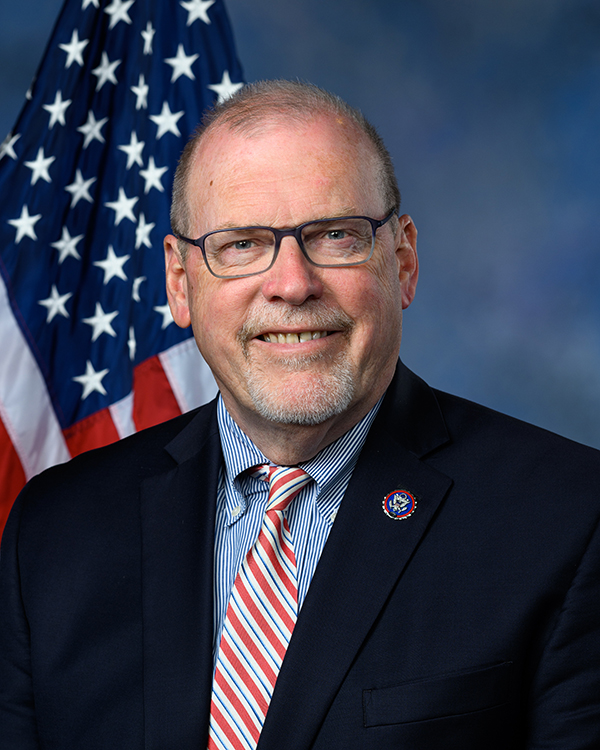
Trahan Releases Updated FRONTIER Act Section-by-Section
Today, Congresswoman Lori Trahan (MA-03), a member of the House Energy and Commerce Committee, released a section-by-section summary of her updated Frontier Risk Oversight, National Transparency, Independent Evaluation, and Reporting (FRONTIER) Act. Full bill text will follow in the coming weeks. “The American people are fed up with the biggest AI companies writing their own rules and grading their own homework. That approach failed on social media, and we can’t let it happen again with an even more powerful technology,” said Congresswoman Trahan . “We can’t wait until January to start building strong, durable guardrails that can pass both chambers of Congress and be signed into law. Building the coalition to get there starts now.” Trahan is working to update the legislation to reflect months of feedback from a broad coalition of stakeholders. Key changes include: Floor preemption: State laws more protective than the legislation are preserved. States with weaker or no standards are preempted to create a federal floor. Embedded, independent verification. Prescriptive language to guarantee embedded access for independent verification organizations (IVOs) and mechanisms for government assignment of IVOs to avoid a race-to-the-bottom. Addressing recursive self-improvement. Automated AI research and development, including recursive self improvement, is its own category of catastrophic risk. Each of the bill’s obligations apply to it, including frameworks, reporting, and IVO assessments. Enforceable corrective orders. When frontier developers fail to adequately mitigate risk, the federal government can require specific corrective action, backed by civil penalties and injunctive relief. IVOs have a duty to recommend corrective actions to developers. Penalties and reporting requirements for near misses. Penalizes frontier developers for near misses to incentivize precautions before a catastrophe materializes. Also mandates that developers report these incidents to the government. Office of AI Security. Formally establishes a new office within the U.S. Department of Commerce to administer the regulatory regime, led by a Senate-confirmed Assistant Secretary for AI Security. The bill authorizes significant appropriations for this office and grants it special hiring authorities. Broader incident reporting. Reportable incidents now include near misses, models deceiving their developers, and incidents affecting critical infrastructure. Also includes a broader knowledge standard, requiring developers who “should have known” about an incident to report it. Outcome-based standard. Frontier developers’ published safety frameworks must be reasonably designed to adequately mitigate catastrophic risk. Commerce must publish guidance for companies on best practices, standards, and methods to meet the standard. A copy of the section-by-section released today can be accessed HERE . ###
46f68c61-7796-48aa-99dc-bf6216a20d9dIssued within 24 hours
Other senators' releases published in the day before or after this one.