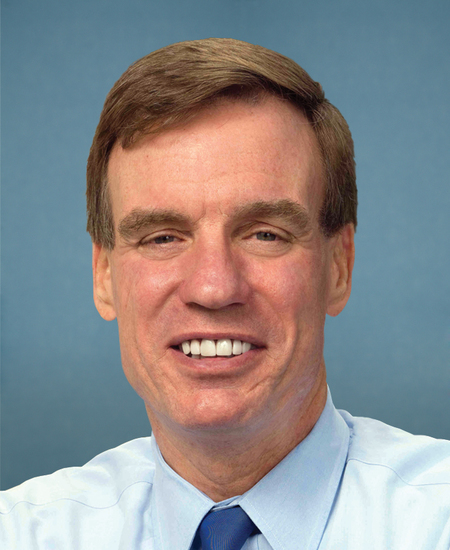
Warner, Kennedy Introduce Bipartisan Legislation to Modernize Federal Reserve Discount Window
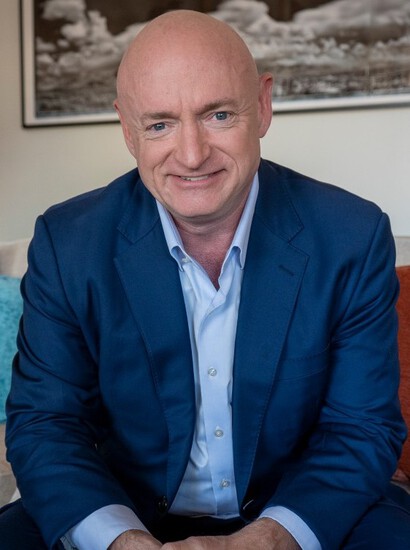
WASHINGTON – U.S. Sens. Mark R. Warner (D-VA) and John Kennedy (R-LA), members of the Senate Committee on Banking, Housing, and Urban Affairs, introduced the Discount Window Preparedness Act of 2026 , legislation to improve the effectiveness of the Federal Reserve discount window, a liquiditytool that provides short-term loans to depository institutions, such as commercial and community banks in order to support the liquidity and stability of the banking system, and help implement monetary policy effectively. First established in 1913 with the creation of the Federal Reserve, the discount window remains, more than 110 years later, a critical tool for ensuring the safety and soundness of the U.S. financial system. “The failures of Silicon Valley Bank and Signature Bank in 2023 marked two of the largest bank failures in U.S. history. Those failures highlighted the need to reform the Federal Reserve’s discount window for the 21 st century economy, where bank runs can occur over hours, rather than days. Our bipartisan legislation will implement key reforms to make sure that banks can actually use the discount window, reduce the unnecessary stigma associated with that use, and improve the window’s operations to meet the challenges of the digital age. We need to modernize the window and return this important liquidity tool to its intended role,” said Sen. Warner. “Borrowing at the Fed’s discount window has become stigmatized to a point where Silicon Valley Bank and Signature Bank were ill-prepared when attempting to gain access to it in times of need. The Federal Reserve’s discount window exists to be the lender of last resort, but banks need to be ready to use it before the wheels come off. The Discount Window Preparedness Act would help modernize the discount window, protect depositors, and keep credit flowing to our families and small businesses,” said Sen. Kennedy . The Discount Window Preparedness Act of 2026 will: Mandate Testing of the Discount Window: Mandates that eligible depository institutions operating in the United States engage in test borrowing at the Federal Reserve’s Discount Window: Large Institutions (> $100 Billion): Quarterly. Smaller and Larger Institutions ($10 Billion – $100 Billion): Semi-annual. Small Institutions (Under $10 Billion): Not in scope. Require Regulators to Reflect Banks’ Ability to Use the Discount Window in Liquidity Evaluations: Regulators must “give credit” in their evaluations of bank liquidity preparedness to depositories that can use the discount window successfully – “positive consideration” must be given to successful testing and pre-pledged collateral. Require Financial Institution Risk Committees or Equivalent to Review and Approve Liquidity Contingency Plans: Depositories’ liquidity contingency plans are to include detailed policies and procedures for seeking advances and be submitted to Federal Reserve Board, Regional Federal Reserve Bank of membership, and primary supervisor. Require the Federal Reserve Board to Modernize Discount Window Operations. Require the Federal Reserve System to Simplify and Harmonize Collateral Processes with Federal Home Loan Bank System: The Federal Reserve Board must work with the FHFA and the FHLB system to simplify and harmonize policies and procedures for pledging and transferring collateral among FHLBs and Federal Reserve Banks. Require Review of Weekly Federal Reserve Balance Sheet Reporting: The Federal Reserve Board must comprehensively review the weekly reporting of its balance sheet activities, and consider changes to avoid market distortions that could inadvertently place individual financial institutions at a disadvantage. Require Federal Reserve Study and Report to Congress on Discount Window Stigma: Requires the Federal Reserve Board to conduct a study and submit a report to Congress about additional measures that could be taken to reduce discount window stigma and improve the process for obtaining advances on behalf of depository institutions. Sen. Warner has also led efforts to hold those responsible for bank failures accountable. Sen. Warner first introduced the Discount Window Enhancement Act in 2024. In the aftermath of the Silicon Valley Bank collapse, Sen. Warner cosponsored the DEPOSIT Act , the Bank Management Accountability Act , and the Failed Bank Executives Clawback Act , efforts to ensure that bank executives do not profit in the wake of bank failures. “The discount window has fallen out of use, especially after the financial crisis of 2008. This bill takes an important step toward restoring it to its original purpose of maintaining the flow of credit to US households and businesses even when the financial system is under stress. The Federal Reserve and other regulators are already moving in this direction, but enacting this bill would broaden and accelerate that effort and, critically, put the force of the Congress behind it,’ said Don Kohn, Former Vice Chair of the Federal Reserve “The Federal Reserve Discount Window is a critical tool that gives financial institutions of all sizes access to liquidity and prevents panic in the broader financial system. Stigma associated with accessing the window and some legacy operational issues have limited the power of this tool and forced the Fed to take dramatic steps to meet recent needs. This legislation would help modernize the window to ensure immediate access by all eligible institutions in today’s lightning-fast financial system. Although this legislation does not require community banks to test usage of the discount window, those who do will add a powerful tool to their liquidity arsenal. For the smallest banks, liquidity is life or death in a panic,” said Betsy Duke, Former Federal Reserve Board Governor. “The raison d’etre for the Fed’s discount window is to enable otherwise solvent banks to access liquidity in times of stress. But the current system is not operationally capable of providing timely window access given the speed with which deposits can “run”. Moreover, the stigma attached to DW borrowing discourages its use. Having DW access should be no more stigmatizing than having deposit insurance. And if they have prepositioned collateral with the Fed, banks should be able to count DW lending capacity in their stress liquidity calculations. This bill could help avoid unnecessary liquidity failures which are disruptive to communities and costly to the deposit insurance fund,” said Sheila Bair, Former Chair of the U.S. Federal Deposit Insurance Corporation “As evident from events in March 2023, it is clear that the current discount window mechanism at the Federal Reserve has deficiencies that have led to severe stigma, increasing the risk of banking panics and deposit runs. This bill will provide a good basis for regulators to implement operational improvements and reduce frictions that hinder the effectiveness of discount window,” said William C. Dudley, Former President of the Federal Reserve Bank of New York. “The bank deposit runs and contagion to other banks in March 2023 revealed that banks were reluctant to use the discount window as intended, and led to the Treasury, FDIC, and the Federal Reserve having to take emergency actions to limit systemic risk and damage to the real economy. This bill makes specific recommendations to reduce discount window stigma and improve its operations to help prevent this situation from happening again. It would require banks to have the operational capacity to borrow from the discount window and to regularly test this capacity. It would build discount window readiness into contingency planning and give credit to banks for preparedness. It also requires the Federal Reserve to modernize their discount window operations. Reducing discount window stigma by solvent banks is important to ensuring that the banking system can function and support the economy in periods of stress,” said Nellie Liang, Former United States Under Secretary of the Treasury for Domestic Finance. “One of the lessons of 2008 is that bank failures rapidly pile up when depositors lose confidence in the banks’ access to reliable funding. Taxpayers should not be put in a position where Congress is forced to choose between financial collapse of banks and emergency taxpayer-funded rescue. This legislation has common sense measures to ensure banks are operationally prepared to access the Fed’s existing liquidity facilities, without stigma, before stress emerges,” said Christy Goldsmith Romero, Former Special Inspector General of the Troubled Asset Relief Program , U.S. Department of the Treasury “Senator Warner and other supporters of this bill should be commended. De-stigmatizing the Fed’s Discount Window so that it can be a more effective liquidity tool for banks is a major step forward. This bill is thoughtful and important, and one that makes U.S. banking safer and sounder,” said Eugene A. Ludwig, Former U.S. Comptroller of the Currency. “We thank Senator Warner for introducing this bill that will ensure banks are operationally ready to borrow from the discount window to meet liquidity needs while also reflecting that readiness in corresponding liquidity regulations and requirements. This is a sensible piece of legislation that seeks to actually respond to the regional banking crisis of March 2023 and help make our financial system work as it is intended,” said Greg Baer, President and CEO of the Bank Policy Institute. “The 2023 banking crisis and the 2020 COVID crisis each revealed vulnerabilities in the current design of the discount window. The events of March 2023 in particular showed that bank runs can occur faster than they did in the past. To illustrate this point: SVB experienced a total outflow of 25% of deposits in one day. Given this, what is needed is an operational system that allows the transfer of collateral and funds at the push of a button. At the same time, it is also imperative that the Federal Reserve maintain its independence as a liquidity provider to banks, given its clear mandate under Section 10B to act independently. This bill is a foundation in which regulators can build off of to bring the discount window into the 21st century,” said Hal S. Scott, Nomura Professor and Director of the Program on International Financial Systems at Harvard Law School; Director of the Committee on Capital Markets Regulation. Read the full bill text here . A summary of the legislation is available here . ###
479a4efd-3865-4009-a60b-0ab2ceb4b4e0Issued within 24 hours
Other senators' releases published in the day before or after this one.