Sullivan Highlights Progress, Partnership, and a Stronger Future for Alaska Native Communities at AFN Convention
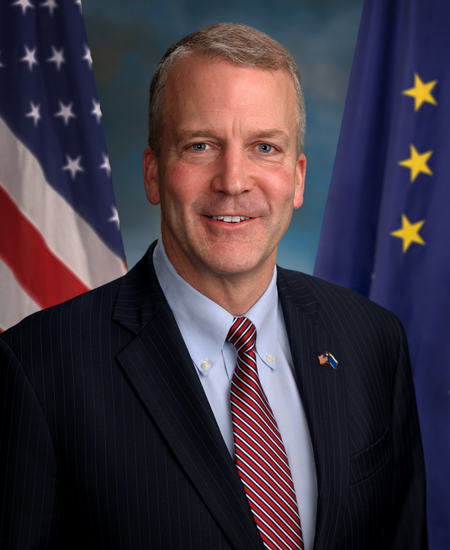
ANCHORAGE, ALASKA —U.S. Senator Dan Sullivan (R-Alaska) today addressed the Alaska Federation of Natives (AFN) annual convention, highlighting progress made over the past year to advance Alaska Native priorities and raise Alaska Native voices at the federal level and reaffirming his commitment to work alongside Alaska Native leaders to strengthen communities, preserve traditions, and expand opportunities across rural Alaska. During his remarks, Sen.Sullivan highlighted efforts to expand land allotment opportunities for Alaska Native Vietnam veterans, restore National Guard units to rural communities, support communities recovering from devastating storms, and protect Alaska’s fisheries and subsistence resources. Sen. Sullivan also discussed the historic Rural Health Transformation Program, which is expected to deliver $1.4billion to Alaska over five years to strengthen rural health care, as well as his efforts to improve rural infrastructure—including water and sanitation projects—and to strengthen aviation safety through generational investments. Additionally, Sen, Sullivan addressed efforts to strengthen public safety, combat the crisis of domestic violence and sexual assault, defend the 8(a) contracting program and Alaska Native corporations, and support Alaska Native artists through his recently enacted ARTIST Act . Below is a full transcript of Senator Sullivan’s remarks. I. Introduction Wow, well, thank you. Thank you. First, Sheri and Megan, thank you for standing here and for, introducing me. That was a wonderful introduction, and you’ve been great friends, but I have so many great friends here. How about a round of applause for Megan and Sheri. Thank you. I just want to say, I’m so thankful to be back at AFN. I love coming to this great convention. It’s the heart and soul of our state in so many ways. So, thanks to all the members of AFN, the board members, the delegates, our elders, our veterans, our Native corporation leaders, and thanks also to FAI. I don’t know if Roy is here, but your team put on another wonderful Elders and Youth Conference, and they deserve a round of applause for that. One of the greatest privileges of serving as your senator has been the opportunity to learn from so many Alaska Native elders, leaders, and friends. Starting with my wonderful family, one of our great elders, my late mother-in-law, Mary Jane Fate, and my incredible, brilliant, gracious… I don’t know, I’m going to run out of adjectives—my wife, Julie, and her sisters, Janine and Jennifer, who are here today. Just for the record, I did not call my wife an elder. I may have screwed that up, so she’s not an elder yet. Kind of. She’s a beautiful elder. Right? I am truly blessed to have her as my life partner, who exemplifies the Native values of service and respect and truth every single day. I want to do another round of applause for my amazing wife, Julie. I’ve also had the privilege, and I mean, it’s the privilege of my entire life—to have legendary Alaska Native leaders, like Lyman Hoffman, and some who are no longer with us—Jake Adams, Oliver Leavitt, Walter Soboleff, and so many others who have taken the time to share their wisdom and guidance with me when I’ve sought it. That has been an incredible honor for me. Through this wisdom, I’ve learned important lessons. Some challenges can be solved quickly, but others take years, even decades. And some may never fully be resolved. What matters is partnership, patience, perseverance, hard work, and a commitment to never give up, even when challenges seem insurmountable. That’s the approach I’ve taken working alongside all of you—listening to your concerns, elevating your voices in the halls of Congress, and at the highest levels of our federal government, and tackling even the most difficult challenges together. That’s what we should be doing. II. Special Patriotism: Alaska Native Military Service Nowhere is that spirit of service, perseverance, and commitment more evident than in the extraordinary patriotism of Alaska Natives, who have answered our nation’s call to serve for generations at the highest rate of any ethnic group in America! Right here. I’m looking at a bunch of them here. During World War II, tens of thousands of Alaska Natives answered the call to sign up for the Alaska Territorial Guard. They were as old as 80 and as young as 12. Many Alaska Native women enrolled before anyone told them they weren’t allowed to enroll. Laura Beltz Wright of Haycock was the first woman to join. See her beautiful picture up there? And wouldn’t you know it; she was the best sharpshooter in the Alaska Territorial Guard. Sorry, Bill Thomas. She could outshoot you, my friend. That special patriotism has continued through America’s other conflicts—Korea, Vietnam, the Middle East. Many Alaska Native Vietnam vets, as we know, missed their opportunity to apply for their Native allotment, because they were serving their country in a war when a lot Americans were avoiding service. I’ve worked with so many in this room—and I’m looking out seeing them; there are pictures of us—to relentlessly fix this injustice and pass legislation to make sure our Alaska Native Vietnam veterans got the lands that they were promised. You saw a couple hours ago, three more Alaska Native Vietnam vets got their allotment because of that legislation. So last year, you might remember, at AFN, I reached out to all of you and said, this vital program is going to expire at the end of the year. I need your help. I have a law to extend it for five more years, but it’s being blocked. I’m going to go down the Senate floor every day until they fix this, but I need your help: AFN, everybody else. And you know what? Everybody here answered the call. It was the Alaska Native Brotherhood, Alaska Native Sisterhood, TCC, Tlingit & Haida—everybody came to help. And guess what? In December, they finally relented, and we got an extension for five more years, and my bill signed into law. Thank all of you. But we’re not finished because a lot of Alaska Native Vietnam vets, particularly those in Southeast, and on the North Slope, don’t have lands by their homes. That’s why I’ve introduced legislation to open approximately 4 million additional acres for land selections for our Vietnam veterans in Southeast and on the North Slope, and we’re going to get that done too. III. Reviving Rural Alaska Guard Units So, also, in this spirit of service to our country, for decades, Alaska National Guard units and armories gave rural Alaskans the opportunity to serve their country close to home while strengthening emergency response and national defense. For reasons that still baffle me, most rural guard units were shut in the 1990s. Take a look at this photo. This is a gut punch to our state, in my view. These were all the Guard units and armories that we had in the 1980s. The vast majority were shut down. We saw the critical role of the National Guard during their response to Typhoon Halong. In conversations I had with leaders in the region, we discussed how reopening armories and returning Guard units to rural communities that want them would strengthen disaster response. But revitalizing the National Guard units throughout rural Alaska would also provide training, leadership, mentorship, and a sense of purpose for young Alaskans right at home. We need to revitalize the Alaska National Guard in rural Alaska, and that’s exactly what my bill, the Alaska National Guard Rural Community Revival Act, will do. I like to tell you, this bill was already marked up in the Armed Services Committee, unanimously passed. Every Democrat, every Republican voted for it. The U.S. Army is on board, the National Guard is on board, and with your help, we’re going to get this done this year for communities in Alaska that want a National Guard unit and armory back. I think it’s a really big idea, and we’re going to get it done. IV. Alaska Military Build-Up So, this is just part of a massive build-up in the Arctic, in terms of military investments and capabilities. We are undertaking in Alaska, the largest build-up of our military since World War II, maybe ever. Billions of dollars for the Air Force, for the Army, even my beloved Marine Corps is going to be coming up to Alaska. But the biggest area where we’re really investing is the Coast Guard. We had, last year, a $25 billion recapitalization of the United States Coast Guard. That is the biggest recapitalization of the Coast Guard in American history. A ton of that is coming to Alaska. For example, we’re going to have four icebreakers homeported in our state. Think about that. It took our country 250 years to figure out that you should put the icebreakers in the state with the ice. But we’re going to do it. We’re going to do it. This means more investments for Arctic security, greater search and rescue capabilities in our rural communities, and, of course, better fisheries enforcement and rescue operations. V. Addressing the Crisis in Our Salmon Runs So, let’s turn to fisheries. When the salmon are strong, our communities are strong. Strengthening the role of Alaska Natives in fisheries management isn’t just a priority. It’s essential to thriving fisheries and maintaining your culture. I’ve worked for years to empower Alaska Native voices through federal law in this area. That’s why I’ve made the salmon crisis—which we are clearly going through—one of my top priorities during my entire time in the Senate, particularly on the Yukon and Kuskokwim Rivers. A number of years ago, my wife, Julie, and I were sitting on the banks of the Yukon River at our family’s fish camp. It was ghostly quiet. No boats on the river. It was another year with dismal king salmon runs that generations of Alaskans, all of you, have depended on. Julie asked a simple but profound question. What is happening? We have to do something about this. Her questions echoed what I’ve heard from thousands of you and helped inspire my Alaska Salmon Task Force Act, which became law over six years ago. This law brought together some of our best minds—Alaska Native, tribal leaders, state, federal, university experts—to better understand what was happening to our salmon runs and build consensus on the path forward to strengthen salmon runs across Alaska. Now, it’s not easy to pass laws on fisheries, but I’ve had many signed into law, and they’ve focused on empowering Native voices. The President also signed my North Pacific Research Board Enhancement Act into law. That adds an Alaska Native board member, incorporating traditional knowledge, and ensuring your voices are a guiding, important principle for federal research on salmon. We also changed federal law to allow fishery disasters to be declared based on subsistence losses, which was never allowed in federal law before, to help Native communities. And based on…yeah, that’s a big deal. Based on the Salmon Task Force law that, as I mentioned, passed six years ago, we are directly tackling the issue of bycatch. My team and I work relentlessly for years to ban the importation of all Russian trawl-caught fish into America. That’s very important. Now, we’re going after the Chinese trawl-caught fish. As I like to say, the American people and Alaskans should be eating “freedom fish,” not “communist fish” from China and Russia. My Bycatch Reduction Act was recently introduced last year. It’s the most comprehensive bycatch legislation ever to reduce bycatch, protect seafloor habitat, strengthen transparency and accountability in federal fisheries management, and importantly, like our other bills have done, this bill gives Alaska Natives oversight of NOAA’s Bycatch Observer Program. This bill passed in its first vote in the Senate in a strong bipartisan way in the Commerce Committee earlier this year. But my effort to pass it on the Senate floor, unfortunately, was blocked. But you have my word that I will not give up on this bill. I will work hard to get this bill done. That is my promise to all of you, and I always keep my promises. VI. Rural Health, Water & Sanitation Now, I want to talk about health care, another challenging issue, and the opportunity we have to turn one of Alaska’s greatest challenges into a huge opportunity for our entire state. Alaska Native health organizations are a shining light for innovation in terms of health care across Alaska, in many ways, across America. Last year, working with many of you, I led the effort to pass legislation creating a $50 billion Rural Health Transformation Fund. That is the largest investment in American history in rural health care in America, and Alaska got the biggest award of any state in the country on this. This award provides roughly $1.4 billion over five years for Alaska health care innovation. Let me repeat what I said last year at AFN: This legislation doesn’t cut Social Security funding, doesn’t cut Medicare funding, and does not cut Medicaid funding. But, for too long, DC, in terms of health care, has imposed a one-size-fits-all approach to health care, designed in DC, imposed on states where it doesn’t work. This program flips that model. It provides very significant funding—historic funding, But it enables us, Alaskans, to design our health care system with Alaska-specific solutions for innovative health care approaches for Alaska villages and communities. In the past year, almost a quarter of a billion dollars has been allocated under this new program, including almost $70 million going directly to Alaska tribes, many represented here, in 68 innovative health care programs. Everywhere I go in Alaska, all over the state, I ask, what are we doing on the Rural [Health] Transformation Fund? What are you doing? These awards are expanding mobile health care, addiction treatment, behavioral health, maternal and child health, workforce development for health care. Some of the innovation—I’ll give specifics: $2 million for the Arctic Slope Native Association to expand surgical services; $2 million for Maniilaq to modernize health care technology; and nearly $3 million to YKHC to strengthen telehealth and telecommunications. And, my favorite one, not just because my wife and sisters are from the Interior—how about Tanana Chiefs Conference’s idea to develop a drone-based prescription drug delivery system to reach remote villages with drones? How about that? That is very cool. That’s one of the innovations. Healthy communities in rural Alaska also means stopping the flow of fentanyl into our villages that has been poisoning our children and killing our kids. We are doing that through legislation that finally secures the border. Illegal immigration with these drug cartels is almost down to zero for America, and that’s healthy for all Alaskans. Healthy communities also means clean running water and sanitation. This issue has been a top priority of mine since Day One in the Senate, and I was honored that Megan Onders mentioned it. Here’s why: We are the richest country in the world, and yet some of the most patriotic communities in the world, meaning yours, with more veterans per capita than any communities in America, still don’t have running water and flush toilets. I believe that is absolutely wrong. It is wrong. So, since Day One, one of my first bills that I got passed into law was a brand new program for small, disadvantaged communities in Alaska for water and sewer. Just a couple months ago, in the Water Resources Development Act, my bill got marked up as part of that bill—it’s going to pass by the end of the year—unanimously, every Republican, every Democrat, voted for it. We got a quarter of a billion dollars directed to running water and flush toilets in Alaska communities in that bill. A quarter of a billion. We’re going to get that done, especially working alongside an ANTHC. I ran into Natasha right before I came in here. They’re doing great, innovative work. I want to thank them on that. VII. Generational Infrastructure Investments Clean water and sanitation are just one part of the historic infrastructure investments we’ve been making across Alaska. These are generational opportunities that we are working on now, especially in rural Alaska, that are saving lives. Take broadband. We have secured nearly $3 billion, more than any other state by far from the federal government, to expand broadband and internet connectivity. This was done in the bipartisan infrastructure bill, with Senator Murkowski and Don Young and [me]. We were negotiating the formula on where the broadband was going, and a lot of senators were saying, I want to take my state from 4G to 5G connection. I was in the room saying, 4G to 5G? What about “no G?” We’ve got “no G” in Alaska. Shouldn’t we prioritize “no G” before we go 4G to 5G. We got that done and now, $3 billion later, we have the most investment from the federal government of any state in the country on broadband. We are making historic investments in aviation safety, too. I had the NTSB and FAA in 2020 commission a report on aviation safety in Alaska. You all know what the results were. We have the highest crash rates in the country by far—two and a half times higher than the rest of the country. And, we have the highest death rates, by far, in terms of aviation safety. We have made aviation safety a huge priority. We had a roundtable recently with a lot of Alaska Native leaders, with the head of the FAA, the head of the NTSB. They’ve announced, in the next three years, a half a billion dollars to upgrade weather systems, infrastructure, cameras, a whole host of things that are coming to rural Alaska that will do the one thing we all agree on we all want: Make sure Alaskan pilots and passengers make it home safely every night. We are working on that. Finally, we are advancing major infrastructure projects that we’ve been talking about for decades. Here’s the good news: We’re not talking about them anymore. We’re actually building them! From the deep-water port in Nome that Megan mentioned, to reopening the Navy base way out in Adak, to the life-saving King Cove-Cold Bay Road. That is one, I think we’re all passionate about. I was recently in King Cove. At the community meeting we had, I saw tears of joy and tears of sadness. Joy, because we’re finally making progress on a road that the brave residents of King Cove have been trying to get built for almost a half a century. Sadness, as families remembered the 18 people who lost their lives because we didn’t have a reliable nine-mile, single lane, gravel road. For too long, Lower 48 environmental groups and the federal government have blocked this road, prioritizing birds over human lives. Not anymore. We are building the King Cove Road. I also want to remember my good friend, Stanley Mack, who fought tirelessly for this road, but sadly passed away before seeing it complete. Our hearts go out to his family. In his honor, I think we all need to recommit to making sure we are going to finally build the King Cove Road. VIII. Addressing High Energy Costs Now, Senator Murkowski talked about one of the biggest challenges we face now, and it’s the high cost of energy, particularly in rural Alaska. We are focused on that every day. We know how hard of an issue that is. We are working to provide immediate relief. In May, the Secretary of the Interior came to Alaska and announced an energy task force specifically focused on rural Alaska—to try to bring down energy costs in rural communities. We were able to work together to get LIHEAP assistance funding for low-income families more than doubled, and to get EPA waivers for more diesel supplies for Alaskans. A few days ago, the Department of Energy announced a huge $150 million investment in Alaska’s transmission lines to bring down utility costs. And right here at AFN this morning, the Deputy Secretary of Energy announced that the Office of Indian Affairs was providing a $50 million grant to 20 projects in Alaska to improve energy affordability. That is one of the biggest awards the Department of Energy has ever made for American tribes anywhere in the country. I want to thank the Secretary. But I think, as we all know, the best way to address Alaska’s energy challenges is to produce more Alaskan energy—by and for Alaskans. That is exactly what we are doing. Under the previous administration, Alaska Native leaders from the North Slope traveled to Washington, D.C. eight different times to oppose unwanted restrictions on responsible resource development on their lands. The North Slope Borough, the tribe, ICAS, the ANCs, the leadership all came to D.C. and delivered the same message: Don’t shut down the NPR-A. It will hurt our communities. It will hurt our way of life. It will hurt thousands of jobs. It will hurt the high cost of energy. But the previous administration didn’t listen to these Native voices. They wouldn’t even meet with these great Alaska Native leaders. Now, we have changed that. We have passed laws to reverse these restrictions and open NPR-A to responsible resource development, bringing back good-paying jobs, more oil flowing through TAPS, which is what the Native leaders of the North Slope wanted, and what all Alaskans want. Senior officials are now traveling to Utqiaġvik, to Anaktuvuk Pass, and to other North Slope communities—listening to and respecting their voices. And we’re going to get the Alaska gasline and LNG project done as well. We’re going to get it done. Now, I know people are rolling their eyes. Sure Dan, we’ve heard this for 50 years. But, first of all, don’t listen to the naysayers. They’ve never built a thing. They’ve never built a thing. We’ve never been further along on this project. The federal government is now in the lead. We’re going to get it done. Think about it: Think about what low-cost, clean-burning Alaska gas can do if we have it for 50 to 100 years, what it can do for our communities, for our future. It’s going to keep our kids and grandkids here. This is the biggest project. We’re going to get done. It will help everybody in terms of lower energy cost, more jobs, and greater economic opportunity. IX. Empowering Survivors of Violence So, our communities must not only be strong, but they must be safe. Now I’m going to talk about a difficult issue for all of us. Many years ago, when I was your Attorney General, I led what was called the rural subcabinet, and I traveled throughout rural Alaska to all kinds of different communities. One of the communities I went to, I met a leader of one of the school districts. He pulled me aside and, just one-on-one, he said, “Attorney General Sullivan, I just wanted to tell you a story. You might not be aware of it. My star student in this school came to me this morning and said, she couldn’t take her final exam because she had been sexually assaulted last night.” Then he said, “You might not know this—but not just in rural Alaska, all of Alaska—this happens a lot. And nobody talks about it.” This was one of the most impactful meetings I’ve ever had in my entire life, because he said we have to do something about it. We have to do something about it. This opened my eyes to one of the most horrendous problems facing our state that I have made my life’s passion as an elected official to address. That is to combat violence against women and children and the related scourge of human trafficking that we also have a giant problem with. As I mentioned, I’ve made combating this scourge my life’s work in Alaska, starting with the statewide Choose Respect initiative, to bring these issues out in the open, so people know about them, and to take bold actions across the board to combat them. In the Senate, I’ve continued that work through legislation that I’ve passed, one called the Choose Respect Act, the other called the POWER Act, mobilizing free legal assistance for survivors, including a focus on indigenous women. Since its passage, the POWER Act has helped reach more than 90,000 lawyers across America to connect them with survivors of domestic violence and help them break out of the cycle of domestic violence. This legal representation matters. One study found that 83 percent of sexual assault survivors who had an attorney were able to get a protective order to break out of the cycle of violence, while those without an attorney, less than 30 percent got anything done. I want to thank the advocates, attorneys, tribal organizations throughout Alaska, and AFN, for helping survivors find safety. We have to continue this work, and we have to [ensure] that these heinous crimes get answers and justice. I want to thank Gloria O’Neill and Cook Inlet Tribal Council, and everyone who joined our May 5 th Missing and Murdered Indigenous People roundtable, where Assistant Secretary of the Interior, Billy Kirkland, who was here this morning, announced a renewed effort to relaunch Operation Lady Justice, which was the work initiated by our own great Alaska Native leader, Tara Sweeney, when she was the Assistant Secretary of Interior. We’re going to continue to focus on this. We must follow through on all these things. X. Defending ANCs and the 8(a) Program Finally, I want to update AFN on a never-ending battle we’ve been fighting together: The persistent lack of understanding back in D.C. —and perhaps even some Lower 48 jealousy—surrounding ANCSA and our unique system of Alaska Native Corporations. Our ANCs are so important to all Alaskans—not just Native Alaskans, all Alaskans. These companies create jobs. They own their own land, they control their own destiny. They’ve created thousands of jobs. They’ve strengthened our economy, and they support communities all over the state. Congress passed ANCSA over 50 years ago, yet we repeatedly see Democrats and Republicans alike target these organizations in a deeply unfair manner that harms all of you. Whenever this has happened, and unfortunately, it happens all the time, we have worked together, we have fought back, and we have prevailed. Let me give you just two recent examples. During COVID, when we were crafting the $6 billion CARES Act Tribal Relief Package, my team and I secured language that made sure that this tribal relief package, which was huge, covered all Native Americans. In Alaska, that meant tribal members and ANC shareholders. We wrote the bill to do that and everybody was fine with it. It passed. Everybody was eligible for relief. That was the right thing to do. The minority leader of the U.S. Senate then, Democrat New York Senator Chuck Schumer, later attacked this provision—even though he had agreed to it—even accusing certain Alaska Native leaders of corruption simply because they were an ANC shareholder. Subsequent legislation, like the $2 trillion American Rescue Plan, and the CHIPS and Science Act—a quarter of a billion dollars—led by this same senator when he became majority leader, consistently singled out ANCs for unfair treatment, discrimination, and depriving them of any opportunity to receive federal funding. Now, in my view and I think in most of your view, this was an absolute outrage. I fought this relentlessly in speeches on the Senate floor: “What are you doing? Why are you discriminating against Alaska Native people?” We all stuck together, even taking litigation on as it related to that CARES Act provision. By the way, that litigation went all the way to the United States Supreme Court. And guess what? Working together, my team led an amicus brief, but so many here did too: AFN, others. We won this issue in the U.S. Supreme Court! So, my team and I continue to remain very, very vigilant. We scrub every single piece of legislation coming through the Congress looking for, striking, and catching anything that singles out Alaska Native Corporations or Alaska Native tribes for discriminatory treatment. So, let me give you another example. Last year, the Republicans took their turn at going after ANCs, when the Secretary of Defense tried to equate ANC involvement in the SBA 8(a) program with “DEI” and said it needed to be dismantled. That was wrong. I called the Secretary of Defense directly and said, “Mr. Secretary, what on earth are you doing? What on earth are you doing? Do you even know what you’re talking about?” Sheri Buretta was talking about how important this program is. So, again, working with dozens of you, we went directly to senior Pentagon officials and made our case. Take a look at that pamphlet. That was a book that we put together with all your help. We went to all these top Pentagon officials and said, “ANCs are not DEI. They are patriots. They’ve been working for 40 years with the Pentagon to make our military stronger, more agile, more lethal. Undermining the 8(a) program as it relates to ANCs doesn’t just hurt ANCs—It hurts the military!” By the way, that pamphlet was so impressive, because what we did, we got all these programs that all of you were working on—and these are amazing programs. I am telling you, if you saw it, you would be like, “Wow, I am so proud to be an Alaska Native defending our country!” Well, I was so proud, I told the team, I’m going to ship this pamphlet—40 pages of what you all were doing to make our country stronger—out to everybody, so people can see how strong Alaska Natives are for the Pentagon. Then I was reminded, “Senator, a lot of this is classified. We can’t send any of this out.” But it is a great pamphlet on just what everybody here is doing. So, as a result of our joint advocacy, we are now in a much better place with these federal agencies. As Sheri mentioned—and I do want to mention Sheri, Shauna Hegna, Nicole Borromeo, so many others who have been working with us on this. I will say again—if additional problems arise, I will continue to pick up the phone and make our case, your case, directly to the Secretary of Defense, the Secretary of the Army, the Secretary of the Navy, the SBA administrator. I’ve called every one of these guys, and ladies, and said, “Enough. You can’t do this. You’re wrong on this.” Now we’re back in a stronger position. XI. Defending Alaska Native Culture, Lifting Voices Let me conclude with this. Julie’s grandmother, the late Sally Hudson, used to tell us all the time, “Alaska Natives are the most brilliant, hard-working, and resilient people in the world.” And she was right. One of the greatest parts of my job is celebrating your culture, and making sure the rest of America understands and appreciates it, and, when necessary, passing laws to protect it. Take our great whaling captains. I’ve stood alongside them throughout my entire time in the Senate, fighting to protect their rights and traditions, telling their stories on the Senate floor, telling their stories even to the President of the United States. Just last month, Julie and I were in Utqiaġvik. and attended a special church service, led by Vietnam veteran, Pastor Arnold Brower, Jr., blessing all the whaling captains and their families and their crews. It was a beautiful service. Last year, we secured in law an important tax provision that will help ensure these extraordinary whaling captain traditions can continue for generations to come. Now, Megan Onders already mentioned this next one. You look up here—take our Alaska Native artists, some of the most talented in the world, many of them downstairs at the craft fair. For years, as Megan mentioned, certain states—California, New Jersey, Hawaii—targeted and unfairly restricted the sale of authentic Alaska Native ivory crafts. And after a decade of fighting, pushing, holding hearings here at AFN, we finally got my ARTIST Act signed into law this year that preempts state laws that target beautiful, Alaska Native ivory and crafts. I want to thank Megan, I want to thank Melanie Bahnke, Vera Metcalf, Nagruk Harcharek. So many helped us on this. And, of course, so many of our incredible ivory artisans who worked with us. I just want to make an announcement: Any out-of-towners from California, New Jersey, or Hawaii, you are now free to go down to the craft store and buy as much ivory as you want. Nobody in California is going to put you in jail for that. Finally, I’m on a never-ending quest—that’s a selfie I always do when I’m in Juneau, when I’m out running in the morning—a never-ending quest to make sure Elizabeth Peratrovich is recognized as one of America’s great civil rights leaders. Now, Alaskans know her extraordinary story, but not enough Americans do. That’s why I’ve worked every single year to pass my Elizabeth Peratrovich Day resolution in the United States Senate. It does pass every year, honoring her remarkable legacy and sharing it with the rest of our country. XII. Conclusion As I mentioned, as I’ve learned from our elders, some challenges take years, even decades to resolve. There will be setbacks. There will be people telling us some things can’t be done. But through partnership, perseverance, hard work, we can prevail on these big, difficult issues. That’s what I’ve learned from so many of you. That’s the approach I will continue to take as your Senator. You deserve a Senator who works as hard as you do. Thank you, Anaa basee’. I’m honored to be here. Thank you, everybody. # # #
4aa07a9a-b72e-49f3-8be4-8f0f8825560eIssued within 24 hours
Other senators' releases published in the day before or after this one.