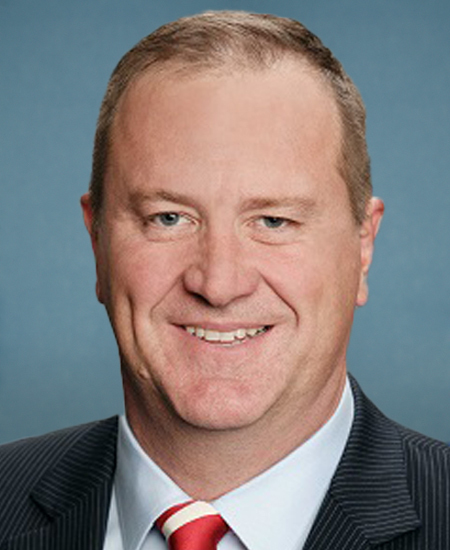
Senators Schmitt, Klobuchar Introduce Bipartisan Bill to Protect Americans from Harmful Online Search Monopolies
Follows Schmitt’s Win Against Big Tech Monopoly as Missouri AG U.S. SENATE — U.S. Senators Eric Schmitt (R-MO) and Amy Klobuchar (D-MN) introduced the bipartisan Securing Enforcement of Americans’ Right to Competition at Home (SEARCH) Act to prevent large search engines from blocking smaller competitors. The bipartisan legislation would put into law remedies sought by then-Attorney General Schmitt and the Justice Department after the Google Search Monopoly Case , the nation’s first Big Tech antitrust win. “Big Tech monopolies are shaping what information Americans see and censoring free speech. A handful of search engines dictate how virtually every American accesses information, meaning the companies controlling those search engines hold massive power over what people see online and control the most basic infrastructure of human speech and freedom of information in the digital sphere, that is unacceptable. As Missouri’s Attorney General, I sued Google over its illegal online search monopoly and its efforts to crush competitors, as well as fought Big Tech companies’ collusion with left-wing organizations and the administrative state that censored conservatives. Now, I am proud to work with Senator Klobuchar to offer a bipartisan path to protect one of the key tenets of modern American society: free speech online,” said Senator Schmitt. “Through three administrations, the Justice Department has proven in court that Google has stifled competition and created barriers to user choice, Upstart search engines should be able to compete and innovate, bringing new tools to consumers. That’s why Congress should put the guardrails in place that both the Biden and Trump Administrations have said are necessary to bring competition to online search,” said Senator Klobuchar . The SEARCH Act would ban dominant, monopoly search engines from blocking smaller competitors by paying distributors to make them users’ default choice, a practice federal courts have found violates antitrust laws by illegally maintaining a monopoly. The legislation would also require search engines to share data and search results to create competition and require access points to offer users alternative search engine tools. Statements of Support: “In U.S. v. Google, the court found Google had illegally used its search monopoly to lock out search defaults from competitors, preventing them from operating at the scale needed to be optimally competitive. The SEARCH Act proposes to finally do something to fix this broken search market. DuckDuckGo is grateful to Senator Klobuchar and Senator Schmitt for their leadership on this bill and for taking on a fight that’s long overdue. This is what a serious, bipartisan fix looks like, and we’re proud to support it,” said Gabriel Weinberg, Founder and CEO, DuckDuckGo. “The courts have done what they can with the tools they have, and it isn’t enough. Even after a federal judge found that Google unlawfully monopolizes the search market, the remedies that followed relied on behavioral fixes rather than the kind of structural relief that actually restores competition, proving that antitrust law as written wasn’t built for markets like this one. Congress can’t keep leaving it to judges to improvise solutions case by case; lawmakers need to give the courts clear, modern guidance for dealing with dominant digital platforms, and DPI urges Congress to pass the SEARCH Act,” said Joel Thayer, President, Digital Progress Institute. “Google’s motto used to be, “Don’t be evil.” They dumped that years ago, instead choosing to eliminate competition through self-preferencing and exclusivity agreements. Using their browser, Google Chrome, and their search engine – the main venue through which millions of Americans find information – Google picked winners and losers while also giving preference to themselves, including their AI, Gemini. The SEARCH Act will hold Google and other future monopolists accountable by building upon the proposed remedies from U.S. v. Google, opening up search, advertising, and even internet browsers as areas of competition and innovation instead of control by one behemoth. We commend Senators Schmitt and Klobuchar for introducing this bill, and encourage quick and speedy passage,” said Aiden Buzzetti, Founder and President, Bull Moose Project. “The Google search case shows why antitrust enforcement and legislation must work together. Courts must stop unlawful conduct and restore competition in the market Google monopolized. Google’s effort to overturn the remedies should fail, and the states are right to seek stronger relief. But litigation takes years, often after monopoly power has become deeply entrenched. The SEARCH Act would establish clear, forward-looking rules for the largest search platforms, including restrictions on payments for preferential treatment and exclusive distribution arrangements. Antitrust remedies can reopen the search market. The SEARCH Act can help keep it open,” said Patrick Gallaher, Senior Policy Advocate, Public Knowledge. ###
56a992b8-e936-4640-a9eb-a78f3789fde4Issued within 24 hours
Other senators' releases published in the day before or after this one.