Warnock Slams CFPB Acting Director Russell Vought for Prioritizing Debt Collectors Over the American People
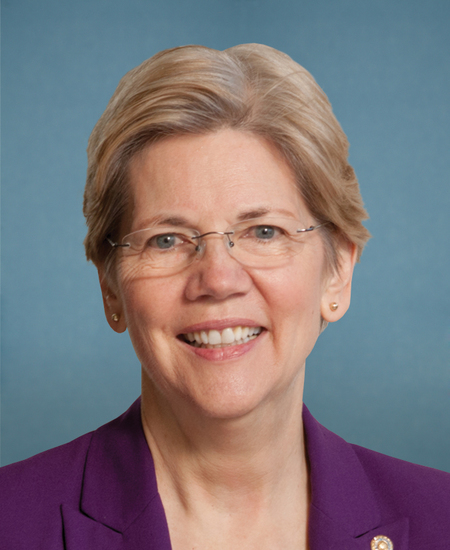
Senator Reverend Warnock questioned Consumer Financial Protection Bureau Acting Director Russell Vought over his decision to expose millions of financially vulnerable Americans to predatory medical debt collectors Medical debt can ruin credit scores and exacerbate the crushing effects of the ongoing affordability crisis for rural and working-class Americans In Georgia, 27% of rural residents have medical debt collections on their credit report—ten percentage points higher than the national average Senator Reverend Warnock: “CFPB, by its nature, is advocating for the everyday consumers, and I don’t see how any of your actions suggest that you’ve been advocating for the people that I represent” Washington, D.C. – U.S. Senator Reverend Raphael Warnock (D-GA), Ranking Member of the Senate Banking Committee’s Economic Policy Subcommittee, slammed Russell Vought, Director of the Office of Management and Budget (OMB) and Acting Director of the Consumer Financial Protection Bureau (CFPB), for reversing a finalized CFPB rule that would have removed almost $50 billion in medical debt from the credit reports of tens of millions of Americans. “CFPB, by its nature, is advocating for everyday consumers, and I don’t see how any of your actions suggest that you’ve been advocating for the people that I represent,” said Senator Warnock. “It seems to me that this shouldn’t be a partisan issue. People on both sides of the aisle know that medical emergencies can happen to anybody. They can happen to anyone. We’ve seen that up close in this very body over the last few weeks. But thanks to you, there are now families who cannot buy a house. They are hounded by debt collectors, and they’re denied business loans all because they got sick.” Last year, Senator Warnock joined Banking Committee Ranking Member Elizabeth Warren (D-MA) and 28 of his Senate Democratic colleagues in demanding the Trump administration publicly produce the data and analysis used to justify the CFPB’s position that the medical debt rule was unnecessary or unlawful. Acting Director Vought has yet to respond to this inquiry, opting instead to deflect blame when confronted by Senator Warnock in Thursday’s Banking Committee hearing. In a similar effort to rectify Director Vought’s disastrous decision to reverse the CFPB medical debt rule, Senator Warnock forced a vote on the Senate floor to restore protections for the millions of Americans vulnerable to predatory medical debt collectors. Most of his Republican colleagues refused to support the resolution, and it ultimately failed on a 50-50 party line vote. 27% of Georgians in rural communities have medical collections on their credit report—ten percentage points higher than the national average. Statewide, roughly 640,000 Georgians lack adequate access to affordable health care because the Republican state legislature has repeatedly refused to fully expand Medicaid. Despite these setbacks, Senator Warnock continues to fight to ensure every Georgian has access to quality, affordable health care. Watch the Senators full remarks HERE . See below for a transcript of Thursdays hearing exchange Senator Raphael Warnock (SRW): “Thank you, Mr. Chair. Director Vought, have you or anyone you know ever had a medical emergency?” Acting Director Russell Vought (RV): “Of course.” SRW: “Do you personally know anyone who has ever gone into debt because of a medical emergency?” RV: “Yes.” SRW: “Before the president took office, the CFPB finalized a rule that would have removed almost $50 billion in medical debt from the credit reports of tens of millions of Americans. Debt which, by the way, is often incorrect. But Director Vought, within months of your taking office, the CFPB reverse itself and joined with the very same debt collectors who were set to profit off medical debt to overturn this rule. How did your decision in any way help those tens of millions of Americans, some of whom are watching today, being crushed by nearly $50 billion in medical debt? How was this helpful for them?” RV: “Senator, the statute specifically ensures that credit reporting agencies can take into account medical debt. So, until you change that statute, we don’t have the ability to just regulate however we want to.” SRW: “Well, you could have tried to narrow the rule, right?” RV: “No, we really couldn’t.” SRW: “You could have tried to fight it in court?” RV: “No, our oath is to the statutes that you have passed—to faithfully execute those laws.” SRW: “That’s not something you could have fought in court?” RV: “Not if we have a fundamental disagreement about what the statute requires.” SRW: “You and I can agree to disagree. I think you chose not to fight it in court, and you joined forces with those debt collectors. A year ago, I, along with nearly 30 of my colleagues, demanded answers from you about this decision, and I request unanimous consent to enter our letter into the record. You never responded. Do you ever respond? Do you ever plan to respond to my letter?” RV: “Much of the correspondence that we’ve gotten has to do with litigation that we’re a part of, and so we can’t speak and respond to letters of which we’re going to have to provide answers in court, and that is a reality that we face. But we do intend to have a very open relationship with Congress, and I’m happy to correspond with you on a regular basis.” SRW: “Do you do you ever plan to respond to our letter?” RV: “I’m leaving the post on August 1st, so there’s a lot of things that hopefully [President Trump’s nominee for CFPB Chair] Brian Johnson will be doing, and one of those is those types of correspondence.” SRW: “You’re leaving on August 1st—you’ve done quite a bit of damage in a few months. We had a simple ask: show your work, publicly disclose the data and the analysis to justify the CFPB’s position that the medical debt rule was unnecessary or unlawful. Since you didn’t respond, I’ll ask you now: How many Americans were projected to have their medical debt wiped from their credit scores by the CFPB’s medical debt rule, which you overturned?” RV: “I don’t know, but the rule was unlawful.” SRW: “The answer is 15 million. Medical debt can ruin credit scores, which can make it impossible for folks to ever buy a home. Do you know how many more mortgages consumers would have been able to afford each year if you hadn’t overturned the rule?” RV: “I don’t have that off the top of my head.” SRW: “So the answer is 22,000. So, 22,000 mortgages that consumers would have been able to afford. 15 million Americans who were set to have their medical debt wiped from their credit scores. I’ve seen this up close in the state of Georgia, and the impact, the real human costs behind the very cold and clinical language about statutory authority, authority which I think you do have. Questions that you could have raised.” “CFPB, by its nature, is advocating for everyday consumers, and I don’t see how any of your actions suggest that you’ve been advocating for the people that I represent. It seems to me that this shouldn’t be a partisan issue. People on both sides of the aisle know that medical emergencies can happen to anybody. They can happen to anyone. We’ve seen that up close in this very body over the last few weeks. But thanks to you, there are now families who cannot buy a house. They are hounded by debt collectors, and they’re denied business loans all because they got sick. Director Vought, you’ve spent the last 18 months decimating the CFPB and its consumer protections, and I think families across America will be that better off when you’re gone. I’d like a response to my letter.” ###
ed0424df-80a0-40cd-a71f-42746e1a051cIssued within 24 hours
Other senators' releases published in the day before or after this one.