On Senate Floor, Warner Calls for Data Center Guardrails on Water, Energy, and Transparency
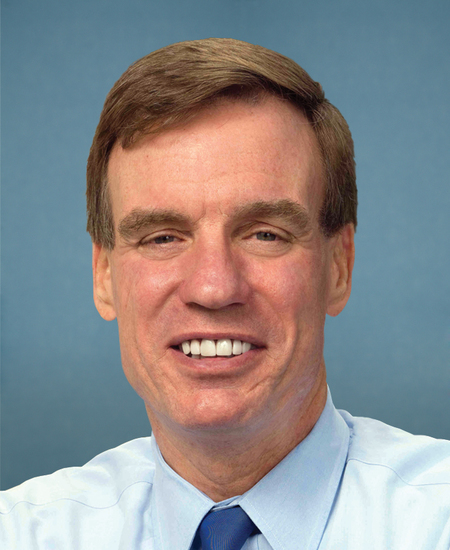
BROADCAST-QUALITY VIDEO IS AVAILABLE HERE WASHINGTON – On the floor of the United States Senate today, Sen. Mark R. Warner (D-VA) called on Congress to enact meaningful protections for communities facing the rapid expansion of data centers, arguing that legislation must include enforceable requirements on energy costs, water usage, transparency, and community impacts. The Senate is expected to vote tomorrow on the Ratepayer Protection Act, which would direct states to consider adopting a standard under which certain large data centers would pay for the infrastructure costs associated with their development. States would have two years to consider the standard and would not be required to adopt it. Warner argued that the proposal does not go far enough and urged his colleagues to instead consider his Data Center Tax Accountability and Disclosure Act , which would establish mandatory transparency requirements for large data centers and condition valuable federal tax benefits on developers meeting standards related to energy, water, environmental performance, and community impacts. In his speech today, Sen. Warner explained that the Ratepayer Protection Act “could be a starting point, but here’s what the bill does. It says that states can consider adopting a federal standard that would hold data centers responsible for rising electricity bills, and then they get two years to consider that. Candidly, they could do that today. We’ve already taken some action in Virginia. And what happens if nobody takes up that offer? Anything happen to these data centers? Does anything happen to those communities? Well, nothing.” Warner continued, “I think we need real legislation on this. We need legislation that actually has some boundaries. This should not be optional. We have seen communities hit by skyrocketing electrical costs. We’ve seen communities where a lot of their water usage has gone up dramatically. We’ve seen these data centers sometimes literally intrude right into neighborhoods.” Warner’s Data Center Tax Accountability and Disclosure Act would require greater public disclosure of data centers’ energy and water consumption, backup power systems, environmental impacts, and other information. It would also condition access to accelerated depreciation tax benefits on developers meeting standards related to energy, water, building efficiency, setbacks, and community transparency. “We need to make sure we’ve got accurate information about power usage, water usage, setbacks, backup power, get rid of non-disclosure agreements,” said Sen. Warner. “My legislation would require, not invite, but require that information to come forward and put a penalty in place.” Warner also emphasized that the legislation would use existing federal tax incentives to encourage better behavior from developers rather than simply relying on voluntary commitments. “If you’re going to do all that and not meet those standards, then you shouldn’t get bonus depreciation,” Sen. Warner said. “We have given these hyperscalers, we’ve given these data center builders, enormous tax benefits and bonus depreciation, where they can write off the cost of these very expensive centers, all in the first year. I don’t want to take that away. I’m not raising anybody’s taxes. But I’m saying, you shouldn’t get all the benefits up front if you don’t provide to the community some guarantees about water, power, setbacks, community involvement.” “Unless we put some consequences, I think we are going to completely miss the boat,” he continued. Warner contrasted that approach with the legislation before the Senate, rejecting the argument that Congress should accept a limited measure now and address the remaining issues later. “I know people will say, and my colleagues may say, well, why don’t you take half a loaf?” said Warner. “But the underlying bill isn’t half a loaf. It’s the promise of maybe one slice of that bread two years down from now.” Sen. Warner said, “I hope that I can encourage my colleagues to join me in passing the Data Center Tax Accountability and Disclosure Act, one that I’ve already socialized with industry, one that would put some mandatory requirements, but also put some real teeth in this very important issue.” Sen. Warner’s full remarks are below: I’ve spent the last couple of years trying to learn as much as I can about artificial intelligence and its upside and still long AI in terms of innovational bring. I think there are some real challenges. I have to acknowledge I did witness something this afternoon something that was a little bit surreal. The president had brought together some leaders of the AI Industry and in a closed, quiet room, I guess they reached some level of moral agreement, whatever that means, that they’re going to try to make sure things are safe. As a matter of fact, they even went so far as to say all of the president’s critique about concerns about AI being a hoax or about data centers not being a problem are suddenly being solved because the president has renamed AI, SI, superintelligence. I didn’t know whether to laugh or cry to think that the greatest innovation in my lifetime — and I was in the tech business before I came to politics — that it’ll be bigger than my old industry, wireless, or bigger than cloud computing. And with all the up sides, there are down sides and it’s suddenly going to be solved by a name change of but that’s the status of our political debate. Earlier today I came down with two of my democratic colleagues and said as we get all of these warnings from industry, form business that use AI tools, from national security, wouldn’t it be a good idea to put in some basic safety precautions in place. We stripped away all of the other provisions and just have a safety board here. I know the presiding officer has had an interest in this topic. I’ve yet to talk to a member that doesn’t think some level of safety with this enormous innovation is appropriate. Well, that’s not going to take place before we finish before the elections. So I’m back again this afternoon to talk about another piece of the AI debate that certainly needs congressional action. And that is the whole question about how we build out and ensure consumers don’t get stuck with the buildout of data centers. This is something I know a little bit about. Virginia is the capital of data centers in our country, and there is enormous concern from neighbors, from communities, many of the kind of the worst examples of data centers were built 15 or 20 years, but the industry has moved forward. I give credit there. But the angst about data centers, I think is also reflective of the angst about AI is not going away, no matter what the president wants to say. I’d urge him to travel anywhere across Virginia, for that matter, anywhere across Kansas or Texas or anywhere else where these data centers are being proposed because communities actually want to have a say in what happens in their backyard, what happens with their utility rates, what happens with their water usage, what happens with local communities signing nondisclosure agreements, so the community doesn’t even know what they’re getting until after the deal is cooked. I guess tomorrow the Senate will turn to focus on the so-called Ratepayer Protection Act, which is supposed to answer all of these concerns about cost, about community. The challenge is, and it could be a starting point, but here’s what the bill does. It says that states can consider adopting a federal standard that would hold data centers responsible for rising electricity bills, and then they get two years to consider that. Candidly, they could do that today. We’ve already taken some action in Virginia. And what happens if nobody takes up that offer? Anything happen to these data centers? Does anything happen to those communities? Well, nothing. I think we need real legislation on this. We need legislation that actually has some boundaries. This should not be optional. We have seen communities hit by skyrocketing electrical costs. We’ve seen communities where a lot of their water usage has gone up dramatically, and they’re concerned, concerned about the water table. We’ve seen these data centers sometimes literally intrude right into neighborhoods. I’ve heard the pushback from communities all across our Commonwealth. Matter of fact, even the community that’s got the most, that has received the most economic benefits, they recently, Loudoun County, they recently put a pause. Now, I don’t think we can pause. I don’t think we can put the genie back in the bottle, but I would urge the Senate not to take this flim flam do nothing bill, but actually take a look at my Data Center Tax Accountability and Disclosure Act, which I didn’t dream up in the last couple of days, but put forward much earlier this summer on an issue that I’ve been working on for a couple of years. What we can’t rely on is simply the goodwill of these hyperscalers and these companies. Some are well intentioned, some are not. We need to make sure we’ve got accurate information about power usage, water usage, setbacks, backup power, get rid of non-disclosure agreements. My legislation would require, not invite, but require that information to come forward and put a penalty in place, at a relatively small amount, if they don’t submit that. But the real bite, and what’s going to really change this behavior and, frankly, earn back some of the community’s trust if there’s a tool. Frankly, I have had ongoing discussions with most of the hyperscalers who are building out these data centers, who, frankly, think my piece of legislation makes some sense. The second half of my legislation would say, if you don’t meet LEED Gold or LEED Platinum standards, which are already established. If you don’t show how you’re bringing your own power. You don’t have criteria on water usage, that’s gotten better because more of these data centers have circulatory systems. If you don’t have setbacks from neighborhoods. If you use non-disclosure agreements. What it would say is, well, if you’re going to do all that and not meet those standards, then you shouldn’t get bonus depreciation. I’m not going to raise anybody’s taxes. But we have given these hyperscalers, we’ve given these data center builders, enormous tax benefits and bonus depreciation, where they can write off the cost of these very expensive centers, all in the first year. I don’t want to take that away. I’m not raising anybody’s taxes. But I’m saying, you shouldn’t get all the benefits up front if you don’t provide to the community some guarantees about water, power, setbacks, community involvement. If a community then wants to go or a hyperscaler wants to come in and say, we’ll help provide. I think, in Louisiana, some additional benefits for your schools have at it. You’ve got to set a federal baseline, so the communities don’t feel that they’re getting snookered. And the ability to make sure we don’t give away these tax benefits without that minimum guarantee I think, has a lot of benefit. And just today, we learned that Microsoft saved about $12 billion in taxes on using accelerated depreciation or bonus depreciation. Meta saved about 16 billion, 15.9 billion, from using bonus depreciation. And I’ve reached out to these companies. They understand the game has changed. They have to be more engaged. And I think many of the hyperscalers would meet these new standards. But unless we put some consequences I think we are going to completely miss the boat. It’s kind of like saying, even though the AI companies themselves are saying, ‘gosh, we’re really worried about safety,’ none of the responsible ones realize they can simply say, ‘just trust us.’ The idea that these largest companies in the world, and I know the CEOs of most of them, I think there are many of them are good people, but the idea, after we’ve all experienced some of the ups and downs of social media, we’re going to turn the same power over to this same group of CEOs and say, ‘we’re going to trust you to figure this all out on your own, without any public input.’ I keep thinking back, would I ever climb on an airplane that hadn’t had a safety inspection? But that’s what we’re thinking about on overall AI safety and these models being released. But at least tomorrow, if the Senate takes up this Ratepayer Protection Act, I’m not sure what I’m going to do on the vote tomorrow, but I would say that the Ratepayer Protection Act is a fig leaf. And I know people will say, and my colleagues may say, well, why don’t you take half a loaf? You know, I’m pretty involved in every bipartisan action. You know, take half a loaf and we keep working on it. But the underlying bill isn’t half a loaf. It’s the promise of maybe one slice of that bread two years down from now. The anger in my state and in every state across the country on this issue is not going to wait two years to have some kind of no penalty, but optional review where, frankly, the pitchforks are out already. I hope that I can encourage my colleagues to join me in passing the Data Center Tax Accountability and Disclosure Act, one that I’ve already socialized with industry, one that would put some mandatory requirements, but also put some real teeth in this very important issue. But, these issues are not going to disappear and simply punting or saying to industry, ‘trust us,’ and I come from the tech industry, is not going to satisfy the concerns of the American people. The sooner we get to work on serious business, the sooner we can make sure that we benefit from all of this AI innovation that I do think lies in wait, because if we have a mistake, or if we have a challenge and something happens, all of this innovation could go away because the American people are already enormously suspect about AI. They are already enormously concerned at a 90-10 ratio about data centers. It is time for us to act and not simply punt. ###
57c7b5b1-2c95-40c8-85f3-fa038aef7357Issued within 24 hours
Other senators' releases published in the day before or after this one.