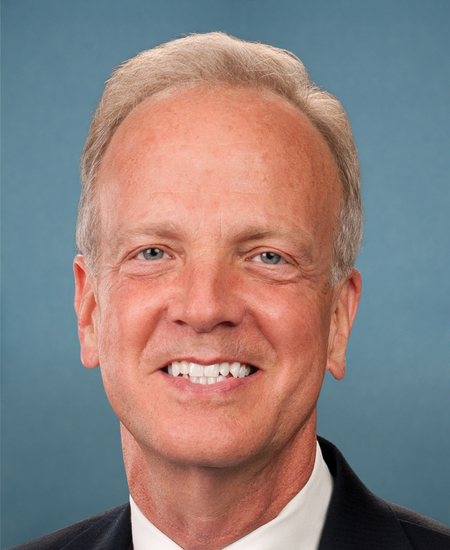
Sen. Moran Calls on Congress to Pass Aviation Safety Legislation
WASHINGTON – U.S. Senator Jerry Moran (R-Kan.) – chairman of the Senate Commerce Subcommittee on Aviation – today spoke on the Senate floor urging Congress to reach an agreement on aviation safety legislation that can pass both chambers and be signed into law by the President before the end of the year. Sen. Moran delivered his remarks ahead of the second anniversary of the deadly midair collision near Ronald Reagan Washington National Airport (DCA) involving a regional passenger jet, Flight 5342, which originated in Wichita, Kansas, and a U.S. Army Black Hawk helicopter. The crash killed 67 people, including seven Kansans. “Productive negotiations have taken place between the House and Senate, and I am encouraged by that progress, but we must finish the job, and we must get this right,” said Sen. Moran. “We cannot wait for another tragedy before addressing known safety concerns. Congress has a responsibility to finish aviation safety legislation. The Senate has acted. The House has acted. There is bipartisan support for improving aviation safety. Now we must resolve our differences and deliver a final bill.” “I am grateful to the families of the victims for their continued commitment to aviation safety,” continued Sen. Moran. “To those families, I want to say: We have not forgotten your loved ones. We have not forgotten January 29th. The time for delay is over. We have the findings. We have the recommendations. We have a path forward. What we need now is the determination to finish the job.” Sen. Moran recently penned an op-ed in The Kansas City Star highlighting the need to pass aviation safety legislation to help prevent future tragedies and honor the lives lost in the Flight 5342 crash. Click HERE to Watch Sen. Moran’s Full Remarks Sen. Moran’s full remarks as delivered: Madam President, sadly on January 29, 2025, our nation witnessed a tragedy. I witnessed it here at Ronald Reagan Washington National Airport. Flight 5342, a regional jet originating in Wichita, Kansas, collided with a U.S. Army Black Hawk helicopter near that airport. “Sixty-seven people lost their lives. Seven of them were from my state of Kansas. Nearly two years later, their families continue to live with an unimaginable loss. And Congress still has not completed the comprehensive aviation safety legislation necessary to address the failures that contributed to the tragedy. It’s unacceptable. “Among those aboard Flight 5342 was Grace Maxwell. Grace should have graduated from Cedarville University with her bachelor’s degree. After graduation, she planned to pursue a master’s degree. Instead, her family is left to imagine that future, the future she would have had. The Maxwell family is not alone. “The families of the victims have continued to urge Congress to act – not simply for their loved ones, but to make certain no other family has to experience this kind of tragedy. We owe them more than our condolences. We owe them action. In December, the Senate unanimously – December almost a year ago – the Senate unanimously passed the bipartisan ROTOR Act to strengthen aviation safety and help prevent future accidents. “The ROTOR Act was carefully developed with the support and input of the crash victims' families, the National Transportation Safety Board, the Federal Aviation Administration, the Department of Transportation and the Department of Defense. “Rather than pass the Senate's legislation, the House advanced its own proposal. The House bill contains important safety reforms, and I appreciate the work of my colleagues in both chambers. But the two bills take different approaches to some of the important safety requirements. “Productive negotiations have taken place between the House and Senate, and I am encouraged by that progress. But we must finish the job, we’ve been talking about that progress and those negotiations for a long time. We must get the job done; we must get it done right. “One of the most important provisions in the ROTOR Act is the requirement for Automatic Dependent Surveillance-Broadcast In, known as ADS-B In. This technology provides pilots with real-time information about nearby aircraft. This allows pilots to see surrounding air traffic from their cockpits and make better and quicker-informed decisions. “It is particularly important in congested airspace, like the airspace surrounding Ronald Reagan Washington National Airport. “Investigators from both the Army and NTSB identified a series of failures that contributed to the January 29th tragedy, including faulty equipment, dangerous flight paths and inadequate tracking technology. “The NTSB concluded that technology allowing pilots to see GPS-based information about nearby aircraft could have helped prevent this collision. With the appropriate technology, pilots could have had nearly a minute of warning to recognize the danger and potentially change course. Nearly a minute that could have made the difference between the life and the death of 67 people. “The ROTOR Act incorporates those findings and puts critical safety improvements into law. It’s not an arbitrary mandate. It is a recommendation rooted in the independent investigation of a tragedy that should never have happened. “The House and Senate have different approaches to ADS-B In. We need to find common ground and produce a bill that can pass both chambers. But compromise cannot mean abandoning the lessons of January 29. “We must reach an agreement that addresses the recommendations of the NTSB and the Army's investigation. We cannot water down critical safety reforms. Our focus must remain on one mission: making our skies safer and preventing another tragedy. “Every provision in the final bill should be measured against that standard. Does it address a demonstrated safety concern? Does it implement the recommendations of the experts who investigated this crash? Does it make our aviation system safer? “Commonsense questions that need to be answered about the legislation. “This work extends, however, beyond the ROTOR Act. As Chairman of the Commerce Subcommittee on Aviation, I have also worked to address the growing number of close calls involving aircraft on runways and airport surfaces. “In June, I held a hearing to examine these incidents and identify ways to prevent them before they become tragedies as well. I worked with colleagues to advance the bipartisan Runway SAFE-T Act to improve training and technology and reduce runway and airport surface incidents. That legislation was approved by the Commerce Committee in September, and I will continue working with my colleagues to advance it. “We cannot, should not, wait for another tragedy before addressing known safety concerns. Congress has a responsibility to finish aviation safety legislation. The Senate has acted. The House has acted. There is bipartisan support for improving aviation safety. Now we must resolve our differences and deliver a final bill. “I am grateful to the families of the victims for their continued commitment to aviation safety. To those families, I want to again say: We have not forgotten your loved ones. We have not forgotten January 29th. We cannot. I cannot. The time for delay is over. We have the findings. We have the recommendations. We have a path forward. We just now need is the determination to finish the job. “We cannot bring back the 67 people who lost their lives. But we can honor them by making certain that the failures that contributed to the tragedy are addressed and that the same mistakes are not repeated. The traveling public deserves to know that when they board an airplane, Congress has done everything within its power to protect their safety. “We need to reach an agreement, pass comprehensive aviation safety legislation, and send a strong bill to the President's desk. The families of the 67 victims deserve nothing less. The American people deserve nothing less.” # # #
58fcdf53-8cc8-4247-9643-e83132de4722Issued within 24 hours
Other senators' releases published in the day before or after this one.