NEWS: Senators Blunt Rochester, Sheehy Introduce Bill to Expand Participation in AI Education, Research, and Workforce
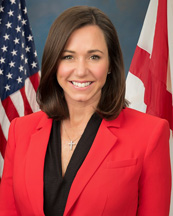
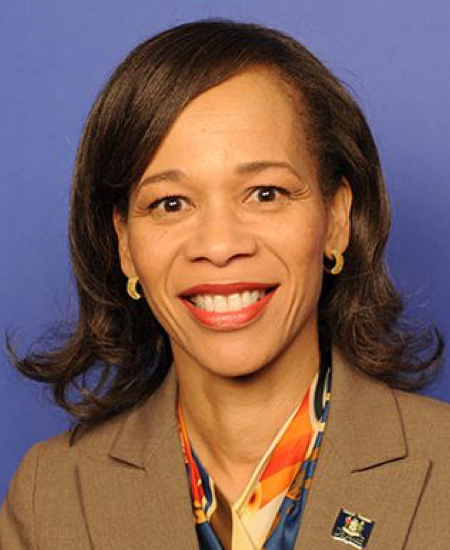
U.S. Senators Lisa Blunt Rochester (D-Del.) and Tim Sheehy (R-Mont.), both members of the Senate Committee on Commerce, Science, and Transportation , introduced the bipartisan Expanding AI Voices Act , which codifies and expands the National Science Foundation’s ExpandAI program to help more institutions build AI research capacity. The legislation will broaden the range of institutions and communities involved in AI research and workforce development, including first-generation college students, Minority-serving Institutions (MSIs), and rural colleges and universities. The House companion is led by Representatives Valerie Foushee (D-N.C.) and Zach Nunn (R-Iowa). “AI offers tremendous opportunities for our communities and economies, but as this technology changes the way we live, we must guarantee that our students and our workforce still have the chance to succeed,” said Senator Blunt Rochester . “I’m proud to introduce the Expanding AI Voices Act alongside Senator Sheehy to ensure that no matter where we come from, we can all achieve our goals in the economy of the future.” “America’s AI leadership depends on finding talent in every corner of the country. That’s why I’m introducing the Expanding AI Voices Act with Senator Blunt Rochester, which helps ensure students and researchers in Montana and other rural states have the opportunity to contribute to the future of AI innovation,” said Senator Tim Sheehy . “Our bipartisan legislation invests in people and institutions that have too often been overlooked, strengthens our workforce, and maintains America’s competitive edge by supporting critical innovation. Let’s get it done.” The Expanding AI Voices Act would: Expand AI research capacity by authorizing competitive NSF grants for emerging research institutions, including institutions outside the top 100 in federal R&D expenditures, Minority-Serving Institutions (MSIs), Historically Black Colleges and Universities (HBCUs), Tribal Colleges and Universities (TCUs), and eligible institutional consortia. Expand AI research infrastructure by supporting access to advanced computing resources, high-speed networking, data facilities, and software engineering support needed to conduct cutting-edge AI research. Build the AI workforce pipeline by supporting AI education, faculty recruitment and professional development, workforce training, and bridge programs that prepare students for graduate study and careers in artificial intelligence. Accelerate AI innovation through partnerships by fostering collaboration among colleges and universities, nonprofit organizations, industry, Federal laboratories, state, local, and Tribal governments, and NSF AI Research Institutes. Expand opportunity nationwide by encouraging geographic diversity, supporting institutions with limited AI research capacity, and increasing opportunities for students—including first-generation college students—to participate in AI research and education. Promote safe, secure, and responsible AI by integrating safe, secure, and responsible AI practices and principles into AI education and workforce development programs. Protect Taxpayer Dollars by requiring NSF to ensure awards complement—not duplicate—existing federal AI research programs. “If we want to win the AI race, we can’t rely on a small handful of schools and people. SeedAI has experienced this first-hand during our AI Across America tour — it’s imperative that we go beyond the coasts and draw from the experiences and ingenuity of all Americans,” said Austin Carson, Founder and CEO of SeedAI. “The Expanding AI Voices Act will help build the AI research capacity needed to make that a reality. SeedAI thanks Senator Blunt Rochester and Senator Sheehy for their bipartisan leadership to strengthen American competitiveness.” “America’s AI economy is moving faster than our workforce can keep up, and that gap will only widen without action. The Expanding AI Voices Act, introduced by Sens. Blunt Rochester (D-DE) and Sheehy (R-MT), meets that challenge head-on by giving students and teachers the tools to compete in an economy being reshaped by AI in real time. This bill also recognizes that opportunity shouldn’t be limited to those who can already afford a foothold. Its focus on first-generation undergraduate students ensures the next generation of AI talent includes voices from every background. BPC Action applauds Sens. Blunt Rochester and Sheehy for their leadership and urges the Senate to move quickly to pass it,” says Michele Stockwell, president, Bipartisan Policy Center Action. “For America to lead on AI, we need to expand the pipeline of talent that’s fueling innovation,” said ARI President Brad Carson. “By investing in education, research, and workforce development across a broader range of institutions and communities, the Expanding AI Voices Act helps ensure the future of AI is shaped by the full scope of American talent. It’s exactly the kind of bipartisan, forward-looking policy the U.S. needs to maintain its edge in AI.” The Expanding AI Voices Act is endorsed by the American Mathematical Society, Americans for Responsible Innovation, Association of Community College Trustees, Bipartisan Policy Center Action, Google, Leadership Conference on Civil and Human Rights, National Hispanic Health Foundation, SeedAI, Society of Hispanic Professional Engineers, IBM, Information Technology Industry Council (ITI), Thurgood Marshall College Fund. The full bill text of the Expanding AI Voices Act can be found HERE and a one pager can be found HERE .
59ce9c20-504a-46a1-af12-fd7115a7714bIssued within 24 hours
Other senators' releases published in the day before or after this one.