Hoeven: Efforts Begin on Phase 2 of Crack the Code 2.0, Moving From Individual Wells to Field-Scale Testing
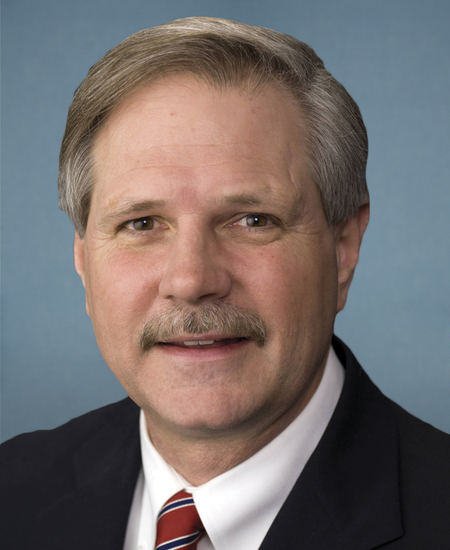
BISMARCK, N.D. – Senator John Hoeven today held a press conference with Governor Kelly Armstrong, Under Secretary of Energy Kyle Haustveit, North Dakota Agriculture Commissioner Doug Goehring, North Dakota Petroleum Council (NDPC) President Ron Ness and Chord Energy President and CEO Danny Brown to provide an update on phase one of Crack the Code 2.0 and discuss efforts to begin the second phase of the initiative, including advancing the field-scale testing of enhanced oil recovery (EOR). Hoeven outlined: Progress on the first phase of Crack the Code 2.0, which is utilizing $157 million in funding to support six large-scale pilot projects in the Bakken. Three of the six pilot projects are underway, with one project having received its injection permit and the other two awaiting approval from the North Dakota Industrial Commission. The funding for phase one consists of $36 million in federal funding that Hoeven worked with Under Secretary Haustveit to secure, combined with $45 million from the state of North Dakota and $76 million from industry. Efforts to scale up the initiative in phase two, moving from individual wells to using EOR in a whole oil field, which will include up to 200 field test wells. Hoeven stressed that they will prioritize a field that is close to: An existing CO2 source, like the Dakota Gasification Company (DGC). Existing pipelines and other infrastructure. The senator highlighted that the U.S. Department of Energy’s (DOE) Office of Energy Dominance had more than $289 billion in loan authority available at the end of 2025. Hoeven is working with Haustveit to make this loan guarantee authority available to support the estimated $400 million cost for establishing the field test wells under phase two. Hoeven, the state of North Dakota and the NDPC are currently looking for additional industry partners to participate in phase two. The senator stressed that private partners will benefit from added revenue streams resulting from: The additional oil produced by the field test wells. The 45Q tax credit, which Hoeven worked to increase in the One Big Beautiful Bill (OB3) specifically for EOR operations. The field test wells come in addition to two other revenue streams that Hoeven is working to incorporate into the second phase of Crack the Code 2.0, including: Developing lignite coal as a source of rare earth elements (REEs) and other critical minerals. Expanding fertilizer production at the DGC’s Great Plains Synfuels Plant. “Phase one of Crack the Code 2.0 is well underway, with a total of six large-scale pilot projects moving forward. But we’re not going to stop there. We are bringing together the partnerships we need for phase two, with the goals of increasing oil production by moving from individuals wells to using EOR in a whole oil field, providing additional revenue streams for our coal producers, developing domestic sources of rare earth elements and increasing fertilizer production. That’s a win-win-win-win,” said Hoeven. “We appreciate Under Secretary Haustveit for again visiting North Dakota with us to help move this initiative forward. The DOE has more than enough loan guarantee authority available to support phase two, and we’re working to ensure that credit and other funding is available so industry partners can move to field-scale testing of EOR. Between the additional oil produced and the improvements we made to the 45Q tax credit, this is a real opportunity for private industry to leverage new revenue streams while helping to prove the viability of EOR, which can both double oil recovery in the Bakken and double the life of our coal-fired power plants.” Critical Minerals By creating a domestic source for REEs, this effort will help improve U.S. economic and national security by reducing reliance on foreign nations like China for sourcing these important materials, which are used in a wide variety of high-tech applications.Hoeven highlighted a project he has worked to advance, along with Senator Kevin Cramer and Representative Julie Fedorchak, at the University of North Dakota (UND) to advance the recovery of rare earth elements and other critical materials from coal and coal-based feedstocks. UND was selected as one of five projects nationwide under the $75 million initiative, following an effort Hoeven led with the North Dakota congressional delegation calling on the Department of Energy (DOE) to support UND’s proposal. The pilot project will be located in Underwood, North Dakota, and UND is currently in negotiations with DOE to finalize its award. Fertilizer Production DGC uses coal to produce fertilizers such as ammonium sulfate, anhydrous ammonia and urea. Increasing production would create additional revenue for coal producers while benefiting farmers, who would have access to an affordable, local source of fertilizer. Expanding DGC’s operations would also provide additional CO2 for EOR, supporting increased oil production in the Bakken. For more than 25 years, DGC has captured CO2 for EOR in Weyburn Field in Canada, showing this is a proven model and demonstrating the benefits it can bring to the Bakken under Crack the Code 2.0. -###-
611a877b-1a74-497c-b6db-6c079fba7588Issued within 24 hours
Other senators' releases published in the day before or after this one.