At Hearing, Warren Exposes Contract Terms That Appear to Allow Express Scripts to Overcharge Taxpayers for Prescription Drugs
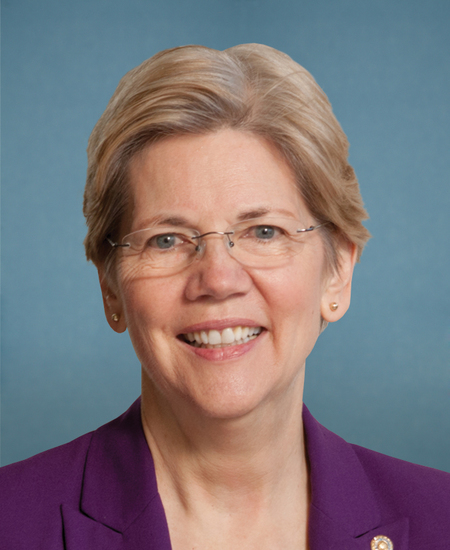
At least two independent watchdog investigations have found Express Scripts engaged in shady pricing practices while administering health benefits for federal government workers Warren: “I’m [] outraged that you drag in billions of dollars from taxpayers and that you won’t submit to an audit when it’s clear that you have the opportunity to bilk the federal government.” Round 1 Questions (YouTube) | Round 2 Questions (YouTube) Washington, D.C. — At a hearing of the Senate Armed Services Subcommittee on Personnel, U.S. Senator Elizabeth Warren (D-Mass.) questioned Dr. Adam Kautzner, President of Express Scripts, the largest pharmacy benefit manager in the United States and exclusive administrator of the military’s TRICARE pharmacy program, Defense Health Agency Deputy Director David Smith, and health care experts on the need to reform the Defense Department’s contract with Express Scripts to manage the military’s TRICARE pharmacy program. In her first round of questions, Senator Warren focused on a contract provision Express Scripts imposed on retail pharmacies that may allow the company to skim taxpayer funds. At least two independent watchdog investigations have found Express Scripts engaged in unallowable spread pricing in health plan contracts for government workers – even when those contracts appeared to disallow spread pricing by requiring Express Scripts to pass through all savings to government payers. Mr. Greg Reybold, a lawyer and Vice President of Public Policy at the American Pharmacy Cooperative Inc., called provision a “smoking gun” and said that the contract appeared to give Express Scripts “the right to move money around after the fact, across plans…[like] a complex shell game.” When pressed on the provision, Dr. Kautzner declined to answer if Express Scripts is contractually required to return this money to the government when it exercises this provision to adjust prices retroactively. Dr. Kautzner also refused to support an independent audit of the Express Scripts contract, saying only that Express Scripts would “comply with what Congress and DHA deem that we need to do.” “I’m pretty outraged that you drag in billions of dollars from taxpayers and that you won’t submit to an audit when it’s clear that you have the opportunity to bilk the federal government and you have used that opportunity in other circumstances,” said Senator Warren . Earlier this year, Senator Warren secured a provision in the FY 2027 NDAA that would require an independent audit of the contract. In her second round of questions, Senator Warren challenged the claim that Express Scripts’ mail-order pharmacy program saves the government money. Senator Warren presented a Defense Department report that found that it cost DOD 12.5 percent more, on average, to dispense a 30-day supply of generic drugs through Express Scripts mail-order pharmacy than retail pharmacies. One reason for that is Express Scripts’ administrative fee, which one lawsuit alleges is about $17 per prescription filled. Another reason could be that, based on an explanation of benefits obtained by Senator Warren, Express Scripts appears to charge beneficiaries the full $14 co-pay for generic drugs even when the medication costs less. In one example highlighted by Senator Warren, a $3 prescription could therefore earn Express Scripts $31, more than ten times the cost of the drug. “[W]hy on Earth is DOD requiring vertical integration so that the very company that’s supposed to be doing the managing also owns [the] pharmacy…[and is] in some of the cases charging both our service members more and charging our federal government more?” Senator Warren asked Dr. David Smith, Deputy Director of the Defense Health Agency. Dr. Smith said it was “reasonable” for DOD to look at changing the structure of the Express Scripts contract. “We need independent audits, and we need to rethink these DOD contracts,” concluded Senator Warren . Transcript: Senator Warren’s Questions at a Hearing to Receive Testimony on the TRICARE Pharmacy Program Senate Armed Services Subcommittee on Personnel July 15, 2026 Round 1 – TRICARE Retail Pharmacy Network Senator Elizabeth Warren: Thank you, Mr. Chairman. So, we know that insurance companies often contract with a pharmacy benefit manager to manage the prescription drug coverage. And, at least in theory, the way it’s supposed to work is that the PBM is supposed to work for the insurance company and for the people who have insurance with them. But PBMs have gotten caught doing all kinds of self-dealing. We’ve already mentioned several times today — it was in much of your testimony: spread pricing. And that’s when the PBM reimburses an independent pharmacy — not its own subsidiary, but an independent pharmacy — $70 for a drug, then bills the insurance company $100 for the drug and then, often secretly, pockets the $30 difference. That’s spread pricing that we’re talking about here. Now, DOD and Express Scripts say the TRICARE pharmacy contract is not a traditional PBM contract, it’s a “purely administrative” contract. They claim that Express Scripts follows DOD directions and passes all of the savings through to DOD, meaning there is no spread. What you pay goes straight on through and that’s how we protect the taxpayer. I taught contract law for many many years, so what I want to see is not how DOD summarizes this contract, or how the PBM summarizes this contract, I want to see what the contract itself actually says. I wanted to see it but DOD refuses to release the contract with Express Scripts. However, I have a copy of the contract that Express Scripts told the pharmacies they would have to sign in 2022 or they couldn’t get any reimbursements and be part of the system. So if you want to be part of TRICARE, you had to sign this. I just want to take a look at one of those terms. Section 3.5 states that Express Scripts maintains the right to “aggregate reimbursement reconciliation and offset methodology.” Dr. Kautzner, you are the President of Express Scripts, so tell us: does this mean that Express Scripts can adjust what they pay pharmacies after a claim has been processed? Dr. Adam Kautzner, President of Express Scripts and Evernorth Care Management: I appreciate the question, Senator. I haven’t reviewed that document, and so that’s a piece I would have to take back and evaluate to be able to give you a comprehensive answer on. If you’re referring to things like clawbacks, we don’t engage in — Senator Warren: I’m referring to exactly what the contract is — that your company, Express Scripts — required pharmacies to sign if they wanted to be part of the network. And I’m just asking: does that mean, after you’ve told the DOD, for example, that it was a $100 prescription, you can readjust that price with the pharmacy after the fact? Say, down to $70, just sticking with the same example. Is that what that phrase means? Dr. Adam Kautzner: Senator, as we’ve covered today, the contract is a full pass through contract with DHA — Senator Warren: Well, that’s what I want to look at. I’m just looking at the language of what you tell the independent pharmacies who show up. I’ll tell you what. Let’s ask a lawyer what it means. Mr. Reybold, you’ve been dealing with these contracts for a long time. Express Scripts is supposed to reimburse the pharmacy at a predetermined price. $100, in my example. Is that what this contract language says? Mr. Greg Reybold, Vice President of Public Policy at the American Pharmacy Cooperative, Inc.: Thank you, Senator Warren. If I heard you correctly, you said that that contract language references “aggregate reimbursement reconciliation and offset methodology.” What I would say is, in about 20 years of practicing law, that might be the biggest smoking gun document I’ve seen in a hearing. Right, because what that means is they get to do “post-adjudication offsets.” So, what they reimburse a pharmacy at the point of sale, they get to move it around. And with all due respect to Dr. Kautzner, my understanding is for years he was over at retail pharmacy networks, so this term shouldn’t be a real surprise to him. But what I would say is this. When you take that provision, which gives them the right to move money around after the fact, across plans, it’s essentially we’re talking about a complex shell game. We’re talking about a Fortune 20 company playing a shell game that you see on the street corner in any city. And you combine that with the fact that in their own courted missions, they admit that they administer their retail network in a manner that’s indistinguishable and indivisible from their other networks. And we know the OIG found in “pass through contracts in federal employee health plans, the spread pricing was there.” Senator Warren: Alright, so let’s follow through on that, because the contract shows that Express Scripts can do spread pricing in TRICARE, notwithstanding what DOD keeps telling us. Right there in the contract, it turns out that Express Scripts has been caught doing exactly that in other government contracts. An Inspector General audit of the Federal Employee Health Benefit Compass Rose Plan found that Express Scripts overcharged the government millions of dollars by failing to pass through all retail pharmacy discounts. And another Inspector General audit of the American Postal Workers Union Health Plan found millions more in unallowable spread pricing. In other words, they’ve already been caught with their hand in the cookie jar on this. But still, DOD claims that, for TRICARE, “all savings” — meaning the difference between $100 and $70 that you’re getting, Dr. Lansford— go directly back to the government, to DOD. So Dr. Kautzner, when Express Scripts exercises Section 3.5 and retroactively lowers the reimbursement rates, are you contractually required to pass that money through back to the DOD? Dr. Kautzner: Appreciate the question, Senator. Our focus is administering the contract with DHA. It’s a 100 percent pass through arrangement — Senator Warren: Is it your testimony today that when you tell Dr. Lansford that he is only going to get $70 and you’ve already told the DOD that it costs $100, and you get $30 back from Dr. Lansford — are you telling us that every penny of that gets sent back to DOD? Is that your testimony today? Dr. Kautzner: Senator, we don’t engage in spread pricing, this is a different type of contract with DHA— Senator Warren: That is the description of spread pricing. If you engage in no spread pricing, then you have a really easy one-word answer here, and that is you are returning every penny when you retroactively adjust prices, is that your testimony today? Dr. Kautzner: Senator, this is a pass through arrangement contract — Senator Warren: Is that your testimony? Dr. Kautzner: This is a pass through — Senator Warren: Let’s do it the other way, then. If it is a pass through arrangement, would you support an independent public audit to verify that you are complying with full pass through? Dr. Kautzner: We’re honored to be able to serve the TRICARE beneficiaries, and the government’s business is very important to us and we would engage — Senator Warren: So I take it that’s a yes? You would support an independent audit to verify that every penny is going back to the government, and that you’re not using this clause in the contract, is that right? Dr. Kautzner: If Congress and DHA would like to do those — Senator Warren: I would like to do it. We are the oversight committee here. I’m a member of Congress. This is my job, oversight. Will you agree to an audit? Dr. Kautzner: Our company will comply with what Congress and DHA deem that we need to do. Senator Warren: Look, DOD and Express Scripts say there is no spread pricing in the TRICARE contract, but the same language that Express Scripts used to bilk other government plans out of millions of dollars is also present in TRICARE. We may well find Express Scripts is playing the same games in TRICARE or not– but we can’t tell without an independent audit. I am glad that we have a provision in this year’s NDAA that will require an audit here, but frankly, I’m pretty outraged that you drag in billions of dollars from taxpayers and that you won’t submit to an audit when it’s clear that you have the opportunity to bilk the federal government and you have used that opportunity in other circumstances. Thank you, Mr. Chairman. I appreciate the extra time. Round 2 – Self-dealing Senator Warren: Thank you, Mr. Chairman. So I just want to dig in a little bit more on the comparison between the mail-order pharmacy price for a drug and what an independent pharmacy charges. DOD and Express Scripts say repeatedly — it’s in all your stuff — that the mail order program saves money. But DOD actually reported data to Congress on this in Fiscal Year 2023. That’s the most recent we’ve got. So, Dr. Smith, did filling a 30-day supply of generic drugs at Express Scripts Pharmacy cost DOD, on average, more or less than filling the same prescription at a retail pharmacy? Dr. David J. Smith, Deputy Director, Defense Health Agency: Ma’am, I’m actually going to have to take that one back for the record. Senator Warren: You don’t have to, I actually have it. It’s the DOD report on this and the answer is Express Scripts cost 12.5 percent more than the retail pharmacy — when you put them all together — on the generic drugs, 30-day supply. I want to dig just a little bit into how that could happen because the way you described the business model, it shouldn’t be able to happen. So where does the money come from that goes to the different parties here? One is a flat administrative fee. We’ve been talking about this flat administrative fee on every claim that its mail-order pharmacies process. And one lawsuit — that’s where I’ve got to look for data — alleges it’s $17 that Express Scripts gets every time they fill a prescription. Let’s look at cost from the perspective of military families. The TRICARE Express Scripts website claims military families will save money by using mail — home delivery. And federal law states that, for all non-active duty TRICARE beneficiaries, the copay for a generic drug is $14 with mail order versus $16 at retail. So I’m sitting there, a military member and I say I get it — a $2 difference and the retail pharmacy is more expensive. But let’s pause for a minute. Lots of generic drugs cost less than $14. So DOD requires Dr. Lansford and all of the other independent pharmacies to use a “lesser of” requirement. So, Dr. Lansford, under a “lesser of” requirement that’s part of your contract with DOD, if a drug costs $3, how much would you charge the patient: $16 or $3? Dr. Lansford: Well, the pharmacy benefit manager would decide that and in this case it would absolutely be the “lesser of,” $3. Senator Warren: That’s right. So you only get three bucks, right? If the thing cost 3 bucks. That is actually the law. That’s in your DOD contract. But what about Express Scripts? Well, I have an Explanation of Benefits right here that shows that Express Scripts charges beneficiaries the full $14 copay even when the cost of the drug is cheaper. So there’s a big difference in what the customer is actually paying on the cheaper drugs. Now, in addition to the customer’s co-pay, there’s a federal government co-pay, maybe $17 — that’s the best I can tell from the lawsuit — on every prescription filled. So that means a $3 prescription can earn Express Scripts $31. A $14 co-pay from the customer or service member, and then a $17 administrative fee from the federal government. Express Scripts is supposed to save money for DOD, but it appears to me — we just worked the example here and that’s what your own data show — is that it costs more. So this raises the question really bothering me and that goes back to what Senator King was asking, and that is: why on Earth is DOD requiring vertical integration so that the very company that’s supposed to be doing the managing also owns this pharmacy that is competing with our independent pharmacies and, in fact — we’ve got the data — charging more in some of the cases charging both our service members more and charging our federal government more? Do you think, Dr. Smith, that maybe it is time for DOD to revisit this requirement of vertical integration? And, in fact, considering saying, “No, you only work for the federal government and there is no vertical integration?” That is, you do not own your own pharmacy at the same time that you’re trying to manage pharmacy claims for the United States government. Dr. Smith: Ma’am, using the generic example is a little bit problematic because the real cost drivers are the brand name drugs and the specialty drugs. Over 56 percent of my costs come from one percent of the prescriptions. So I do think that the generic question needs to be looked at. I frankly will have to take “For the Record” to figure out why we don’t decrement the cost of the drug part — but of course, when you’re mailing there is a cost associated with the mailing that we have to work through. The other thing is, as I’ve said multiple times, and hopefully you recognize, is we have to go with TAA-compliant sources. Cuban doesn’t need to do that, we do. Senator Warren: I’m sorry, maybe I wasn’t clear in my question, Dr. Smith. Dr. Smith: I’m sorry, I may not have — Senator Warren: No, no. It’s my fault. Do you think maybe it’s time to revisit whether or not the person or the entity that manages prescription drugs does not also own a competing prescription drug dispensary that competes with every independent pharmacy in America and creates incentives to prefer your own subsidiary over all of the independent pharmacies out there? Do you think it’s time maybe for DOD to rethink that? You’re getting ready to renegotiate a contract here. Dr. Smith: Ma’am, we’re always willing to look at how we can do this better and certainly we can look at it, but most of what EFS is doing, quite frankly, is how we have set it up and what we’ve told them to do and perform it as. So, I think it’s reasonable for us to look at it. We clearly will. I still, because of the way our contract is set up, I don’t get the issue that we clearly need to have more discussion on, relative to conflict of interest, because we’re the ones driving people to go to the retail. Our rule sets say you need to go to retail for brand and specialty because it’s dramatically cheaper through mail-order than it is through the retail network. And that’s why with Accredo, the specialty provider, that is an affiliate of Cigna — that is an owner also of Evernorth — we make 92 percent of those come through us because we buy the drugs rather than the specialty provider. But happy to look at the system and see for our next contract whether there is a better way to set it up. Senator Warren: Dr. Smith, let me just say, it may be cheaper to do some things by mail. I fully understand that, but I do not know why it is that the company — that is administering how we’re going to get prescription drugs out to our people and how they’re going to get reimbursed for it — needs to own the mail-order pharmacy and be in direct competition with every individual pharmacist out there and have an incentive to drive all of our prescriptions in a way that will maximize profits for this company. If we’re not in alignment on that central question, I just don’t know how we go forward here, but thank you for having this hearing today. We need independent audits, and we need to rethink these DOD contracts. ###
6a88bcf0-af3a-4bfc-9341-949a68592d22Issued within 24 hours
Other senators' releases published in the day before or after this one.