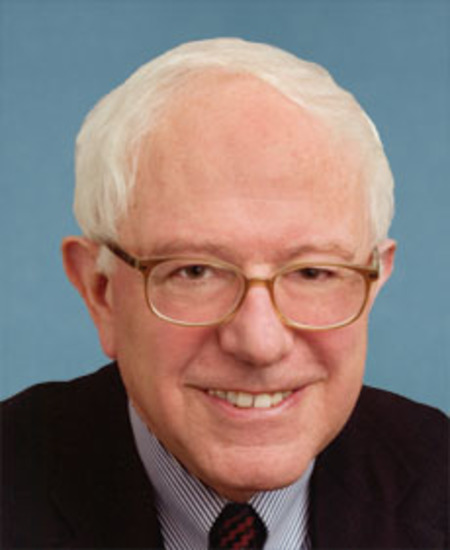
NEWS: Sanders, Takano Reintroduce Bill to Move Toward 32-Hour Workweek, Ensure America’s Workers Benefit from AI and Automation
WASHINGTON, Sept. 8 — Sen. Bernie Sanders (I-Vt.), Ranking Member of the Senate Committee on Health, Education, Labor, and Pensions (HELP), and Rep. Mark Takano (D-Calif.) today announced that they will reintroduce legislation to establish a standard 32-hour workweek in America with no loss in pay or benefits. This bill comes as America’s workers have seen massive increases in productivity over the past century and as artificial intelligence, automation and new technologies promise to further increase productivity. “At a time when artificial intelligence and robotics will radically transform our economy, it is imperative that the financial gains from this new technology benefit working families, not just a handful of billionaires and corporate CEOs. One important way to do that is through a 32-hour workweek with no loss in pay or benefits,” Sanders said. “A 32-hour workweek is not a radical idea. What’s radical is that, despite an explosion in technology and productivity over the last fifty years, millions of workers are working longer hours for lower wages while nearly $80 trillion in wealth has been redistributed from the bottom 90 percent to the top 1 percent. That has got to change. It’s time to reduce the stress level in our country and allow workers and their families to enjoy a better quality of life. It’s time to pass this bill.” “The 40-hour workweek was established in law nearly 90 years ago,” said Takano. “Since then, cell phones, the internet, and now AI have increased worker productivity, but the profits have been largely concentrated at the top by billionaires and corporations. Work has fundamentally changed. It’s time that labor standards caught up. I’m proud to continue partnering with Senator Sanders in reintroducing this bill to make sure that the gains from historically high productivity are felt by all American workers.” Today, American workers are more than 400 percent more productive than they were in the 1940s. However, millions of Americans are now working longer hours for lower wages. As of 2019, nearly 40 percent of U.S. workers are on the job at least 50 hours a week, and a staggering 18 percent — or 28.5 million workers — are clocking at least 60 hours a week. In 2024, the average full-time worker in the U.S. now worked almost 43 hours a week. On top of that, today more than 8.5 million Americans work multiple jobs, with more than 4.7 million working a second part-time job on top of a full-time job. Despite working more, Americans are falling behind. Wages are now lower than they were 53 years ago while CEOs make more than 280 times what their workers earn. According to the American Psychological Association , approximately 80% of workers would be happier and just as productive at work if they worked four days a week. In 1938, President Franklin D. Roosevelt signed the Fair Labor Standards Act (FLSA) into law establishing the 44-hour workweek through overtime protections — the first broadly applicable federal standard for working hours in the U.S. Just two years later, the FLSA phased-in today’s 40-hour workweek to the American people, which has remained the federal standard ever since. Before these federal labor standards were established, workers — including kids — in the early 19th century were on the job more than 70 hours a week, often in horrendous and dangerous working conditions. In the late 1800s, workers conducted major strikes for an 8-hour workday, coining the historic slogan, “Eight hours for work, eight hours for rest, eight hours for what you will.” The Thirty-Two Hour Workweek Act is endorsed by: Association of Flight Attendants-CWA (AFA-CWA); The American Federation of Labor and Congress of Industrial Organizations (AFL-CIO); The International Federation of Professional and Technical Engineers (IFPTE); National Employment Law Project (NELP); National Nurses United (NNU), Radio and Machine Workers of America (UE); Service Employees International Union (SEIU); United Auto Workers (UAW); United Food and Commercial Workers (UFCW) and WorkFour. Read the bill summary here . Read the bill text here .
6c0b5fc6-a060-481e-967f-1df4957f564bIssued within 24 hours
Other senators' releases published in the day before or after this one.