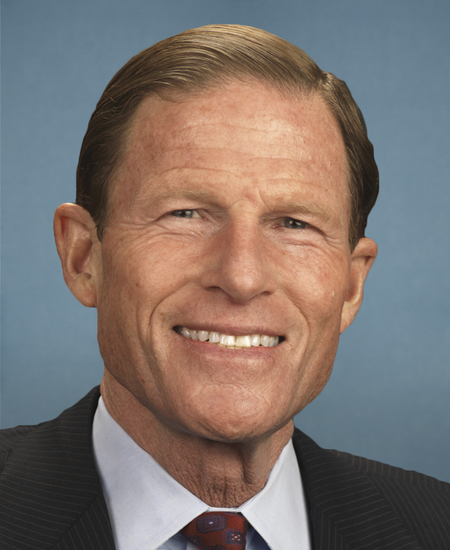
Fischer Questions Expert Witnesses on Defense Mobilization
Today, U.S. Senator Deb Fischer (R-Neb.), a senior member of the Senate Armed Services Committee, questioned expert witnesses about the use of the Defense Production Act (DPA) for defense mobilization. She asked the witnesses about ensuring that the DPA is invoked only for situations that truly relate to national defense.
During the hearing, Senator Fischer questioned Founder and Chief Executive Officer of MMR Defense Solutions Dr. Christine Michienzi on whether she recommends any statutory changes to better define what qualifies as national defense.
Additionally, Senator Fischer asked Dr. John McGinn, Executive Director of the Greg and Camille Baroni Center for Government Contracting at George Mason University’s Costello College of Business, for his assessment of the Department of Defense’s National Defense Industrial Strategy and any recommendations he would propose for implementation.
Click the image above to watch a video of Senator Fischer’s questioning
Click
here
to download audio
Click
here
to download video
Fischer Questions Expert Witnesses:
Senator Fischer:
I strongly believe the administration should maximize its use of the Defense Production Act. They have the authority to address challenges in our defense industrial base. However, I am concerned by the expanding definition of what qualifies as national defense. For example, in 2022 President Biden invoked the Defense Production Act to ramp up domestic production of clean energy technologies. Dr. McGinn, how should the Defense Production Act be used for defense mobilization? Should the DPA investments be focused on areas clearly related to the national defense of this country?
Dr. McGinn:
Thank you very much, Senator Fischer. Yes, the Defense Production Act is an incredibly powerful tool, and it is best used for national security defense purposes. And that's how it's been used during the development of the MRAP during the Afghanistan and Iraq War. That's how it was used during COVID, and that's how it's being used to rebuild our defense industrial base in areas such as rare earth processing, castings, and forgings and the like, specialty chemicals. So, that is how it is best used. And the more it is focused on national defense, it is not a political issue, therefore it's a national security issue.
Senator Fischer:
Thank you. And how should the Act be used for defense mobilization? Should the investments be focused on areas clearly related to being able to get that done?
Dr. Michienzi:
Thank you. I just wanted to make sure, it should absolutely be focused on mobilization efforts. But some of the efforts that DPA is funding now, it's difficult sometimes to realize that those go towards mobilization—so things that Jerry mentioned, such as rare earth processing and critical chemicals.
Senator Fischer:
Would you look at any statutory changes to be able to make it work and make it identify, truly, what is national defense? Is there anything we need to be looking at here?
Dr. Michienzi:
I think making sure that it is centered on national defense issues and national security is critically important, as Dr. McGinn mentioned, because we don't want to dilute the efforts of the DPA that are being very successfully used currently and can be used going forward.
Senator Fischer:
Thank you. Dr. McGinn, in January of 2024, the Department released its first National Defense Industrial Strategy, and later in October, released an implementation plan. What's your assessment of the strategy?
Dr. McGinn:
Well, I think the strategy did a very good job at kind of bringing together a lot of efforts that have been led across recent administrations. One of the good things about this area is it's very bipartisan. There's been a lot of similar themes being addressed across the Obama administration, through the Trump administration first, through Biden and today's. So, I think that the strategy did a good job at identifying the progress that has been made, but also setting a vector for the future. And I think that there were a number of good things in that report. I particularly like the focus on importance of production as well as the importance of working with allies and partners. The key will be kind of how that's instantiated in the FY26 budget submission.
Senator Fischer:
Are there any additional areas that you'd recommend the Department would consider that maybe were lacking from the previous strategies?
Dr. McGinn:
I think two things I would recommend. One is mobilization. I mean it's mentioned briefly in the strategy, but there's no talking about restarting mobilization planning. I mean there actually are program elements in the Army, Navy, and Air Force, Marines for mobilization, but they're really all about pre-positioning equipment and the like. There's no planning function that's being done today; that all stopped and that needs to be restarted. And then the other area that is on—the strategy talks a lot about it—building exportability in systems. That is building systems so that we can share them with our partners and allies. That requires investment in terms of—because you're going to have different capability levels—of different missiles going to different partners, depending on how close they are. So that requires investment up front, and that's a big priority that needs to be invested in, in terms of making exportability a priority in acquisition and also investing in the technology needed to build that capability.
Senator Fischer:
Thank you.
6fc2c851-e32e-4cae-b161-4f4c7726e9c1Issued within 24 hours
Other senators' releases published in the day before or after this one.