Cramer Highlights PROVE IT Act Language at Bipartisan Policy Center Briefing
***Clickherefor media resources.***
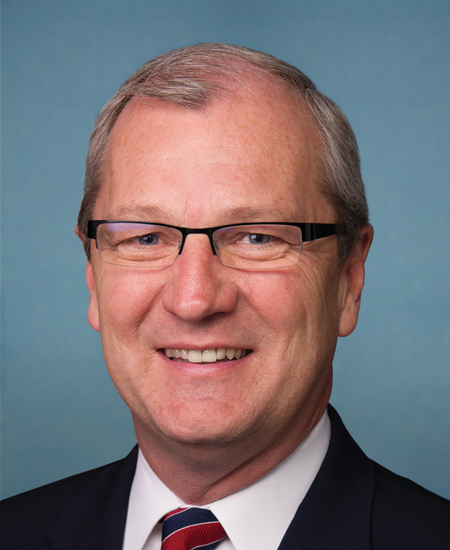
WASHINGTON, D.C. – Speaking at a Bipartisan Policy Center briefing today on foreign pollution, U.S. Senator Kevin Cramer (R-ND) outlined the long-term value of his recently-passedPROVE IT Actlanguage. He highlighted the need for official data from the study to equip the United States with information the administration needs to advance an America First trade agenda.
Two months after the European Union’s (EU) implementation of its Carbon Border Adjustment Mechanism (CBAM), the United States Congress gave the federal government the authority to gather the data necessary to defend its industrial base against attacks from European climate technocrats.
This is made possible, thanks to Cramer’s legislationrequiringthe U.S. Department of Energy’s (DOE) National Energy Technology Laboratory to conduct to conduct a comprehensive study. It compares the emissions intensity of certain goods produced in the United States to the emissions of those same goods produced in other countries. The study, formally known as PROVE IT, was included as part of the Fiscal Year 2026Energy and Water Development Appropriations Act, which passed the Senate by a vote of 82 to 15 and signed into law by President Trump. It created a new tool to counter the EU’s emission calculations of American producers and manufacturers. Thedatashows the United States’ cleanliness standards meet or exceed global competitors. Rather than relying on private or disparate data, thePROVE IT Actempowers the DOE to compile all this data on behalf of American industry to defend against unfair trade practices.
“This issue of the EU CBAM is not theoretical because the EU has already started their CBAM,”said Cramer.“They've already announced plans to expand the list so we have to be ready and have the nimbleness to meet that. Why would the United States sit on the sideline and not leverage our advantage? Why would we get hung up on beating ourselves up for our excellence, rather than bragging about it? The passage of this language in the energy water bill was the next logical step, but it wasn't an easy one. We had some momentum going into it thanks largely to many of the people in this room. The geopolitics of this policy are in the forefront, and the United States need to be at forefront.”
The study must include all items covered by the EU’s CBAM, beginning with iron, cement, fertilizer, hydrogen, and electricity. The EU will widen the scope of the CBAM at its discretion, with steel, aluminum and associated downstream products being added in January 2028. Other countries, including Canada, Japan, Singapore, South Korea, and the United Kingdom are preparing similar measures.
Tags:Energy and the Environment
7172128a-dd4c-45f0-8bc6-668dc6d4de78Issued within 24 hours
Other senators' releases published in the day before or after this one.