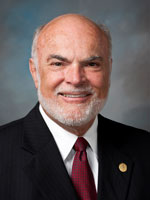
State Senator Sparks Files Fourth 89th Priority Legislative Package on Child Welfare Reform
FOR IMMEDIATE RELEASE Contact: Mattie Garland
Friday, February 21, 2025 mattie.garland@senate.texas.gov
Ph: 512-463-0131
STATE SENATOR SPARKS FILES FOURTH 89th PRIORITY
LEGISLATIVE PACKAGE ON CHILD WELFARE REFORM
[Austin, TX] – Senator Kevin Sparks (R-Midland) has announced his fourth legislative priority package aimed
at strengthening child welfare policies in Texas. The legislative package focuses on reforming community-based
care, unifying standards, removing burdensome regulatory barriers, providing greater healthcare access, and
establishing timelines for adoption documentation. Texas families, communities, and child welfare providers have
worked collaboratively to develop this robust array of solutions to pressing regional and state problems. This
legislative package seeks to address these concerns by enhancing services for at-risk children. The following
pieces of legislation are Senator Sparks’ 89th Legislative Priority “Child Welfare Reform”, they consist of the
following:
• SB 513 - Rural Community-Based Care Pilot: Establishes an innovative community-driven pilot
program for rural Texas community-based care, such as Region 9 (Permian Basin/Concho Valley).
• SB 1149 - Regulatory Reform: Reduces burdensome requirements for child welfare providers that
prevent entry and continuation of services unrelated to the safety of the child.
• SB 620 - Active Efforts for All: Equalizes standards of removals from an old two-tiered system to one
where all children, regardless of race or ethnicity, would be under the same standard.
• SB 500 - Adoption Documentation Timelines: Streamlines the adoption process by requiring timelines
for departmental documentation.
• SB 855 -Private Pay Optionality: Permits medical consenters to pay out of network for healthcare
services so children can receive improved access to care.
“If we do not protect the least of these, then our priorities must change,” said Senator Sparks. “Every child in
Texas deserves the state to fight on their behalf for policies that improve their chances in both the short and long
term. These reforms will help us build a stronger, more effective child welfare system that prioritizes the well-
being of children, empowers families, and ultimately improves outcomes.”
The following pages detail each bill regarding background, key provisions, and statements of support.
SB 513 – RURAL COMMUNITY-BASED CARE PILOT
Background
On December 31, 2020, the Texas Department of Family & Protective Services (DFPS) announced that Region
9 — which includes Midland, Odessa, and San Angelo — would begin the transition of the first in a four-part
series to community-based care (CBC). However, Region 9 would go on to receive zero CBC contractor bids
during the designated timeline.
Key Provisions
This bill establishes a short-term CBC pilot project for rural catchment areas. By utilizing a distributed network
model, a local lead agency can function as a managing entity and subcontract with local providers to deliver a full
continuum of services. Additionally, the bill innovates the current CBC model through employing a collaborative
governance structure, capitated funding model, comprehensive service spectrum, and other operational solutions
to address service issues and challenges.
Statements of Support
“I am proud to work with Senator Sparks on HB 1536 and SB 513 to improve our foster care system in West
Texas. I am confident this program will make a meaningful difference in the lives of children; our greatest
resource. I look forward to working with my colleagues in the Texas House and Senate to provide better options
for this vulnerable population.” - State Representative Tom Craddick, Texas House District 82
“West Texas Together strongly supports SB 513's approach to community-based care in rural Texas. As a
coalition of local stakeholders deeply embedded in the Permian Basin and Concho Valley communities since
2020, we know firsthand that rural child welfare requires solutions designed by those who understand our region's
unique dynamics. What makes this legislation transformative is how it puts real authority and responsibility in
the hands of local communities. Our experience uniting service providers, advocates, and community leaders
across West Texas has shown us that lasting change only happens when communities have the power to shape
their own solutions. This bill creates that pathway.” - Brandon J. Logan, J.D., Ph.D., West Texas Together
“As a native west Texan, I can tell you, west Texas is very unique. Something as important as child welfare in
west Texas requires a unique approach driven by those who know and live the strengths and weaknesses of the
community. SB513 would offer our community the ability to design our own model of child welfare that has a
better potential of success. Children and families in crisis deserve the best we can offer in help and healing.” -
Patty Pisklak, Executive Director - CASA of West Texas
“SB 513 provides a long-overdue opportunity to implement a true community-based care model in West Texas
and rural communities. The community-driven approach of the proposed pilot program recognizes the unique
challenges faced by rural communities and empowers them as experts in identifying and addressing their specific
needs. Flexible funding, collaborative governance, and local decision making allow rural communities to leverage
existing resources and work collectively to develop innovative solutions. High Sky Children’s Ranch strongly
supports SB 513 to establish a rural community-based care pilot program. We believe that this initiative is critical
to protecting, supporting, and healing children and families in the communities we serve.” - Kelsee Jones,
Executive Director - High Sky Children’s Ranch
SB 1149 – REGULATORY REFORM
Background
In 2023, Sen. Sparks passed SB 593, which authorized a third-party assessment to review child welfare licensing
and regulations. This report was released in the fall of 2024 and detailed the states’ burdensome regulatory
framework. Currently, the Health & Human Services Commission is implementing the assessment’s
recommendations.
Key Provisions
This bill would clarify that single source continuum contractors do not need a child placing agency license given
their unique operating provisions. Additionally, the legislation would decrease insurance requirements, improve
workforce flexibility, and lower unnecessary requirements to increase provider access and system efficiency.
Statements of Support
“I am thankful to DFPS and HHSC for implementing the vast majority of the recommended reforms. Now, I look
forward to finalizing our effort by passing into law the recommendations that require statutory change.” - State
Representative James Frank, Texas House District 69
“For too long, Texas has struggled to maintain an adequate supply of foster, adoptive, and kinship family
placements due to an overly burdensome regulatory environment. Texans are among the most generous people
in the world who will go out of their way to care for their neighbors in need. This package of reforms makes
common-sense changes to laws to make it easier for all Texans to serve their communities and ensure that every
child who enters foster care has a safe place to go.” - Andrew Brown, Texas Public Policy Foundation
“By making these regulatory changes, Sen. Sparks is helping to refocus our Texas system into one that prioritizes
the safety and stability over unnecessary red tape. These updates strike a balance between flexibility and
accountability that promotes Texas’ needed foster care capacity and supports providers in serving families well.”
- Allicia Frye, President - Texas Alliance for Child and Family Services
“Sen. Sparks' bill will strengthen the framework for Community Based Care by ensuring that Texas providers can
fulfill their obligations by removing an unnecessary regulatory barrier. Maintaining CBC oversight through
performance-based contracts while removing some of the regulations that promote compliance over child
outcomes will help achieve the vision and intent of CBC.” - Scott Lundy, President - Arrow Child & Family
Ministries
SB 620 – ACTIVE EFFORTS FOR ALL
Background
In 1978, Congress passed the Indian Child Welfare Act (ICWA) to address the disproportionate removal of Native
children from their families. ICWA requires states to make "active efforts" to prevent removal and support
reunification. In contrast, laws like the 1997 Adoption and Safe Families Act (ASFA) govern cases involving
non-Native children and introduced a “reasonable efforts” standard for states to receive federal foster care
reimbursements. Unlike ICWA’s clear guidelines, "reasonable efforts" lacks a federal definition, leading to varied
interpretations and confusion across states.
Key Provisions
This bill would replaces all relevant “reasonable efforts” terms with “active effort” while also establishing a
definition for “active efforts.” Additionally, the “active efforts” definition includes assisting parents with case
plans and accessing necessary resources where efforts are tailored to each case and may involve comprehensive
family assessments, identifying and overcoming service barriers, locating and engaging extended family, keeping
siblings together, supporting regular and trial home visits, connecting families to community resources,
monitoring progress, considering alternative service solutions, and providing post-reunification support.
Statements of Support
“Texas is leading the nation in transforming child welfare practice to prioritize family integrity and using foster
care only when absolutely necessary to protect children from harm. Senate Bill 620 builds on the progress our
state has made by ensuring that all children, regardless of their racial or ethnic background, receive the best efforts
we can offer to keep them with their families and keep them safe.” - Andrew Brown, Texas Public Policy
Foundation
“I think Senator Sparks’ bill requiring active efforts by the department is imperative and thoroughly needed
because there are too many cases where parents’ rights have been terminated for not completing their services
when they did not have a phone, they did not have transportation, they may not have had safe or stable housing,
they haven’t been able to get to their visits, or they haven’t been able to call providers to get appointments set up.
I think that this bill would actually require the department’s caseworkers to act like the social workers that they
were meant to be. Hopefully this prevents terminations in the future.” - Julia Hatcher, President - Texas
Association of Family Defense Attorneys
SB 500 – ADOPTION DOCUMENTATION TIMELINES
Background
Under Texas Family Code, Section 162, prospective adoptive parents must review a child’s health, social,
educational, and genetic history (HSEGH) report before adoption. During the 88th Legislature, Sen. Sparks filed
SB 2009 to streamline this process. The bill required the Department of Family & Protective Services (DFPS),
child-placing agencies, or guardians to compile and distribute the HSEGH report within 30 days of an adoption
plan change. It expanded data access for adoptive parents, excluding biological parents' identities, and required
nondisclosure agreements for confidential information. Reports were to be provided within 90 days of a request.
SB 2009 passed the Senate unanimously but died in the House.
Key Provisions
This bill would establish clear deadlines for CPS to provide required records to prospective parents and eliminate
the amount of information needed to be redacted from a child’s case file. This would shorten the amount of time
children spend in the foster care system and decrease the amount of money spent by the state on foster care.
Statements of Support
“For 12 years, Addy's Hope has prioritized adoption to address CPS capacity issues by placing legally free
children into permanent homes through matched adoption. A major delay in achieving swift permanency has been
the redaction of case files. SB 500 would allow us, as a Child Placing Agency, to request redacted files at the
point our adoptive family is identified as a possible match. This would initiate a mandatory 90-day timeline for
file completion, expediting placements, reducing unnecessary child welfare stays, and saving taxpayer dollars.” -
HollyAnn Petree, Executive Director – Addy’s Hope Social Services
“Timely release of information about a child’s health, social, educational, and genetic history is important to
ensure that potential adoptive parents have the critical information they need to make a decision about adoption
as soon as possible. This bill will help children achieve permanency sooner.” - Andrea Sparks, Buckner
International
SB 855 – PRIVATE PAY OPTIONALITY
Background
In October 2024, West Texas Together issued a report which addressed the critical shortage of healthcare
providers serving foster youth in the Midland/Odessa area. Despite extensive efforts to engage with Superior
Health to resolve these provider shortages, progress has been minimal. The report elevated this urgent issue,
seeking intervention to address this healthcare crisis impacting our most vulnerable youth. In response, the Health
and Human Services Commission responded with differing information on contracted providers, which brought
concern regarding access to care and accountability the state is assuming. The West Texas Together report
revealed a critical shortage of healthcare providers in Midland/Odessa accepting Superior Health plans, which
serve foster youth. Of the 28 identified pediatric providers, only 10 accepted all clients, leading to long wait times
and forcing families to travel for care. Behavioral health services are similarly constrained, with only 12 of 18
providers taking new clients and significant gaps in age-appropriate care and trauma-informed training.
Furthermore, the region has only two ophthalmologists, one serving minors, and two speech therapists, both with
over two-month wait times. These systemic barriers jeopardize timely, specialized care for foster youth and
emphasize the urgent need for enhanced healthcare access and support.
Key Provisions
This bill would allow the medical consenters of foster care children to access out-of-network providers for
healthcare solutions. Additionally, the bill seeks to remove liability from the managed care organization for out-
of-network care while ensuring Medicaid benefits are not limited for minors under conservatorship.
Statements of Support
“The severe shortage of healthcare providers serving foster children in West Texas requires innovative solutions.
SB 855 thoughtfully addresses this crisis by allowing medical consenters to access providers who want to serve
foster children but find the administrative requirements of STAR Health prohibitive. This flexibility could
significantly expand the provider network in our region while maintaining important STAR Health benefits and
protections. Most importantly, it gives foster families more options to meet the critical healthcare needs of
children in their care.” - Brandon J. Logan, J.D., Ph.D., Executive Director, One Accord for Kids
7f196b3a-e645-4afe-ac2a-ce42883938a5Issued within 24 hours
Other senators' releases published in the day before or after this one.