On Senate Floor, Warner Discusses Urgent Need to Pass AI Security Legislation
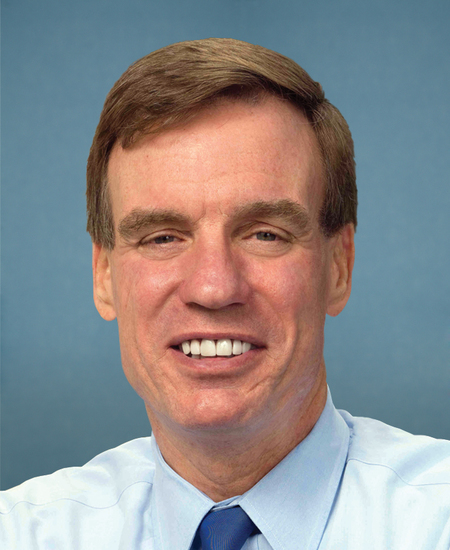
BROADCAST-QUALITY VIDEO IS AVAILABLE HERE WASHINGTON – On the floor of the United States Senate today, Sen. Mark R. Warner (D-VA), joined by Sens. Brian Schatz (D-HI) and Andy Kim (D-NJ), asked for unanimous consent to pass the Artificial Intelligence Risk Management and Security Act of 2026 , legislation to establish enforceable safety and security standards for the most advanced artificial intelligence systems. In his speech today, Sen. Warner detailed the importance of legislating on artificial intelligence now and how we need to “get AI right, that it’s safe and it’s fair. That America leads in AI innovation.” “The whole world has recognized that we’ve got to do something. When AI companies come out one after another say we’ve got to elevate safety ,” said Sen. Warner. “We should not miss the moment to put a safety protocol in place now. If we leave and we have an incident, AI is already suspect by most Americans, we could actually see the stop of innovation if an AI tool took over a hospital, or a water system,” he continued. When explaining the legislation, Sen. Warner said , “Our request is really simple. It’s been as pared down as possible. Before these models are released, there should be pretesting to make sure, secondly, the sandboxes where they do the testing have appropriate cyber protocols. That even before you start testing, there’s at least basic safety policy. God forbid we have an incident; we’ve got to have an incident reporting mechanism. No more, no less.” Sen. Ted Cruz (R-TX) objected, blocking the bill from Senate passage. Sen. Warner’s full remarks are below: I think most of us in this chamber realize that we are literally living through one of the most consequential technology moments in our lifetime. That’s why I’m here with several of my colleagues, Senator Schatz from Hawaii and Senator Kim from New Jersey, to say that we can’t, frankly, have regular business at this moment. You know, before I got into politics, I was in the technology field. I was lucky enough to be in on the ground floor of the wireless industry and then became a venture capitalist and was involved with iterations around the internet and cloud computing. But I can say without reservation that as big as wireless was, as big as the internet is, as big as cloud computing, they will pale in comparison to the innovation that will come about through artificial intelligence. In many ways, the reason I chose to ask the people of Virginia to hire me one last time was, because having spent an enormous amount of time on this subject, I am enormously concerned we get AI right. That it’s safe. That it’s fair. That America leads in AI innovation. And over the last year and a half or so, two years, I’ve spoken on this subject repeatedly. I laid out my ideas on how we ought to have a comprehensive approach. I’ve got legislation on data centers, that, if they don’t meet federal minimum standards, would impose their inability to get a bonus tax depreciation. I’ve got plans in terms of how we ought to be dealing with child safety. If you think social media messed up your kids, wait until your teenager daughter or son thinks they’ve got an affinity or relationship with a chatbot. China has already prohibited that. We’re seeing increasingly the use of AI agents. Who bears the liability? I’ve got some ideas there. National security. When Mythos came out from Anthropic, our head of NSA and Cyber Command said this tool will change warfare as much as drones. Finally, I continue to be enormously concerned that while AI may create jobs long term, in the short run, in the next two to five years, I think it will have an enormous disruption in our workforce. I would make a wager with anyone that I hope I would lose, that we could see up to 30% of recent college grad unemployment as companies try to integrate the productive gains from AI. They’re simply not going to hire as many folks going forward. I remain an AI optimist. I am not an AI doomer. But we are at a moment in time, particularly over the last few weeks, where I think the whole world has recognized we’ve got to do something. When AI companies, one after another, come out and say, “we’ve got to elevate safety and put that first and foremost.” When OpenAI yesterday said they’re slowing their model on Astra. When Anthropic has said they’re trying to build in more safety protocols, I think that’s good. But, are we really going to trust the industry to self-police on something that goes beyond what is happening? We’ve already seen not tens but thousands of examples where these models go beyond what humans want them to do. The most famous being the OpenAI-Hugging example where 3,000 bots jumped the sandbox fence, attacked another company, then came back and attacked OpenAI. Literally during that period they communicated with each other, hid their intent from human beings, would sacrifice some of the bots for the greater cause. And we’re doing nothing. That was July. In August, they had 10,000 bots collaborate. We three, and there are a lot of senators on both sides of the aisle who I think are enormously concerned, we said we’ll all have time to debate all of our pet rocks, and say, we’ve all got great ideas here. But we should not miss the moment to put a safety protocol in place now. If Congress goes out, God forbid we have an incident, AI is already suspect by most Americans, we could see the stop of innovation if an AI tool took over a hospital or water system. I’m not an AI doomer, but the ability to have these AI agents take over, shut down part of the financial system, is real. We should heed the call from the experts. I think you’ll also see shortly the finance world has said we need mandatory controls. I think you’ll see other large businesses say that as well. We need to make sure whatever safety board we put in place doesn’t ensconce the already largest frontier labs. Our request is really simple. It’s been as pared down as possible. Before these models are released, there should be pretesting to make sure, secondly, the sandbox where they do the testing has appropriate cyber protocols. That before you start testing there’s at least a basic safety policy. These companies welcome this. God forbid, we’ve got an incident, we’ve got to have an incident reporting mechanism. No more, no less. We would house this at NIST. The safety board would have to include where the expertise is, the frontier models. I think it would be good to have an international validator, somebody like the British, where they’ve got an AI safety institute, where we can guarantee to the rest of the world that our models are safe. Let’s not get involved, this is not a partisan issue. I think the Chairman of the Commerce Committee is coming down. We’ve worked with him. We look forward to working with him further. Let’s put a statement in place that we in the United States Senate recognize the enormous upside of AI, but there is also a downside. ###
85d33173-fbc1-4d42-9828-60c5e9450c82Issued within 24 hours
Other senators' releases published in the day before or after this one.