Warnock Presses Trump Ag Trade Nominee on Future of Global Food Assistance Programs
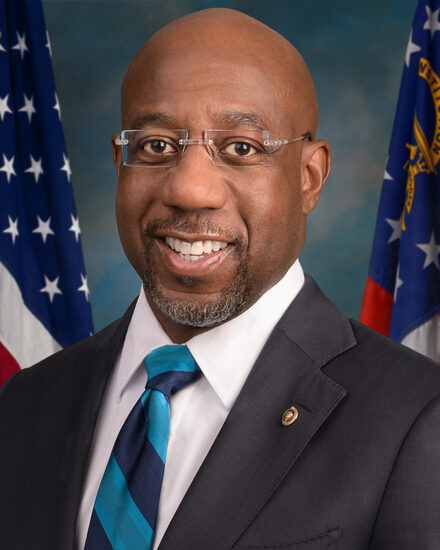
On Tuesday, during a Senate Agriculture Committee hearing, Senator Reverend Warnock pressed President Trump’s nominee for Under Secretary for Trade and Foreign Agricultural Affairs on his commitment to protecting America’s global food assistance programs U.S. global food assistance programs have long supported Georgia farmers while providing critical food assistance to vulnerable communities around the world Senator Reverend Warnock: “When President Trump and Elon Musk shut down [food assistance] programs, they didn’t just hurt starving children and waste taxpayer dollars by letting already purchased food rot in warehouses; they also directly hurt American farmers who supported those contracts” Washington, D.C. – On Tuesday, during a Senate Agriculture Committee hearing, U.S. Senator Reverend Raphael Warnock (D-GA) pressed Greg Ibach, President Trump’s nominee for Under Secretary for Trade and Foreign Agricultural Affairs at the U.S. Department of Agriculture (USDA), on his commitment to protecting America’s global food assistance programs. Following the Trump administration’s dismantling of the United States Agency for International Development (USAID) in 2025, several of the agency’s global food assistance programs were transferred to USDA, raising questions about how the department will continue supporting American farmers while addressing hunger abroad. U.S. global food assistance programs have long provided a critical market for Georgia farmers while delivering food assistance to vulnerable communities around the world. “When President Trump and Elon Musk shut down [food assistance] programs, they didn’t just hurt starving children and waste taxpayer dollars by letting already purchased food rot in warehouses,” said Senator Reverend Warnock. “They also directly hurt American farmers who supported those contracts. That includes Georgia peanut farmers who grow the key ingredient for ready to use therapeutic foods which deliver salvation and nutrition to children all over the world.” Prior to its dismantling, USAID administered the Food for Peace program, a cornerstone of America’s efforts to combat hunger and malnutrition around the world. The program purchased American-grown agricultural commodities to provide emergency food assistance to vulnerable communities facing famine, natural disasters, and conflict. In addition to providing lifesaving humanitarian assistance, the program supported American farmers by creating markets for U.S. agricultural products. In February 2026, USDA announced that it would assume responsibility for administering the program. Senator Warnock has long championed efforts to combat global hunger while supporting Georgia’s agricultural economy. Following the Trump administration’s cancellation of federal food assistance contracts, Senator Warnock pushed to restore critical funding for organizations working to provide lifesaving nutrition to vulnerable children around the world. As part of these efforts, Senator Warnock worked directly with Secretary of State Marco Rubio to secure the release of millions of dollars in outstanding federal payments owed to MANA Nutrition, helping sustain its operations and support Georgia peanut farmers. Watch the Senator’s full exchange HERE See a transcript of the exchange between Senator Warnock and TFAA nominee Ibach below: Senator Reverend Warnock (SRW): “Thank you, Chair Boozman.” “Last year, the Trump administration—with the help of Elon Musk—illegally dismantled the USAID, a critical pillar of our national security. USAID administered programs like Food for Peace, which provides food from American farmers to vulnerable people all around the world. It’s part of our diplomatic toolbox. When Trump and Elon Musk shut down this program, they didn’t just hurt starving children and waste taxpayer dollars by letting already purchased food rot in warehouses. They also directly hurt American farmers who supported those contracts. That includes Georgia peanut farmers who grow the key ingredient for ready-to-use therapeutic foods, those RUTF packets, which deliver salvation and nutrition to children all over the world.” “Mr. Ibach, USDA is now administering Food for Peace, and if confirmed, you would oversee it along with other international food assistance programs. Yes or no? Are you aware—are you aware that the Food for Peace program purchases food from American farmers, including peanut growers, right down in my home state of Georgia?” TFAA Nominee Greg Ibach (GI): “Yes, sir. I am aware of the fact that we do purchase food from farmers and distribute it around the world. I actually had the opportunity one time traveling with USDA when I was director of agriculture to be in Ghana and witness those packets that you talked about that contained peanut butter being distributed to children in schools there, and the nutrition that it provided was very impressive, and it was very, you know, provided sustainability.” SRW: “It’s lifesaving. It’s lifesaving.” “And I’m very proud as a voice for Georgia that the key ingredient comes from Georgia farmers. Do you agree then that these programs can help American farmers who are already suffering from Trump’s tariffs and trade wars?” GI: “Absolutely. By getting our customers around the world that need food assistance used to the high quality, nutritional content, and the safety of our commodities, hopefully, when they get on their feet and their economies improve, they will become customers of U.S. farmers and ranchers.” SRW: “Sure. So helpful to families and people who are struggling around the world. Helpful to farmers.” “The White House has proposed eliminating the Food for Peace program in their 2027 budget request, calling it wasteful. Yes or no? Do you believe that the Food for Peace program should be funded?” GI: “It would be my obligation to follow the law, whatever the law—” SRW: “Do you think it should be funded? I’m just asking your opinion. Do you—yes or no? Do you think it should be funded?” GI: “Food and feeding programs are important part of our humanitarian responsibility as U.S. citizens.” SRW: “So, that’s a yes?” GI: “Food and feeding programs are important.” SRW: “So, the USDA is newly administering food for peace, and it lacks the staff or the expertise of USAID, which has led to significant delays in securing contracts and delivering food. If confirmed, what is your plan to ensure the USDA has the capacity to efficiently and accurately administer food for peace?” GI: “So, Food for Peace being a new program to USDA, and while I’m familiar with the purchases that we made when I was part of MRP that AMS made, I would look forward to seeking out the expertise to understand the specifics of Food for Peace. I think it’s important that we make sure that we have staffing to not only staff effectively the feeding programs, international feeding programs, but also our trade activities around the world. And so, I would work with the Secretary and the administration to make them aware of any needs we’d have to be effective in our mission.” SRW: “And did I hear you also say that you would seek out expertise?” GI: “Seek out expertise, correct.” SRW: “Does that mean you will also commit to consulting the State Department for technical assistance?” GI: “Yes, and you know we have two people within the TFAA leadership that come from the State Department, and so hopefully I look forward to using them as advisors as well as seeking out advisors at the State Department or here on Capitol Hill.” SRW: “Thank you.” “On numerous occasions, this administration has tried to withhold foreign aid, including life-saving programs like PEPFAR, arguably one of the greatest humanitarian relief programs ever created. And the Trump administration has threatened to withhold that aid, aid like PEPFAR, other aid, unless countries agree to unrelated demands like health data or access to critical minerals. If confirmed, will you commit to deploying food based on need, not to coerce countries into agreeing to other demands?” GI: “I will follow the law.” SRW: “When the Trump administration refers to America first, they mean America only. But the American people showed on Tuesday that they do not support that agenda. Food for Peace is a great example. It seems to me of how we do not have to make that false choice. We can support American farmers. We can feed vulnerable families all around the world at the same time. I think that those are related objectives, and there’s nothing stopping the administration from deploying food based on need. You said you would follow the law. I’m glad to hear that. But let me just state for the record: there’s nothing in the law that’s stopping them from deploying food. This is a choice, in my view, an immoral choice that the administration is making. I’m heartened to know that you will seek the expertise of folks who are focused on this, and I hope we can get to better policy somehow in the days ahead.” “Thank you so very much.” ###
8755c63b-df61-4306-a7eb-88ce542625e5Issued within 24 hours
Other senators' releases published in the day before or after this one.