Blumenthal Demands Answers from Polymarket Following Suspicious Bets on Ceasefire
“Polymarket has become an illicit market to sell and exploit national security secrets unlike any in history, and by extension a potential honeypot for foreign intelligence services watching for those same suspicious bets and wagers.”
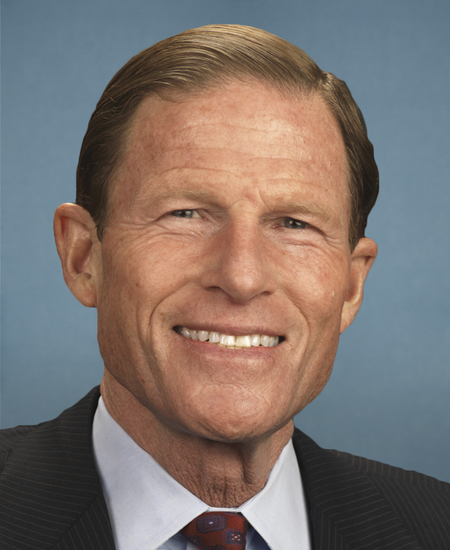
[WASHINGTON, DC] — U.S. Senator Richard Blumenthal (D-CT) today wrote to Founder and CEO of Polymarket Shayne Coplan demanding answers about the prediction market’s failure to prevent insider trading and gambling related to American national security matters, including betting over military interventions in Venezuela and Iran. Blumenthal’s letter comes after a group of new accounts on Polymarket placed highly specific bets on whether the U.S. and Iran would reach a ceasefire agreement on April 7, shortly before the two-week ceasefire deal was announced by President Trump.
“These repeated, illicit bets raise significant concerns about the mishandling of confidential information on Polymarket, and calls into question whether it is taking adequate steps to prevent, deter, and report national security leaks and gambling over matters of life-and-death,”Blumenthal wrote.
Blumenthal continued,“Prediction markets have also turned a blind eye, or even encouraged, the use of secrets and insider information. Indeed, you called it ‘cool’ that Polymarket ‘creates this financial incentive for people to go and divulge the information to the market and the market to change.’ This financial incentive to abuse trust apparently worked…In practice, Polymarket has become an illicit market to sell and exploit national security secrets unlike any in history, and by extension a potential honeypot for foreign intelligence services watching for those same suspicious bets and wagers.”
“After embarrassing press stories about these unethical wagers, last month you announced a few new rules restricting misuse of confidential information and manipulation. However, these changes are paltry, inadequate, and late,”Blumenthal concluded.
Earlier this year, Blumenthal introduced thePrediction Markets Security and Integrity Actto prevent abuse and fraud in prediction markets and return regulatory authority to the states.
The full text of Blumenthal’s letter isavailable hereand below.
Dear Mr. Coplan,
I write to demand information about Polymarket’s continuing failure to prevent insider trading and gambling related to American national security matters, including betting over the military intervention and ceasefire in Iran. These repeated, illicit bets raise significant concerns about the mishandling of confidential information on Polymarket, and calls into question whether it is taking adequate steps to prevent, deter, and report national security leaks and gambling over matters of life-and-death.
Prediction markets, such as Polymarket, hold themselves out as a market-based, decentralized mechanism to determine truth by soliciting the wisdom of crowds, allowing their users to bet on everything from what happens in court rooms to nuclear negotiations. In practice, however, prediction markets have created a wild west of unethical, and potentially illegal, bets: allowing gamblers to wager, either directly or indirectly, over matters of violence, assassination, and war. For example, like other prediction markets, Polymarket allowed its users to bet on whether Nicolás Maduro and Ali Khamenei would be out of power this year — bets resolved by war. However, Polymarket’s practices stand out as especially unconscionable, taking over half a billion dollars in direct bets over when the United States and Israel would strike Iran, and allowing wagers over Hizballah’s terrorism. Polymarket even put the rescue of a U.S. service member up for wager until it was publicly shamed into removing the listing.
Prediction markets have also turned a blind eye, or even encouraged, the use of secrets and insider information. Indeed, you called it “cool” that Polymarket “creates this financial incentive for people to go and divulge the information to the market and the market to change.” This financial incentive to abuse trust apparently worked. In January, a trader made more than $436,000 on Polymarket by betting on Maduro’s removal mere hours before a U.S. military intervention in Venezuela. Weeks later, another account made $553,000 placing bets against Khamenei right before he was killed in the early hours of airstrikes — one of several accounts that engaged in suspicious wagers at that time. According to Reuters, this week several new, anonymous Polymarket users placed well-timed bets on a ceasefire, earning hundreds of thousands of dollars, despite all apparent indications that negotiations had collapsed. In practice, Polymarket has become an illicit market to sell and exploit national security secrets unlike any in history, and by extension a potential honeypot for foreign intelligence services watching for those same suspicious bets and wagers.
After embarrassing press stories about these unethical wagers, last month you announced a few new rules restricting misuse of confidential information and manipulation. However, these changes are paltry, inadequate, and late. Given the repercussions of illicit betting to American national security, please provide detailed answers to the following questions by April 24, 2026:
Thank you for your prompt attention to this request.
Sincerely,
-30-
89725463-9268-4a6c-83ce-1e80de30dcfaIssued within 24 hours
Other senators' releases published in the day before or after this one.